What Is Conversion Rate Optimization (CRO)?
Conversion rate optimization (CRO) is the discipline of increasing the percentage of visitors who take the action you want — buy, book, subscribe, or submit a lead — without buying more traffic. It is usually the highest-return growth lever a business has, because it multiplies the value of every other channel you already pay for. This guide covers what CRO is, how to measure it, the process that makes it compound, and where to start. For the numbers behind ‘good,’ pair it with our 2026 conversion rate benchmarks.
What is conversion rate optimization?
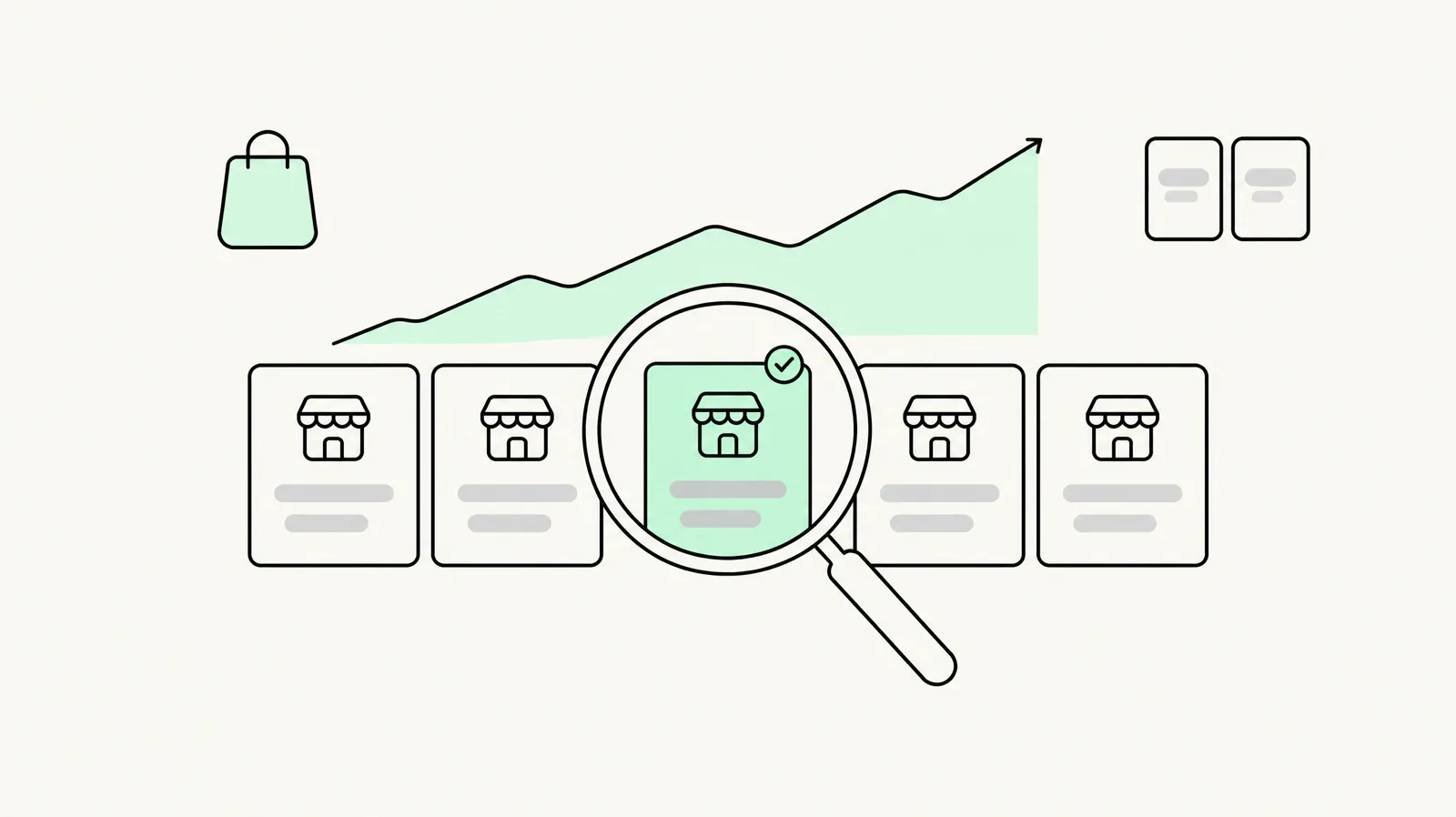
CRO is a structured, evidence-led loop: study how people actually behave on your site, form hypotheses about what's stopping them from converting, test those changes against a control, and keep the winners. Done properly it is closer to applied experimentation than to design opinion. The goal is not a prettier page — it is a measurably higher conversion rate that holds up over time.
The core formula
Conversion rate = (conversions ÷ total visitors) × 100. If 1,000 people visit and 30 buy, your conversion rate is 3%. Every CRO program starts by agreeing on what counts as a 'conversion' and instrumenting it correctly.
How to calculate conversion rate
Divide the number of conversions by the number of visitors in the same window, then multiply by 100. The trap is definitional, not mathematical: are you counting sessions or unique users? Is a 'conversion' a purchase, an add-to-cart, or a newsletter signup? Micro-conversions (email capture, account creation) and macro-conversions (revenue) both matter, but you must decide which one a given test is trying to move before you launch it.
Sources for the figures above: Littledata's ecommerce conversion rate benchmark (median of 427 Shopify stores over 90 days to October 10, 2026; top 20% convert above 2.6%, top 10% at 3.6% or more) and Baymard Institute's cart abandonment rate list, which averages 50 published studies. Littledata sells analytics to Shopify merchants, so treat its sample as Shopify-specific rather than all of ecommerce.
The CRO process: a loop, not a project
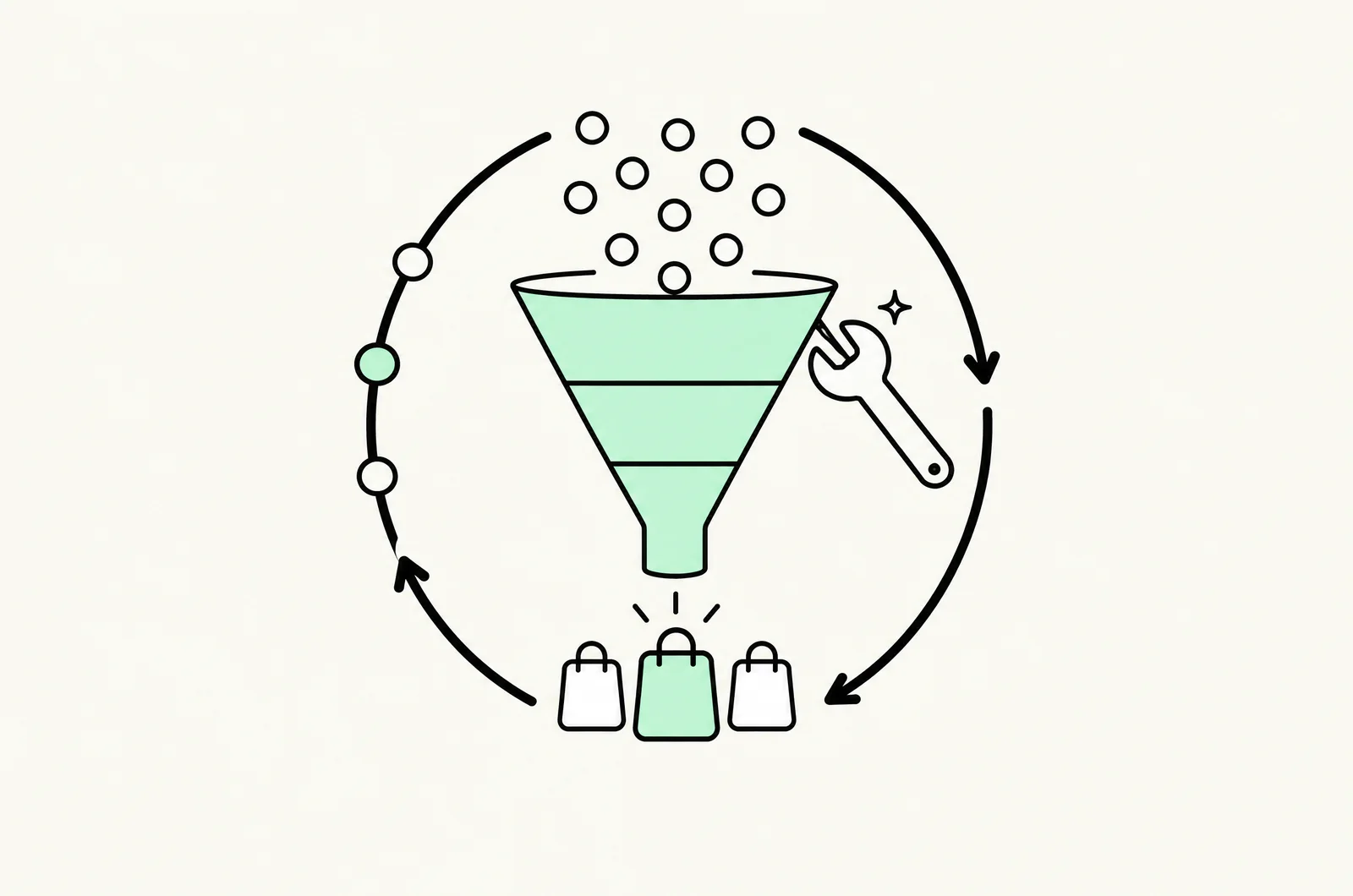
The teams that win at CRO treat it as a permanent operating loop, not a one-off redesign. Each turn of the loop produces a learning whether the test wins or loses, and those learnings compound into a durable advantage competitors can't copy from the outside.
- Research — quantitative (analytics funnels, where people drop) plus qualitative (session replays, heatmaps, surveys, support tickets).
- Hypothesize — write a falsifiable statement: 'Because X, if we change Y, then Z metric will improve.'
- Prioritize — rank hypotheses by expected impact, confidence, and effort (ICE/PIE) so you test the highest-leverage ideas first.
- Test — run a controlled A/B or multivariate test against a real control group, sized for significance.
- Analyze — read the result honestly, segment it, and write down what you learned even when the variant loses.
- Iterate — ship winners, kill losers, and feed every result back into the next round of research.
Why bother with a control group instead of just shipping good ideas? Because small changes can matter far more than anyone predicts. In Harvard Business Review, Ron Kohavi (then head of Microsoft's experimentation team) and Stefan Thomke describe a Bing test that changed how ad headlines were displayed. The idea sat in the backlog for months; when tested, it raised revenue 12%, which they estimate at more than $100 million a year in the US alone. Nobody would have prioritized it on opinion. That is the case for testing over debating.
What to test first
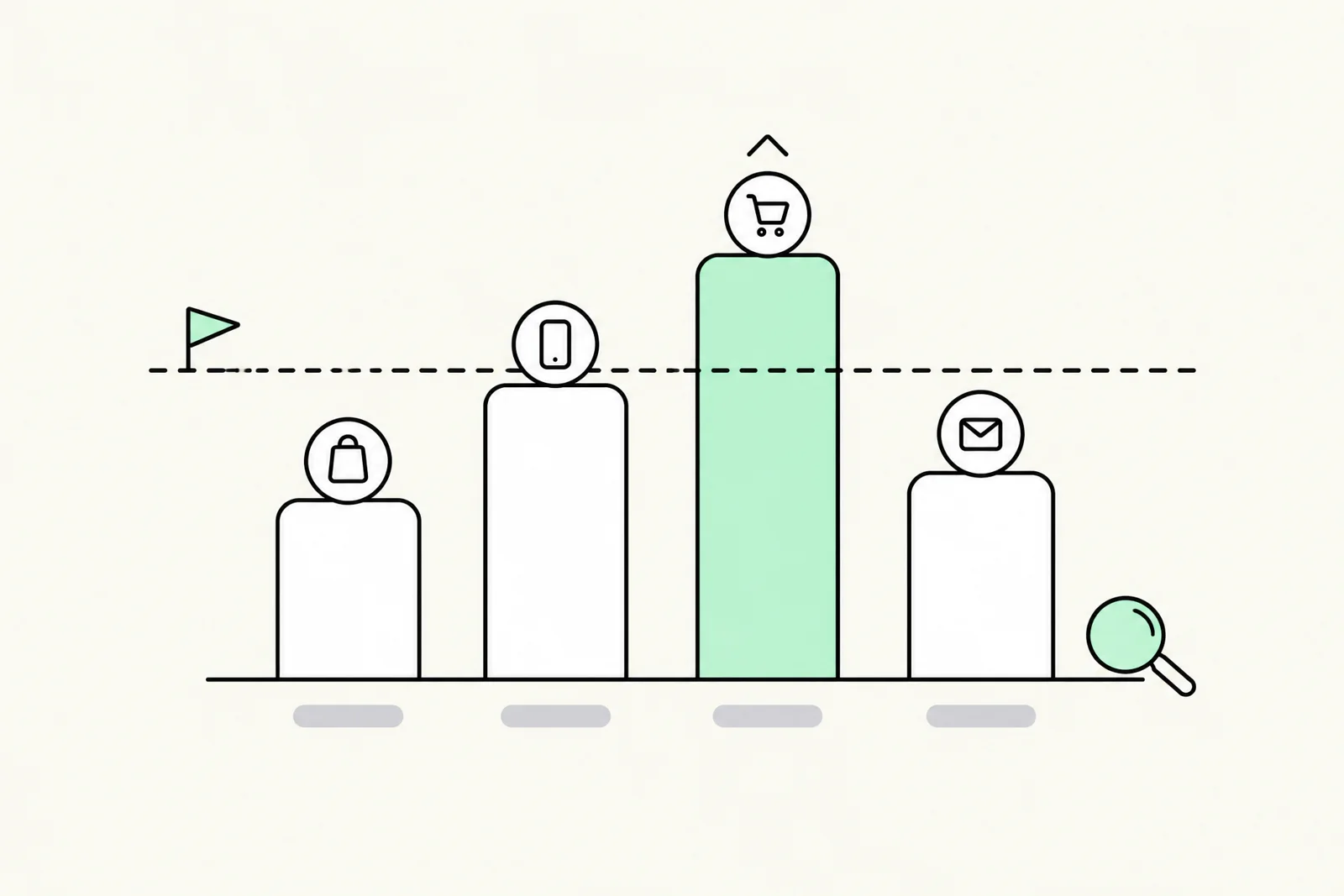
Start where money and traffic concentrate. A 10% lift on your highest-traffic revenue page beats a 50% lift on a page nobody visits. In practice, the highest-yield surfaces are almost always the same handful:
- Primary landing pages and paid-traffic destinations, where intent is highest and the drop-off is most expensive.
- Product and pricing pages — clarity of value, proof, and the specific objection each page fails to answer. Customer video testimonials are one of the most direct forms of proof.
- The checkout or booking flow, where friction (fields, steps, unexpected costs) quietly kills otherwise-ready buyers. On Shopify, this is what checkout optimization work targets.
- Calls to action — placement, wording, and whether the next step is obvious above the fold.
The checkout deserves extra attention because the friction there is well documented. Baymard Institute's checkout research finds that, among US shoppers who abandoned an order (excluding those just browsing), 40% left because extra costs like shipping, tax, or fees were too high, 19% didn't trust the site with their card details, 18% were asked to create an account, and 17% found the checkout too long or complicated. Baymard also reports the average US checkout shows 14.88 form fields by default, against 7–8 in its recommended ideal, and estimates that fixing solvable checkout usability issues could lift the average large ecommerce site's conversion rate by 35.26%. That last figure is Baymard's model-based estimate, not a guaranteed result, but it shows where the opportunity usually sits.
Don't test noise
Button-color tests are a cliché for a reason: on their own they seldom touch the reasons people leave. Baymard's abandonment data points to cost surprises, trust, forced accounts, and long forms. Prioritize changes to value proposition, proof, friction, and clarity, the levers that change whether someone believes and acts.
Product-page social proof is one of the quickest wins to test. Short, tagged product videos let shoppers see the item in use and add to cart without leaving the page; our comparison of the best shoppable video apps for Shopify covers pricing, free plans, and page-speed impact. If you don't have footage yet, our guide to UGC videos explains the formats and where to source them. You can also get UGC videos without paying influencers.
Why CRO compounds
A higher conversion rate makes every acquisition channel more efficient at once. Lift conversion 20% and your effective cost per acquisition drops by about 17% (1 ÷ 1.2 = 0.83) across SEO, paid, email, and referral at the same time. That is exactly why CRO changes the math on your paid media. It also raises the ceiling on what you can profitably bid, a dynamic we unpack in the break-even ROAS guide. Traffic you buy stops when the budget stops; a conversion improvement keeps working on every future visitor. The same logic applies to order size: revenue per visitor is conversion rate times average order value, so a well-priced bundle or quantity break can lift revenue without one extra visitor. Our guide to the best bundle apps for Shopify walks through the margin math before you discount.
Common CRO mistakes
- Stopping tests early. Calling a winner the moment significance flickers. Statistician Evan Miller shows that checking results repeatedly and stopping at the first 5% significance reading can inflate the real false-positive rate to 26.1% in a worst-case example. Set the sample size up front with a sample size calculator and wait for it.
- Testing without a hypothesis. Random changes produce random results and zero transferable learning.
- Ignoring segments. A flat result often hides a strong win for mobile and a loss for desktop — or vice versa.
- Chasing rate over revenue. Raising conversion rate by discounting can lower profit. Optimize for contribution margin, not vanity percentages.
Want a senior team running this loop on your funnel?
We audit your funnel, find the highest-leverage tests, and run the research-to-revenue loop for you — on a pay-on-results basis for qualifying accounts.
Book a free funnel auditFrequently asked questions
What is a good conversion rate?
It depends on your channel, traffic source, and industry. For Shopify stores, Littledata's benchmark of 427 stores (90 days to October 10, 2026) puts the median at 1.4% of sessions, with the top 20% above 2.6% and the top 10% at 3.6% or more. Lead-gen and booking flows vary too widely for one number. The benchmark that matters most is your own trend line, quarter over quarter. See our 2026 benchmarks post for channel-by-channel figures.
How is CRO different from SEO or paid ads?
SEO and paid ads buy you more visitors. CRO turns the visitors you already have into more customers. They compound: if conversion rate rises 20% at the same traffic and spend, cost per acquisition falls by about 17% (1 ÷ 1.2), which is why CRO is often the best-value lever once you have meaningful traffic.
How much traffic do I need before CRO is worth it?
It depends on your baseline rate and the smallest lift you care about, so calculate it rather than guess. With Evan Miller's free sample size calculator, a 2% baseline and a 20% relative lift (2% to 2.4%) at 95% significance and 80% power needs roughly 21,000 visitors per variant. If you can't reach that in a few weeks, focus on qualitative research, obvious UX fixes, and your highest-traffic pages instead of formal A/B tests.
Do I need a big tool stack to start?
No. You need reliable analytics (GA4 or similar), one session-replay or heatmap tool, and one experimentation tool. The constraint is almost never tooling — it's a steady stream of well-formed hypotheses and the discipline to ship, measure, and iterate every week.
How long does a CRO test need to run?
Fix the sample size before launch and run until you reach it, covering at least one full weekly cycle (many teams use two weeks) to average out day-of-week effects. Don't stop the moment the tool shows significance: Evan Miller shows that repeatedly checking and stopping on a 5% threshold can push the real false-positive rate to 26.1% in a worst case.