Shopify SEO Agency
The Shopify SEO agency that compounds revenue
Technical SEO, collection and product page optimization, schema, content, and link building, engineered for Shopify and Shopify Plus brands competing on commercial intent keywords. Full Plus surface coverage: Markets, expansion stores, B2B Edition and Hydrogen.
- Technical SEO + on-page + content + links + GEO for AI search
- Plus-tier depth: Markets, expansion stores, B2B Edition, Hydrogen
- Pay-on-results option: we earn as organic revenue grows
Trusted by 50+ D2C brands · Google, Meta & Shopify partners





From SEO audit to apps, migrations, and AI search
Shopify SEO audit
Free with every call
Shopify SEO checklist
Technical + on-page
Shopify SEO migration
Redirect-mapped
AI SEO for Shopify
GEO + citations
Store-wide Shopify SEO means homepage, collections, product pages and blog all pulling in the same direction. Homepage SEO carries your brand entity and category hub links. Collection SEO is where commercial-intent revenue lives. Product page SEO wins long-tail queries through schema and descriptive copy. Blog SEO earns the links and the AI citations that make the commercial pages rank in the first place. Shopify SEO best practices are platform-specific: the stores that win treat collection pages as landing pages, fix technical debt at the Liquid theme level through Shopify theme development instead of installing another app, publish content that earns links, and measure non-brand organic revenue instead of sessions. A Shopify CRO program then turns the extra organic traffic into revenue.
Shopify SEO migrations are their own discipline. Replatforming from Magento, BigCommerce, WooCommerce or a custom stack means a 1:1 redirect map for every indexed URL, content and metadata parity on your top revenue pages, schema rebuilt from scratch, and a staging crawl before DNS cutover, planned with our Shopify migration team. Stores running Markets, expansion stores or B2B catalogs get the deeper Shopify Plus SEO program. AI SEO for Shopify, or Generative Engine Optimization, is now part of every program: passage-level answers under question-shaped headings, FAQ and HowTo schema, brand entity work in Wikidata and the Knowledge Graph, llms.txt and AI crawler access, and tracked brand mentions across AI engines. Organic search also sits inside a wider plan, which our ecommerce SEO agency and Shopify marketing agency teams cover.
Our Shopify SEO services are judged on one number: non-branded organic revenue, because branded searches would find you anyway. Here is the break-even maths we run with every client. A store with a 55% gross margin paying $5,000 a month needs about $9,100 of extra monthly organic revenue to break even. At a $90 AOV that is roughly 100 extra non-branded orders a month, and every order above it is profit that keeps compounding after the work is done. If the forecast does not clear that bar, we will say so on the first call.
Shopify Plus stores add a second layer: expansion stores, Markets and B2B catalogs that share one catalog. That indexation topology is covered by our dedicated Shopify Plus SEO agency team. Comparing options before you hire? See our guides to the best Shopify SEO agencies and the best Shopify SEO apps, and our broader ecommerce SEO agency services for stores beyond Shopify.
Shopify SEO has platform-specific traps
Generalist SEO agencies miss these. Shopify-specific specialists know them by heart.
Duplicate content from collections + tags
Shopify auto-generates /collections/all/ and /collections/[tag]/ URLs that compete with your primary collection. Without proper canonical handling, Google indexes the wrong page, and your traffic flatlines.
Theme-level Core Web Vitals issues
Most theme + app combinations push LCP past 4 seconds and INP into the red. App bloat, render-blocking JS, and unoptimized Liquid loops kill rankings on mobile. We fix at the theme code level, not by installing more apps.
Collection pages treated as catalogs, not landing pages
Most stores have empty collection pages with just a product grid. Collection pages should be landing pages with substantive copy, schema, FAQ, and internal links. That's what ranks for commercial-intent keywords.
Faceted navigation quietly burning your crawl budget
Five filters with four values each generate over a thousand crawlable URLs per collection. A 150-product catalog can balloon past 300,000 indexable URLs. Google spends its crawl budget on filter permutations instead of the pages that make you money, and nobody notices until rankings stall.
Internal site search and ?variant= URLs in the index
Shopify's /search?q= pages and every ?variant= parameter URL are crawlable by default. They generate thin, near-duplicate pages that dilute sitewide quality signals. We handle it with robots.txt.liquid rules (available on every plan) plus meta-robots noindex in the theme.
Hydrogen storefronts that don't render for Googlebot
Hydrogen on Oxygen renders server-side, but client-side routing and lazily hydrated components can leave titles, canonicals, schema and product copy out of the initial HTML payload. We test render parity (raw HTML against the rendered DOM) on every headless build. There is no ranking bonus for Hydrogen, only risk if it's built carelessly.
From $0.6M to $10.5M monthly sales in 2.5 years
A Shopify Plus brand we partnered with from April 2020. Combined Shopify SEO program (technical fixes at the theme level, collection-page rewrites, programmatic SEO, and digital PR) compounded into a 17.5× revenue lift over 32 months.
All Users
100.00% Revenue
+ Add Segment
Apr 1, 2020 — Nov 30, 2022
0.6M To 10.5M
Monthly Sales
In 2.5 Years
17.5×
Revenue lift
+1,164%
Organic traffic
240+
Top-3 commercial KWs
32 mo
Compounding period
Every layer of Shopify SEO, done right
Full-spectrum SEO for Shopify and Shopify Plus stores: technical, on-page, content, off-page, and AI search.
Shopify Technical SEO
Canonical tag handling, robots.txt, sitemap.xml, hreflang for multi-region, Core Web Vitals optimization, JavaScript rendering, structured data, and faceted navigation control. We fix at the theme code level.
- Canonical + duplicate content
- Core Web Vitals (LCP, INP, CLS)
- Hreflang for multi-region
- Faceted navigation handling
Collection Page Optimization
Collection pages treated as commercial-intent landing pages: substantive copy, FAQ, internal links, breadcrumbs, schema. The single highest-ROI SEO lever for most Shopify stores.
- Long-form collection copy
- FAQ + how-to schema
- Internal linking architecture
- Breadcrumb + filter SEO
Product Page SEO
Product schema (with reviews from Judge.me, Yotpo or Okendo, plus availability and price), descriptive copy, FAQ, related products, structured Q&A, and image SEO. Product pages should rank for long-tail commercial queries. Most don't because the schema is broken.
- Product + Review + Offer schema
- Descriptive copy + FAQ
- Image SEO + alt text
- Variant + size SEO
Keyword Research & Strategy
Commercial-intent keyword discovery, SERP intent analysis, topic cluster mapping, and content brief creation. We start with what your customers actually search, not what looks good in a tool.
- Commercial intent keyword research
- SERP backwards analysis (SXO)
- Topic cluster + pillar mapping
- Content brief library
Content Marketing for Shopify
Blog content, buyer's guides, comparison pages, and pillar guides aligned to commercial keywords. Programmatic SEO for large catalogs. Content that earns links and ranks, not just content for content's sake.
- Pillar + cluster content
- Buyer's guides + comparison pages
- Programmatic SEO templates
- Content refresh program
Link Building & Digital PR
Authority link building via digital PR, HARO/Connectively, founder-led outreach, partnership campaigns, and resource page placements. We don't do PBNs, link farms, or paid links, only links that survive a Penguin update.
- Digital PR campaigns
- Resource page link building
- Founder-led outreach
- Brand entity authority
Schema.org Structured Data
Product, Offer, Review, AggregateRating, BreadcrumbList, FAQPage, Article, Organization, VideoObject. Hand-coded JSON-LD where Shopify defaults aren't enough, which is most of the time.
- Product + Offer + Review schema
- FAQ + HowTo + Article
- Organization + Brand entity
- BreadcrumbList + ItemList
AI Search Optimization (GEO & AEO)
AI search optimization for Shopify stores: generative engine optimization (GEO) for Google AI Overviews, ChatGPT search, Perplexity, and Bing Copilot, plus answer engine optimization (AEO) so your products and brand get cited, not just crawled. Passage-level optimization, brand entity work in Wikidata, and llms.txt setup.
- AI Overviews + AI Mode optimization
- ChatGPT + Perplexity citation
- Answer engine optimization (AEO)
- Wikidata entity + llms.txt
Google Shopping & Merchant Center
Free product listings and Shopping visibility come from your Merchant Center feed, not your theme. We fix feed titles, GTINs, attributes, product category mapping, and disapprovals, and keep feed data consistent with on-page Product schema.
- Free listings + Shopping visibility
- Feed titles, GTINs + attributes
- Disapproval + diagnostics fixes
- Feed and schema consistency
Agentic Commerce & AI Shopping
ChatGPT Shopping, Perplexity and Google AI Mode recommend products from structured data. We complete product attributes with metafields, write specific titles, keep price and inventory accurate, and track how often AI answers cite and recommend your products.
- Metafield attribute completeness
- AI shopping product data
- AI citation share tracking
- llms.txt + entity signals
Local SEO for Shopify Stores
Shopify stores with physical locations or local service areas. Google Business Profile, local schema, location pages, citation building, and local link earning.
- GBP optimization + posts
- LocalBusiness schema
- Location landing pages
- Local citation + link building
Plus stores are a different topology
Standard Shopify SEO is one storefront, one canonical set, one locale. Shopify Plus SEO is a topology problem: expansion stores, Markets, B2B catalogs and Hydrogen storefronts that share a catalog and compete with each other in the index. This is the Plus-only surface we cover.
Markets & international
- Shopify Markets + Markets Pro setup
- Hreflang clusters with x-default
- Subfolder vs ccTLD architecture
- Geo-redirect rules that don't block Googlebot
- Localized catalog + currency duplication
- Multi-region canonical topology
Expansion & multi-storefront
- Expansion store indexation policy
- Cross-storefront duplicate catalog control
- Self-referencing canonicals per storefront
- Shared content, localized SEO
- Consolidated GSC + reporting per market
- Launchpad campaign SEO safeguards
B2B Edition & wholesale
- B2B catalog noindex policy
- Company-specific price list exclusion
- Gated pricing kept out of the index
- Public wholesale landing pages that rank
- Bulk Account Inviter flow SEO
- Login-wall thin-content prevention
Hydrogen, Oxygen & Functions
- Hydrogen render parity testing
- Oxygen SSR + streaming HTML audit
- Liquid vs Hydrogen migration SEO
- Shopify Functions + Script Editor impact
- Checkout Extensibility crawl effects
- Per-storefront robots.txt.liquid policy
What you get in the free Shopify SEO audit
Every engagement opens with a free 30-minute strategy call and a Shopify SEO audit.
Technical health
A crawl of your store covering canonicals, duplicate collection URLs, Core Web Vitals at theme level, crawl and index status, and index bloat.
On-page and schema coverage
On-page and collection-page optimization, plus a check of schema coverage across your templates.
Content gaps and authority
A content gap analysis against the commercial keywords your competitors already rank for, and a look at backlink authority.
A prioritized Shopify SEO checklist
You leave with a prioritized punch list and a forecasted organic revenue target, whether or not you hire us.
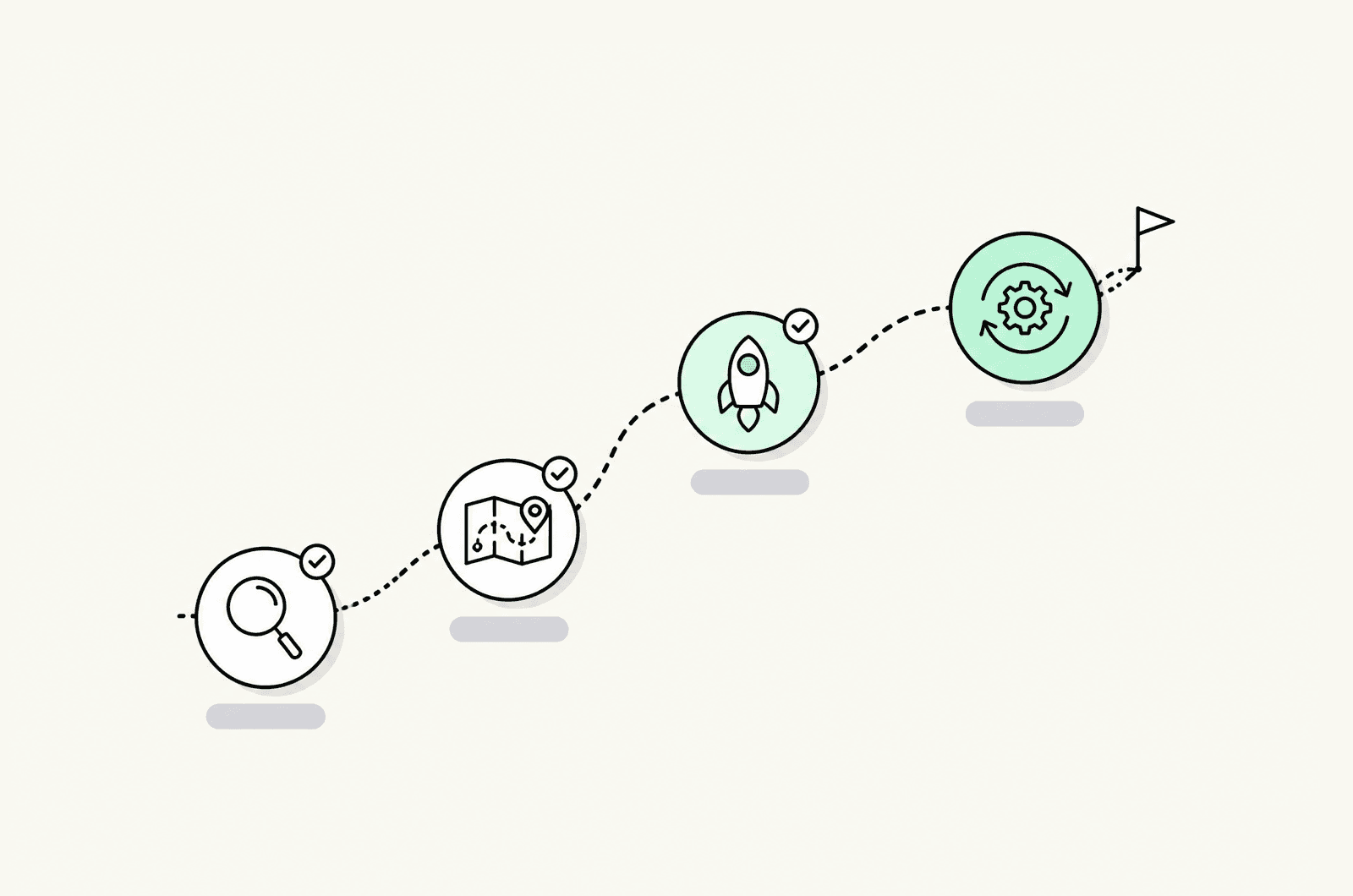
From audit to rankings in 90 days
- Step 01
Days 1–30: audit, access & quick fixes
Collaborator access (never your owner login) and a duplicate theme for every change. Full crawl, theme code review, app audit, Search Console and Merchant Center baseline, and a written 12-month strategy with a non-branded organic revenue forecast. Duplicate-URL and canonical fixes ship in month one.
- Step 02
Days 31–60: technical foundation & schema
Core Web Vitals at theme level, Product, Offer and Review schema, internal linking architecture, faceted navigation control, and Merchant Center feed fixes. Every Liquid change is logged so your developers know what changed and why.
- Step 03
Days 61–90: collections & content
Collection page rewrites for your top commercial categories, the first buyer's guides and comparison pages, and AI search formatting. The 90-day review shows non-branded clicks, revenue and rankings against the baseline.
- Step 04
Month 4 onward: authority & compounding
Digital PR, link building, brand entity work, and content refreshes. Months 4 to 12 are about compounding authority and expanding into adjacent commercial keyword markets.
Four ways to do Shopify SEO, compared honestly
Most Shopify stores weigh the same four options. Here is what each one actually covers.
Typical cost
- Freelancer
- $1K–$4K/mo
- In-house SEO hire
- $90K–$140K/yr + tools
- SEO apps only
- $0–$50/mo
- Conversion
- From $3K/mo
Theme-level Liquid fixes (duplicates, speed)
- Freelancer
- Sometimes
- In-house SEO hire
- Needs a developer
- SEO apps only
- No
- Conversion
- Yes
Collection page + content programme
- Freelancer
- Varies
- In-house SEO hire
- Yes
- SEO apps only
- No
- Conversion
- Yes
Digital PR + link building
- Freelancer
- Rarely
- In-house SEO hire
- Rarely
- SEO apps only
- No
- Conversion
- Yes
Google Shopping + Merchant Center feed
- Freelancer
- Rarely
- In-house SEO hire
- Varies
- SEO apps only
- Partial
- Conversion
- Yes
AI search + AI shopping visibility
- Freelancer
- Rarely
- In-house SEO hire
- Varies
- SEO apps only
- Partial
- Conversion
- Yes
Shopify Plus, Markets + B2B indexation
- Freelancer
- No
- In-house SEO hire
- Varies
- SEO apps only
- No
- Conversion
- Yes
Reported on non-branded organic revenue
- Freelancer
- Rarely
- In-house SEO hire
- Yes
- SEO apps only
- No
- Conversion
- Yes
Contract
- Freelancer
- Per project
- In-house SEO hire
- Employment
- SEO apps only
- Monthly
- Conversion
- Month-to-month after 90 days
We're a Shopify SEO specialist. Not a generalist SEO agency.
Shopify and Shopify Plus only
We don't run SEO for WordPress, Magento, or custom stacks. Shopify-only specialization means we know every Liquid trick, every collection-page quirk, every Plus-only opportunity, cold.
Pay on results, for organic revenue
We earn fees as organic revenue grows. No flat retainer, no upfront content fees, no link-building markup. Skin in the game on the metric you actually care about.
Technical + content + links + GEO under one roof
Most SEO agencies are content shops or link shops. We're a full-stack technical + content + link + GEO team, because all four matter, and they have to work in concert.
Theme-level technical fixes
Most Shopify SEO agencies install apps. We edit Liquid, optimize render-blocking JavaScript, and fix theme-level Core Web Vitals issues. That's where the real performance lift lives.
GEO + AI search ready
Generative Engine Optimization for Google AI Overviews, ChatGPT, Perplexity, and Bing Copilot. We track AI mentions, optimize for passage-level extraction, and build brand entity authority for AI search.
Transparent, tied to revenue
We report organic revenue, organic conversion rate, and category-level ranking lifts, not vanity DR or impressions. Weekly Slack updates and monthly executive reports.
The technical issues generalists never find
Every one of these is a real Shopify-specific failure mode we've fixed on live stores. If your current agency can't name them, they aren't a Shopify SEO specialist.
Crawl & index control
Faceted navigation URL explosionFilter + sort parameter crawlingInternal site search indexation/collections/all duplicationAuto-generated tag collectionsrobots.txt.liquid rulesCrawl budget wasteSoft 404 handlingsitemap.xml limitsNoindex vs disallow policyDuplicate content
Collection-path product URLs?variant= parameter URLsPagination + infinite scrollCross-storefront catalog duplicationNear-duplicate collection copyCanonical tags Google ignoresVendor + type auto-collectionsRedirect chains from legacy URLsRendering & performance
JavaScript-rendered contentRender parity (HTML vs DOM)Pre-rendering + SSR gapsApp bloat + render-blocking JSLCP, INP, CLS at theme levelUnoptimized Liquid loopsLazy loading done wrongThird-party script budgetStructure & data
Metafield-driven schema graphDuplicate JSON-LD instancesCollectionPage + ItemList schemaAggregateRating implementationSEO-friendly URL constraintsInternal linking architectureBreadcrumb hierarchy301 redirect mapping
Shopify SEO questions
What does a Shopify SEO agency do?
How much does Shopify SEO cost?
Is Shopify good for SEO, and how does it compare with WooCommerce or BigCommerce?
How long does Shopify SEO take to work?
What are the best Shopify SEO apps, and can I DIY Shopify SEO?
Is Shopify Plus worth it for SEO?
How do Shopify Markets and expansion stores affect international SEO?
How do I fix duplicate content and faceted navigation on Shopify collection pages?
How do I migrate to Shopify or Shopify Plus without losing organic rankings?
Do you optimize for AI search and AI Overviews (GEO)?
What's the best Shopify SEO agency in 2026?
Do I need Shopify Plus to get good SEO results?
Is Shopify SEO worth it for a small store?
Should I hire a Shopify SEO agency, a freelancer, or do it in-house?
What should a Shopify SEO contract include?
Can you do SEO on a Shopify store you didn't build?
How do you measure and report Shopify SEO results?
What is the most common Shopify SEO problem?
Is Shopify or WordPress better for SEO?
Do you optimize for Google Shopping and ChatGPT Shopping?
Can I switch SEO agencies without losing rankings?
Do you offer a free Shopify SEO audit?
Pair Shopify SEO with the rest of your growth stack
SEO compounds fastest alongside a fast store, a Plus-ready foundation, and a CRO program that turns the extra traffic into revenue.
Best Shopify SEO Agencies (2026)
Shortlisting agencies? A side-by-side of Shopify SEO agencies on price, contract terms and technical depth, plus the red flags to avoid.ExploreBest Shopify SEO Apps
Which SEO apps are worth installing, what they cost, and where apps stop and theme-level work has to take over.ExploreShopify Development Agency
Theme-level fixes need developers, and a fast, crawlable theme gives the SEO work a foundation to rank on.ExploreShopify CRO Agency
Research-driven A/B testing and PDP optimization convert the extra organic traffic SEO sends you.ExploreShopify Plus SEO Agency
Expansion stores, Markets, and B2B catalogs that share one catalog need their own indexation rules.ExploreShopify Plus Agency
Multi-store expansion changes URL and hreflang structure, so the build and the SEO plan should be decided together.ExploreShopify Marketing Agency
Paid social, paid search, and email layered on top of organic give you full-funnel growth while rankings mature.ExploreGrowth Marketing Agency
Paid acquisition and retention run alongside organic, so growth does not wait on rankings.Explore
Get your Shopify store ranking + converting
Book a free 30-minute Shopify SEO strategy call. We'll review your store, audit your technical and on-page setup, and forecast the organic revenue you're leaving on the table.
What happens next
- 1Pick a time for a free 30-minute Shopify SEO strategy call.
- 2We review your store and audit your technical and on-page setup.
- 3You leave with a prioritized punch list and a forecasted organic revenue target, whether or not you work with us.
Prefer email? tarun@conversion.is