Shopify App Development Agency
Shopify app development by a team that ships its own apps
Custom Shopify apps, public App Store apps, Shopify Functions, and checkout UI extensions, built by the engineers behind CartDrawer. We've been through Shopify's review process as a vendor as well as a contractor.
- Custom apps, public App Store apps, and integrations
- Shopify Functions + checkout UI extensions (Plus)
- Fixed-scope quotes and post-launch maintenance
Trusted by 50+ D2C brands · Google, Meta & Shopify partners












We build apps the way we build our own product
CartDrawer
Our own Shopify app
Functions + Checkout UI
Plus-native primitives
Fixed-scope quotes
No open-ended hours
San Francisco, USA
In-house engineers
Conversion is a Shopify app development agency headquartered in San Francisco. Alongside client work, we build and operate CartDrawer, our own Shopify app for cart and checkout conversion. The App Store review process, billing API, API version deprecations, merchant onboarding, and support load are things we run every week, and client apps get built with the same discipline. App work often sits inside a wider build from our Shopify development services or our Shopify Plus development team.
Most Shopify app work falls into three shapes: integrations (ERP, PIM, 3PL, CRM, subscriptions) such as the ERP sync behind B2B on Shopify Plus, merchant-specific workflow automation, and customer-facing functionality via Functions, theme app extensions, and the checkout UI extensions we use for Shopify checkout optimization. Storefront API work extends to Hydrogen and headless storefronts. We scope each to a fixed quote, build on Shopify's supported primitives rather than deprecated script injection, and hand over documented code your team can own.
Three ways custom apps become liabilities
We inherit a lot of half-built Shopify apps. The failure patterns are consistent.
Built on deprecated primitives
Script tags, checkout.liquid customizations, and legacy REST endpoints that Shopify has already announced end-of-life for. The app works until the deprecation date, then breaks in production. We build on Functions, checkout UI extensions, and the GraphQL Admin API, the supported path forward.
Demo integrations that never reach production grade
The ERP sync works in the demo with ten orders. Then Black Friday sends ten thousand, the webhook queue backs up, rate limits hit, and orders duplicate or vanish. We engineer for idempotency, retry, backpressure, and observability from the first commit.
No one to call when the API version changes
Shopify deprecates API versions quarterly. The freelancer who built the app has moved on, and nobody knows which calls will break. Every app we ship comes with documentation, monitoring, and a maintenance option so it keeps working as the platform evolves.
Every kind of Shopify app, built to last
Custom, public, and integration apps for Shopify and Shopify Plus, on the platform's supported primitives.
Custom Shopify App Development
Merchant-specific apps for workflows Shopify doesn't handle natively: custom order processing, fulfillment logic, reporting, internal tooling, and embedded admin UIs built with Polaris and App Bridge.
- Embedded Polaris admin UIs
- Custom workflow automation
- Merchant-specific business logic
- Multi-store support
Public App Store Development
Apps built to serve many merchants and pass Shopify's review: billing API, onboarding flows, GDPR webhooks, performance requirements, and the support tooling that keeps a listing healthy. We run our own, CartDrawer.
- App Store review compliance
- Billing API + plans
- Onboarding + GDPR webhooks
- Listing + support operations
Shopify Functions
Server-side customization of discounts, shipping rates, payment methods, cart and checkout validation, and order routing, running inside Shopify's infrastructure with no script injection.
- Discount + bundle Functions
- Shipping + delivery customization
- Payment method rules
- Cart + checkout validation
Checkout UI Extensions (Plus)
Custom fields, trust content, upsells, delivery instructions, and post-purchase offers rendered inside the native Shopify Plus checkout via checkout extensibility, the supported successor to checkout.liquid.
- Checkout UI extensions
- Post-purchase extensions
- Branding API
- Checkout.liquid migration
ERP, PIM, 3PL & CRM Integrations
Bidirectional sync with NetSuite, SAP, Dynamics, PIMs, warehouse systems, subscription platforms, loyalty tools, and CRMs, engineered for webhook reliability, rate limits, idempotency, and error recovery.
- ERP + accounting sync
- Warehouse + 3PL integration
- PIM + catalog sync
- Subscription + loyalty hooks
Storefront API & Headless Apps
Custom storefront functionality via the Storefront API: configurators, quote builders, B2B portals, and Hydrogen or Next.js components that need data Shopify's theme layer can't reach.
- Storefront API integrations
- Product configurators
- B2B + quote portals
- Hydrogen / Next.js components
Theme App Extensions
App-driven storefront features delivered as theme app extensions: installable blocks merchants place in the theme editor without touching Liquid, and that survive theme updates.
- App blocks + embeds
- Theme-editor configurable
- Update-safe delivery
- Performance-budgeted assets
App Maintenance & API Upgrades
Quarterly API version upgrades, dependency updates, monitoring and alerting, bug fixes, and small feature work on a retainer, so the app you launched keeps working as Shopify changes.
- API version upgrades
- Monitoring + alerting
- Bug fixes + small features
- Documentation upkeep
What you get on the first call
A free 30-minute scoping call about the Shopify workflow you want an app for.
A read on what it actually needs
We'll tell you whether the workflow needs a custom app, a Function, a checkout extension, or an existing tool. If an existing app already solves it, we say so.
A written scope
Which Shopify primitives the build needs, what data flows where, and the edge cases to plan for.
A fixed quote within 48 hours
If it's a build, you get a fixed price after discovery, with no open-ended hourly billing.
Scoped, built, reviewed, maintained
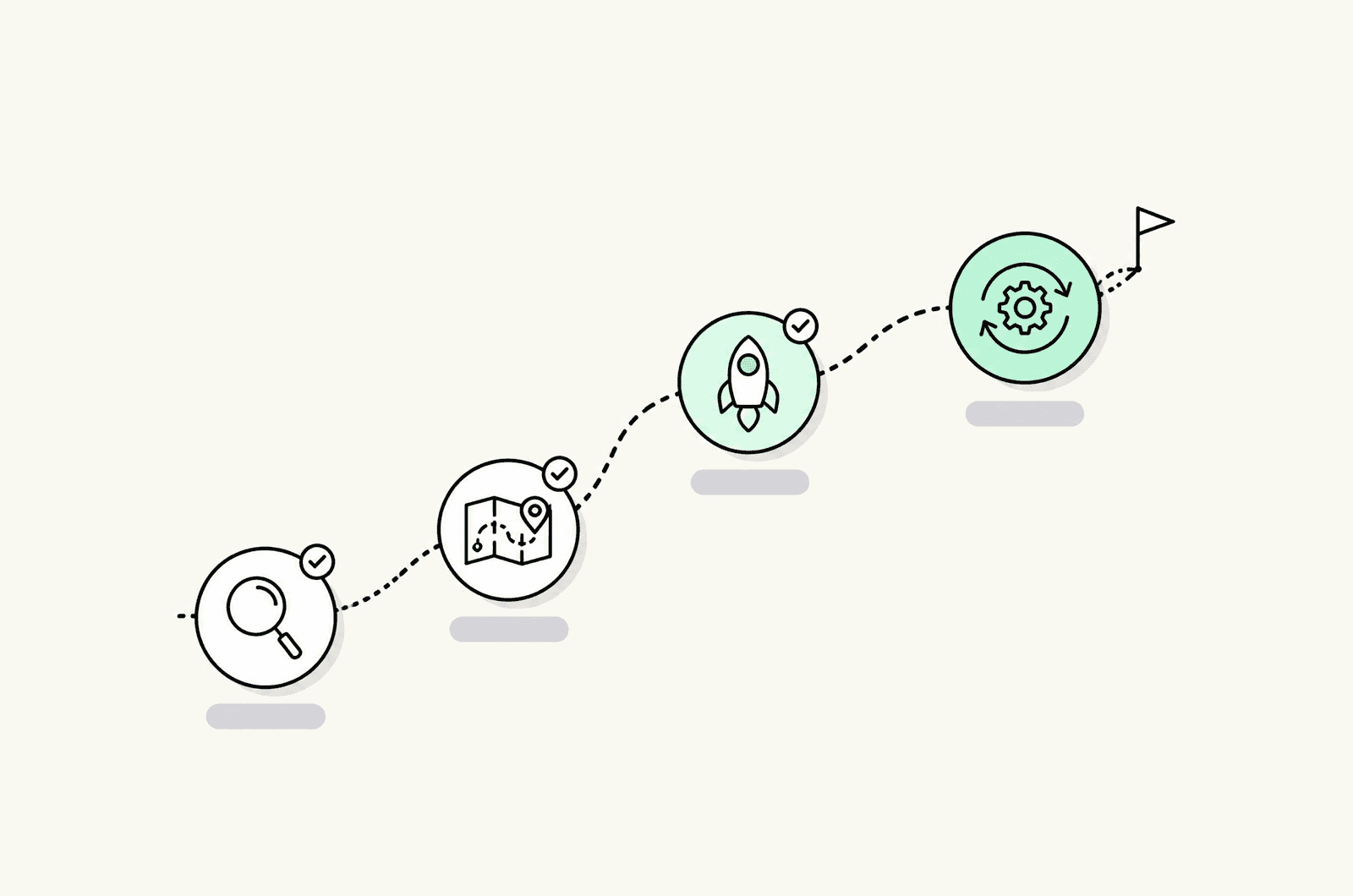
- Step 01
Discovery & scoping
A 30-minute call to understand the workflow, then a written scope: which Shopify primitives it needs, what data flows where, edge cases, and a fixed quote. If an existing app already solves it, we say so.
- Step 02
Architecture & build
Data model, API design, and Function or extension architecture agreed before code. Built on the Remix app template with Polaris, typed end-to-end, with webhook processing and error handling designed for production volume.
- Step 03
QA, review & launch
Tested against a development store and a staging copy of your production data. For public apps, we prepare the listing and take it through Shopify's review. We monitor the launch once the app is live.
- Step 04
Maintain & extend
Documentation and handover, then an optional maintenance retainer covering API upgrades, monitoring, and feature work. The app keeps working as Shopify's platform moves.
App developers who also operate an app
We run our own Shopify app
CartDrawer is our product. App Store review, billing, API deprecations, merchant support: we deal with all of it as a vendor, which is why client apps get built for the long run.
Supported primitives only
Functions, checkout UI extensions, theme app extensions, and the GraphQL Admin API. No script tags, no checkout.liquid, no REST endpoints Shopify has scheduled for removal.
Production-grade integrations
Idempotent webhook processing, queue-backed sync, rate-limit handling, and observability from the first commit. That is the difference between a demo integration and one that survives peak season.
Fixed-scope quotes
A written scope and a fixed price after discovery. No open-ended hourly billing on a project whose end you can't see.
Conversion-minded by default
Because we also run CRO and Shopify development, customer-facing app features are built with conversion and performance budgets in mind as well as functionality.
Documented handover
Every app ships with architecture docs, environment setup, and runbooks. Your team can own it, or we can maintain it. Either way, nothing lives only in one developer's head.
Built on Shopify's supported primitives
We build on what Shopify is investing in and avoid what it has announced end-of-life for.
Shopify platform
GraphQL Admin APIStorefront APIShopify FunctionsCheckout UI ExtensionsTheme App ExtensionsWebhooks + Bulk OperationsApp framework
Shopify CLI + Remix app templatePolaris + App BridgeNode.js / TypeScriptPrisma + PostgresSession token authOperations
Billing API + subscriptionsGDPR mandatory webhooksQueue-backed webhook processingObservability + alertingApp Store review readiness
Shopify app development questions
What does a Shopify app development agency do?
What is the difference between a custom app and a public app?
How much does Shopify app development cost?
Do you build Shopify Functions and checkout UI extensions?
Can you integrate Shopify with our ERP, PIM, 3PL, or CRM?
Do you maintain apps after launch?
Why hire an agency instead of a freelance Shopify app developer?
Apps are one part of a Shopify build
CartDrawer
Our own Shopify app for cart and checkout conversion, and the product that taught us App Store operations first-hand.ExploreShopify Checkout Optimization
Checkout UI extensions and Functions do the most for revenue when they are applied to the checkout itself.ExploreShopify Development Services
Custom theme development, Plus builds, and replatforming shape the store your app runs in.ExploreB2B Ecommerce Agency
Wholesale portals, price lists, and ERP sync are the integrations B2B on Shopify Plus depends on.ExploreShopify Mobile App vs PWA
Native app, PWA or mobile site: costs, features and when each is worth building.Explore

Scope your Shopify app in one call
Book a free 30-minute scoping call. We'll tell you whether it needs a custom app, a Function, a checkout extension, or something off the shelf.
What happens next
- 1Pick a time for a 30-minute scoping call.
- 2Bring the workflow you want to build and the systems it touches, such as your ERP, PIM, 3PL, or CRM.
- 3Get a fixed quote within 48 hours if it's a build.
Prefer email? tarun@conversion.is