Social Commerce for Shopify: TikTok Shop, Instagram, YouTube & the Shop App (2026)

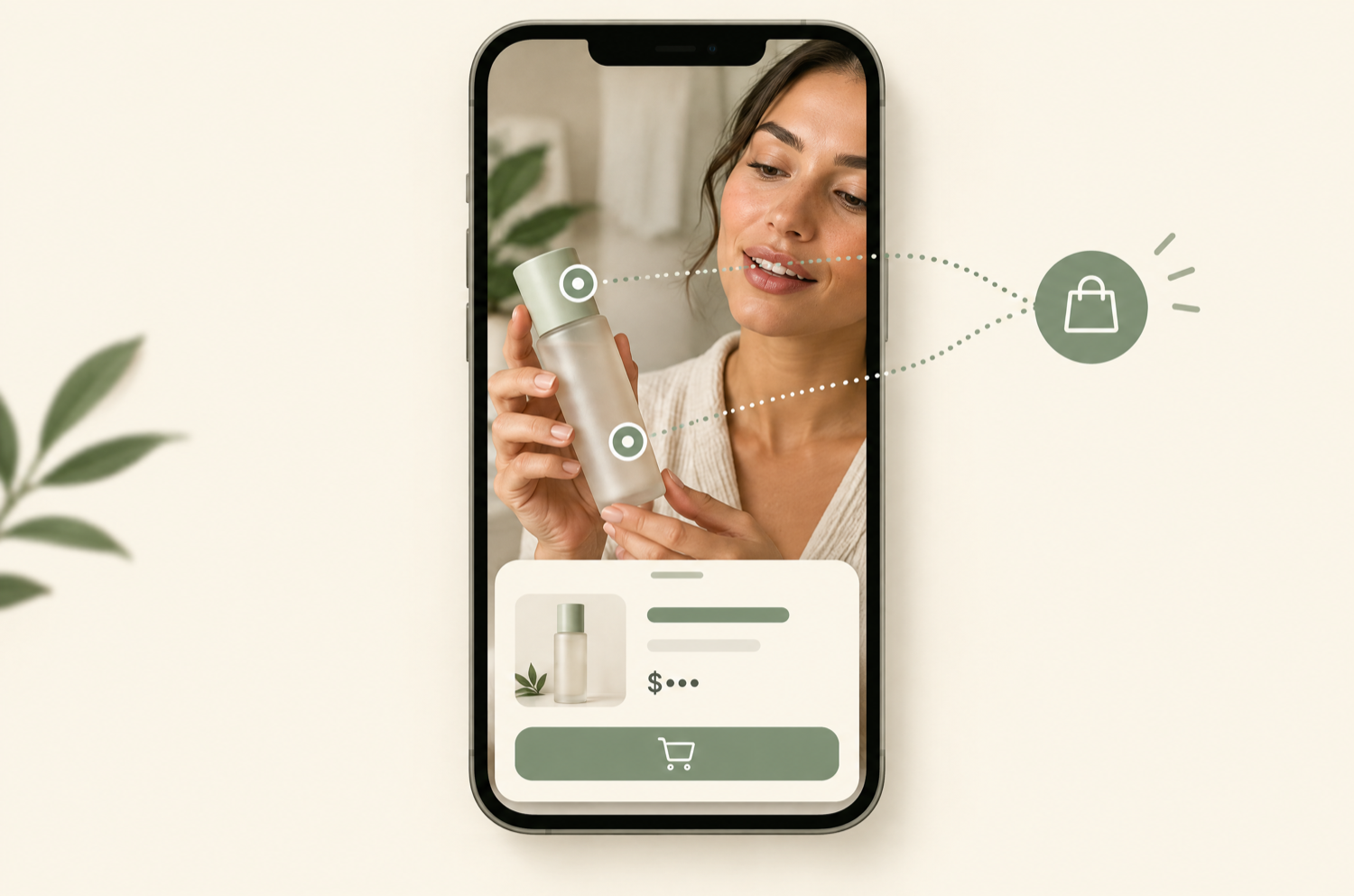
Social commerce is selling products directly inside social platforms, so people can discover, check out, and often buy an item without leaving TikTok, Instagram, Facebook, YouTube, or Pinterest. For a Shopify brand it has two halves: organic shopping surfaces (TikTok Shop, Instagram and Facebook product tags, YouTube Shopping, the Shop app) and paid shoppable ads that put your catalog in front of people who have never heard of you. This guide covers both, platform by platform, and shows how to connect each one to Shopify.
Social commerce in one line
Your Shopify catalog becomes the product source for every social platform: products sync out, orders and data sync back, and Shopify stays the single source of truth for stock and pricing.
What is social commerce?
Social commerce covers any purchase that starts, and ideally finishes, inside a social app. It is not the same as social media marketing. Marketing sends people to your website; social commerce puts the product, the price, and the buy button where the attention already is.
- Discovery. A creator video, a Reel, a Pin, or an ad shows the product in use.
- Product tags. The post or video is linked to the product in your catalog, with live price and variants.
- Checkout. Either native (the buyer pays inside the app, as on TikTok Shop) or a handoff to your Shopify checkout.
- Fulfilment and data. Orders land in Shopify, inventory stays in sync, and pixel or API events report back to the platform so ads can optimise.
The idea that ties it together is shoppable content: posts, images, and videos you can buy from directly. If you want the on-site version, where videos on your own product pages are shoppable, read what is shoppable video. This guide is about taking shoppable beyond your own site.
Social commerce vs ecommerce vs social media marketing
| Ecommerce (your store) | Social media marketing | Social commerce | |
|---|---|---|---|
| Where the sale happens | Your Shopify site | Your Shopify site | Inside the app, or a one-tap handoff |
| Job of the post | n/a | Drive a click | Drive the purchase |
| Steps to buy | Browse, product page, cart, checkout | Scroll, click, land, browse, checkout | Tap the tag, choose variant, pay |
| Who owns the customer | You | You | Shared with the platform (varies) |
| Main risk | Traffic cost | Drop-off between app and site | Platform fees and rule changes |
Social commerce platforms for Shopify
Every major platform now connects to Shopify through an official sales channel app. They differ mainly in whether checkout happens natively or on your store, and how much of the customer relationship you keep. Features and eligibility change often and vary by country, so check each platform's current seller rules before you plan around them.
TikTok Shop
TikTok Shop is the most complete social commerce setup today: an in-app storefront, shoppable videos and LIVE, native checkout, and an affiliate program where creators tag your products and earn commission. Shopify stores connect through the TikTok app for Shopify, which syncs products, inventory, and orders.
- Best for: impulse-friendly, demonstrable products; brands willing to work with creators.
- Checkout: native, inside TikTok (in supported markets).
- Watch out for: referral fees, strict product and shipping-time rules, and the fact that TikTok, not you, owns much of the buyer relationship.
We cover setup step by step below in how to connect TikTok Shop to Shopify.
Instagram and Facebook Shopping
Through Meta's Facebook & Instagram app for Shopify, your catalog syncs to Meta Commerce Manager. You can then tag products in posts, Reels, and Stories, and run catalog-based shoppable ads. In many markets Meta has moved away from native in-app checkout and now sends shoppers to your website checkout, which keeps the order and the customer data in Shopify.
- Best for: visual brands (fashion, beauty, home) with strong creative and an existing audience.
- Checkout: mostly a handoff to your Shopify checkout.
- The real value: the synced catalog powers Advantage+ catalog ads, the highest-leverage shoppable ad format for most Shopify brands.
YouTube Shopping
With the Google & YouTube app for Shopify, eligible channels can tag products in videos, Shorts, and livestreams and show a product shelf under videos. Your products also feed Google Merchant Center, which powers Shopping ads and YouTube product ads. Creators in the YouTube Shopping affiliate program can tag products from participating brands.
Pinterest users arrive planning purchases, which makes it strong for home, fashion, weddings, and gifting. The Pinterest app for Shopify syncs your catalog into product Pins that show price and availability and link to your store, and the same catalog runs Pinterest shopping ads.
The Shop app
Shop is Shopify's own shopping app. It is not a social network, but it behaves like one for commerce: shoppers follow brands, track orders, and browse a personalised feed, and Shop Pay makes checkout fast. Every Shopify store can have a Shop store with little setup, and Shop Campaigns let you pay for new customers acquired through the app. It is also the one channel where you keep the full customer relationship in Shopify.
| Platform | Shopify connection | Checkout | Best for |
|---|---|---|---|
| TikTok Shop | TikTok app for Shopify | Native in-app | Demo-driven products, creator affiliates |
| Instagram / Facebook | Facebook & Instagram app | Mostly handoff to Shopify | Visual brands, catalog ads |
| YouTube | Google & YouTube app | Handoff to Shopify | Tutorials, reviews, higher-consideration items |
| Pinterest app | Handoff to Shopify | Home, fashion, gifting, planned purchases | |
| Shop app | Built into Shopify | Shop Pay | Repeat buyers, order tracking, retention |
Not sure which social channel to start with?
Book a free 20-minute call. We'll look at your catalog, margins, and creative and tell you which platform to launch first.
Book a free strategy callShoppable ads: formats, platforms and examples
Shoppable ads are paid ads that pull products straight from your catalog, showing the item, price, and a direct path to buy. Organic social commerce only reaches people who already follow you or get lucky with the algorithm. Shoppable ads are how you scale it, and for most Shopify brands they drive the bulk of social revenue.
For a deeper dive with setup steps and measurement, read our full guide to shoppable ads: formats, platforms and examples.
| Platform | Shoppable ad formats | Typical use |
|---|---|---|
| Meta (Facebook, Instagram) | Advantage+ catalog ads (formerly dynamic product ads), Collection ads, carousel with catalog, Advantage+ shopping campaigns | Retargeting viewers and cart abandoners; prospecting with the whole catalog |
| TikTok | Video Shopping Ads, catalog ads, GMV Max for TikTok Shop, Spark Ads on creator posts | Pushing creator videos and LIVE to buyers; scaling TikTok Shop sales |
| Google & YouTube | Shopping ads, Performance Max, product feeds on YouTube and Demand Gen | Capturing search intent; adding product cards to video |
| Shopping ads, collections ads | Reaching planners early in the purchase | |
| Snapchat | Dynamic product ads, collection ads | Younger audiences, retargeting |
Shoppable ad examples
- Catalog retargeting: someone viewed a jacket on your store; the next day they see that jacket, in their size range, in an Instagram carousel with the price.
- Creator Spark Ad: a creator's unboxing video, boosted from their account, with a product card that opens your TikTok Shop listing.
- Collection ad: a lifestyle video on top and four products underneath; tapping opens a fast-loading instant experience.
- Shopping ad on YouTube: a product feed below a tutorial video, pulling live prices from Merchant Center.
What makes shoppable ads work
- A clean catalog. Accurate titles, variants, prices, and high-quality images. A broken feed breaks every catalog ad.
- Server-side tracking. Meta Conversions API and TikTok Events API (both set up through the Shopify apps) recover events that browser pixels miss.
- Video-first creative. Catalog ads with UGC or product-in-use video on top usually beat plain product images. See our guide to UGC video.
- Profit-based targets. Set ROAS goals from your margins, not guesswork. Our break-even ROAS guide shows how.
We run shoppable catalog campaigns as part of our Meta ads agency service, and TikTok Shop, Pinterest, and Snapchat campaigns through our social ads agency.
How to connect TikTok Shop to Shopify
The exact screens change often, but the flow is the same in every supported market:
- Check eligibility. Confirm TikTok Shop is open to sellers in your country and that your products are allowed. Restricted categories need extra approval.
- Install the TikTok app for Shopify. Add it from the Shopify App Store and connect (or create) a TikTok For Business account.
- Create your TikTok Shop seller account. Verify your business details, bank account, and warehouse or return address.
- Sync your products. Choose which products to publish. Fix any rejections, which are usually image, title, or category issues.
- Set shipping and fulfilment. Orders flow into Shopify; make sure your shipping times meet TikTok's rules.
- Turn on the pixel and Events API. This powers TikTok ads optimisation and measurement.
- Get content selling. Tag products in your own videos, go LIVE, and open an affiliate plan so creators can promote your products for commission.
Mind your margins
TikTok Shop charges a referral fee on each order, and affiliate commissions sit on top. Price your TikTok Shop listings, or choose which products to list, with both costs in mind.
Social commerce strategy for Shopify brands
- Start where your buyers already are. One well-run channel beats five neglected ones. Most brands start with Meta catalog ads, then add TikTok Shop if their products demo well on video.
- Keep Shopify as the source of truth. Manage products, prices, and inventory in Shopify only, and let the sales channel apps sync everywhere else.
- Make content shoppable by default. Every product video you make for social can also sell on your product pages. Our roundup of shoppable video apps for Shopify covers the tools.
- Treat creators as a channel. Affiliate creators on TikTok Shop and YouTube Shopping are a sales team paid on results. See how to get UGC videos without paying influencers.
- Win the customer back to your store. Use inserts, the Shop app, and email or SMS to turn a one-off social buyer into a repeat customer you own.
- Measure blended, not just in-platform. Platforms credit themselves generously. Judge channels on total revenue, new customers, and contribution margin.
Is social commerce worth it?
For products that are visual, easy to demonstrate, and priced for a quick decision, yes: social is where discovery already happens, and removing steps between seeing and buying lifts conversion. For higher-priced or complex products, social works better as the first touch, with shoppable ads retargeting people and your own site closing the sale. Either way, the only reliable answer for your store comes from testing a channel with a clear budget and a profit target.
Turn social into a sales channel
We set up TikTok Shop, Meta catalog ads, and shoppable creative for Shopify brands, and measure it all against profit.
Talk to our social ads teamFrequently asked questions
What is social commerce?
Social commerce is buying and selling products directly inside social media platforms such as TikTok, Instagram, Facebook, YouTube, and Pinterest. Products are tagged in posts, videos, and ads, and shoppers can check out in the app or through a one-tap handoff to the brand's store.
What are shoppable ads?
Shoppable ads are paid ads that pull products from your catalog and show the item, its price, and a direct path to buy. Examples include Meta Advantage+ catalog ads and Collection ads, TikTok Video Shopping Ads and GMV Max, Google Shopping ads, and Pinterest shopping ads.
How do I connect TikTok Shop to Shopify?
Install the TikTok app from the Shopify App Store, connect a TikTok For Business account, create and verify a TikTok Shop seller account, sync your products, set shipping, and turn on the TikTok pixel and Events API. Availability and rules vary by country, so check TikTok Shop's current seller requirements.
Can you sell on Instagram with Shopify?
Yes. The Facebook & Instagram app for Shopify syncs your catalog to Meta so you can tag products in posts, Reels, and Stories and run catalog ads. In many markets shoppers complete checkout on your Shopify store rather than inside Instagram.
What is the difference between social commerce and ecommerce?
Ecommerce is selling online in general, usually on your own website. Social commerce is a type of ecommerce where discovery and often the purchase happen inside a social platform instead of on your store.
What is shoppable content?
Shoppable content is any post, image, or video with product tags that let people buy the item directly. Shoppable posts and videos appear on social platforms, and shoppable video can also run on your own product pages.
Is the Shop app social commerce?
Partly. Shop is Shopify's shopping app rather than a social network, but it offers a personalised feed, brand following, and fast Shop Pay checkout. Unlike other social channels, the customer relationship stays in Shopify.
Which social commerce platform is best for Shopify?
It depends on your product and audience. Meta catalog ads suit most Shopify brands; TikTok Shop suits products that demo well on video and sell on impulse; Pinterest suits home, fashion, and gifting; YouTube suits higher-consideration products that need explanation.