Ecommerce Google Ads
The Google Ads agency for ecommerce and D2C brands that bid on margin
Google Shopping, Performance Max and Search managed by ecommerce Google Ads specialists. We rebuild the feed, fix the tracking, and set every target from your gross margin.
- Google Shopping, Performance Max and Search run against your gross margin
- Product feed, Merchant Center and conversion tracking fixed before bids
- Flat monthly fee, and every account stays in your business's name

Trusted by 50+ D2C brands · Google, Meta & Shopify partners










Ecommerce Google Ads runs on product data
Google Ads for an ecommerce or D2C brand is mostly a product-data problem. Shopping and Performance Max decide which queries you show for from the feed, and Smart Bidding decides what to pay from your conversion data. If titles are vague, GTINs are missing or the purchase tag double-counts, a target ROAS (tROAS) strategy will bid confidently on the wrong things. A Google Ads agency for ecommerce should work on the feed, Merchant Center, tracking and the account together. If you sell on Shopify, our Shopify PPC agency page covers the platform-specific setup.
We plan everything from contribution margin, not a blended ROAS target. Your break-even ROAS sets the floor for each margin band, and custom labels in the feed let Shopping and PMax bid differently on high-margin hero products and low-margin traffic drivers. Paid search then runs alongside Meta ads for demand creation and landing page testing for what happens after the click.
Why Google Ads stops scaling for online stores
These come up in almost every ecommerce account we audit. Most cost less to fix than the budget increase usually proposed instead.
Performance Max reporting revenue you already had
Without brand exclusions and a separate brand campaign, PMax spends heavily on branded queries and remarketing. Blended ROAS looks excellent while new-customer revenue stays flat.
A feed that was never written for search
Titles copied from the product page, no product type taxonomy, missing GTIN and MPN, and no custom labels. Google matches Shopping ads on feed content, so this caps every campaign that uses it.
Smart Bidding fed the wrong signal
Purchases counted twice across GA4 imports and the Google Ads tag, enhanced conversions off, and Consent Mode misconfigured for EU and UK traffic. Automated bidding optimises toward whatever you report.
One ROAS target across every product
A 30%-margin accessory and a 70%-margin hero product held to the same tROAS. One is unprofitable at that target, and the other is starved of budget it could use.
Merchant Center warnings left until suspension
Price and availability mismatches, missing return policies and misrepresentation flags pile up until products are disapproved or the account is suspended in peak season.
Nobody watching search terms
Broad match and PMax search themes with no negative keyword list or brand exclusions keep paying for informational, competitor and job-seeker queries that will never buy.
Google Ads management for ecommerce: what we run
Shopping, PMax, Search and the inputs they depend on, managed as one system.
Google Shopping management
Standard Shopping campaigns segmented by margin, category and best-sellers, with query-level control PMax doesn't give you. Priority settings and negatives route high-intent queries to the right products.
Performance Max for ecommerce
Asset groups split by category and margin, audience signals from first-party customer lists, brand exclusions, listing-group control, and the new customer acquisition goal where lifetime value supports it.
Google Search campaigns
Non-brand category and product searches, competitor terms where they pay, and a separate brand campaign so branded demand is measured on its own.
Product feed optimisation
Titles rebuilt around searched attributes, Google product category and product type, GTIN and MPN coverage, supplemental feeds and feed rules, custom labels for margin, and per-country feeds.
Merchant Center management
Setup and diagnostics, shipping and returns, free listings, price-competitiveness reports, and suspension and misrepresentation appeals with the evidence Google asks for.
Conversion tracking and Smart Bidding
One purchase definition, enhanced conversions, server-side tagging through GTM where it helps, Consent Mode v2, and value-based bidding (tROAS and Maximise Conversion Value) on clean data.
YouTube, Demand Gen and remarketing
Video and Demand Gen to create demand, plus dynamic remarketing built from the feed. Measured separately so prospecting isn't judged on last-click ROAS.
Microsoft Advertising
Shopping and Search imported from Google and then managed in their own right, with separate negatives and bids. Often cheaper clicks for older and desktop-heavy audiences.
Incrementality and reporting
Brand and non-brand reported separately, contribution margin alongside ROAS, and geo holdout tests once spend justifies them. You see what Google Ads added, not just what it claimed.
What a margin-led Google Ads account looks like
Illustrative example scenarios showing how we structure Shopping, PMax and Search accounts. The dashboards are mock-ups, not client data.
 Fashion & apparelShopping + PMax
3.9x
ROAS over 90 days
Margin-split Shopping for a high-SKU apparel catalog
Feed titles rebuilt around size, colour and fabric, custom labels by margin, and brand split out of PMax. Hero SKUs got their own Shopping campaign at a lower tROAS so they could win more auctions.
 Beauty & skincarePMax
3.6x
ROAS over 90 days
Fixing double-counted purchases before scaling PMax
Three purchase actions were all set as primary. We consolidated them, added enhanced conversions, and moved PMax to a new-customer goal. Ingredient-led search campaigns ran alongside it.
 Home & furnitureShopping
3.4x
ROAS over 90 days
High-AOV furniture bid on margin after delivery
Custom labels reflected margin after shipping, not list price. Demand Gen remarketing covered the long research window, and non-brand category search was rebuilt around room and style terms.
How we run Search, Shopping and Performance Max
Search campaigns, feed-led Shopping and PMax, Smart Bidding set from margin, and pixel tracking you can trust.
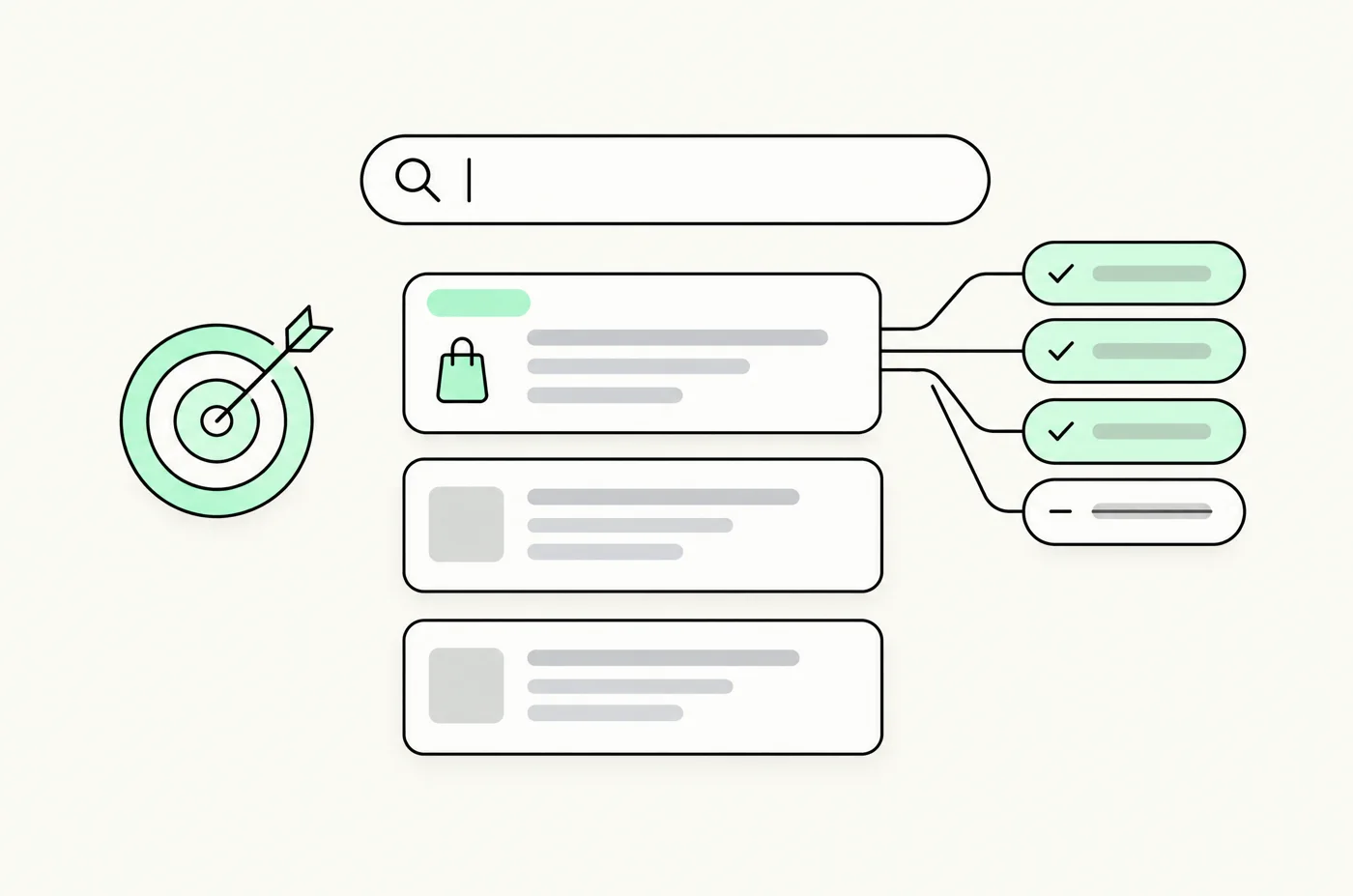
Search ads
Non-brand category and product searches, kept on buying intent with match types and negative keyword lists.
RSAsExact & phraseBroad matchNegative keywordsBrand vs non-brandCompetitor termsSitelinks & assets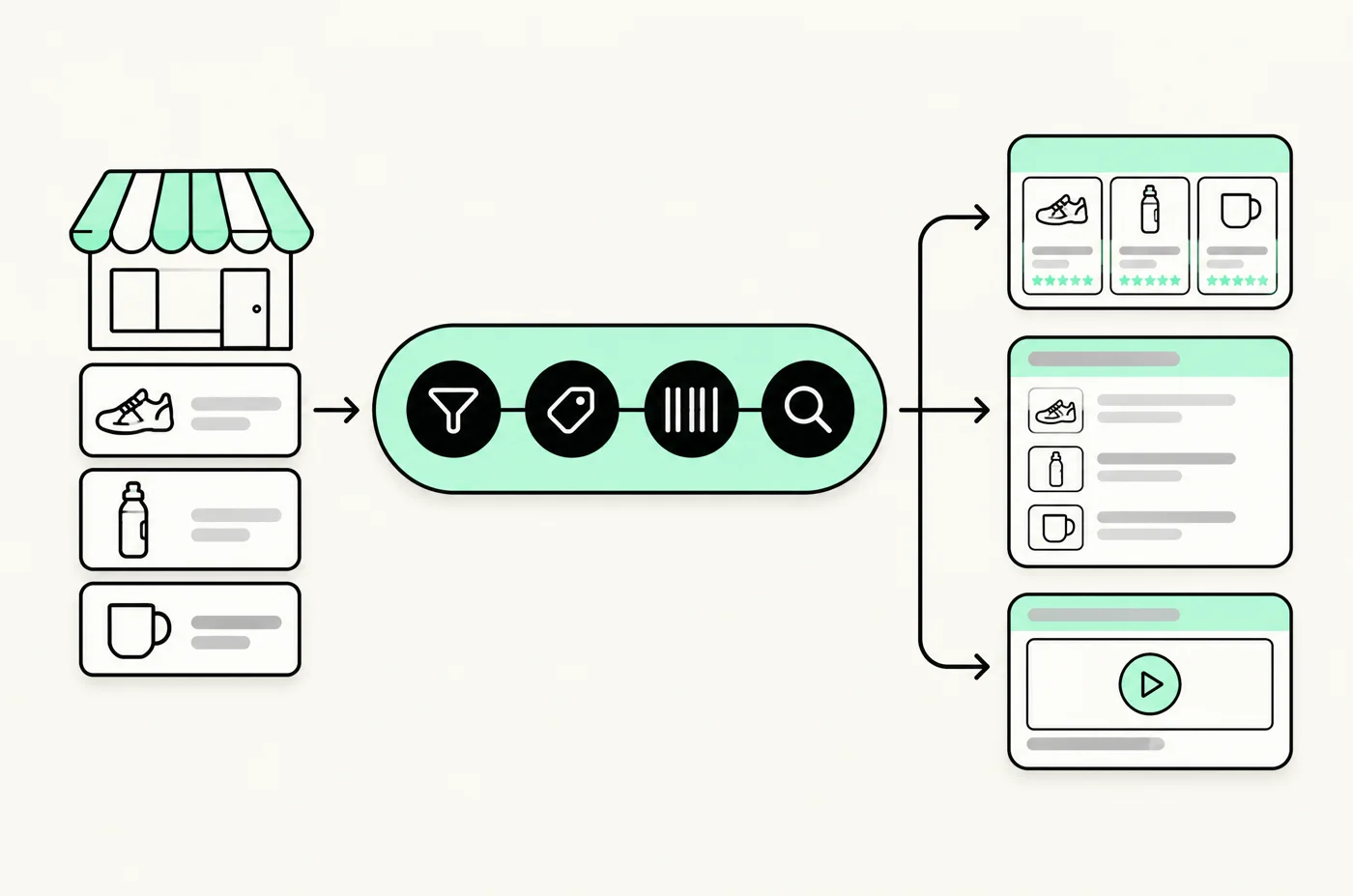
Shopping & Performance Max
The product feed decides which queries Shopping and PMax can show for, so we optimise it before touching bids.
Merchant CenterFeed titlesCustom labelsListing groupsAsset groupsBrand exclusionsSearch themes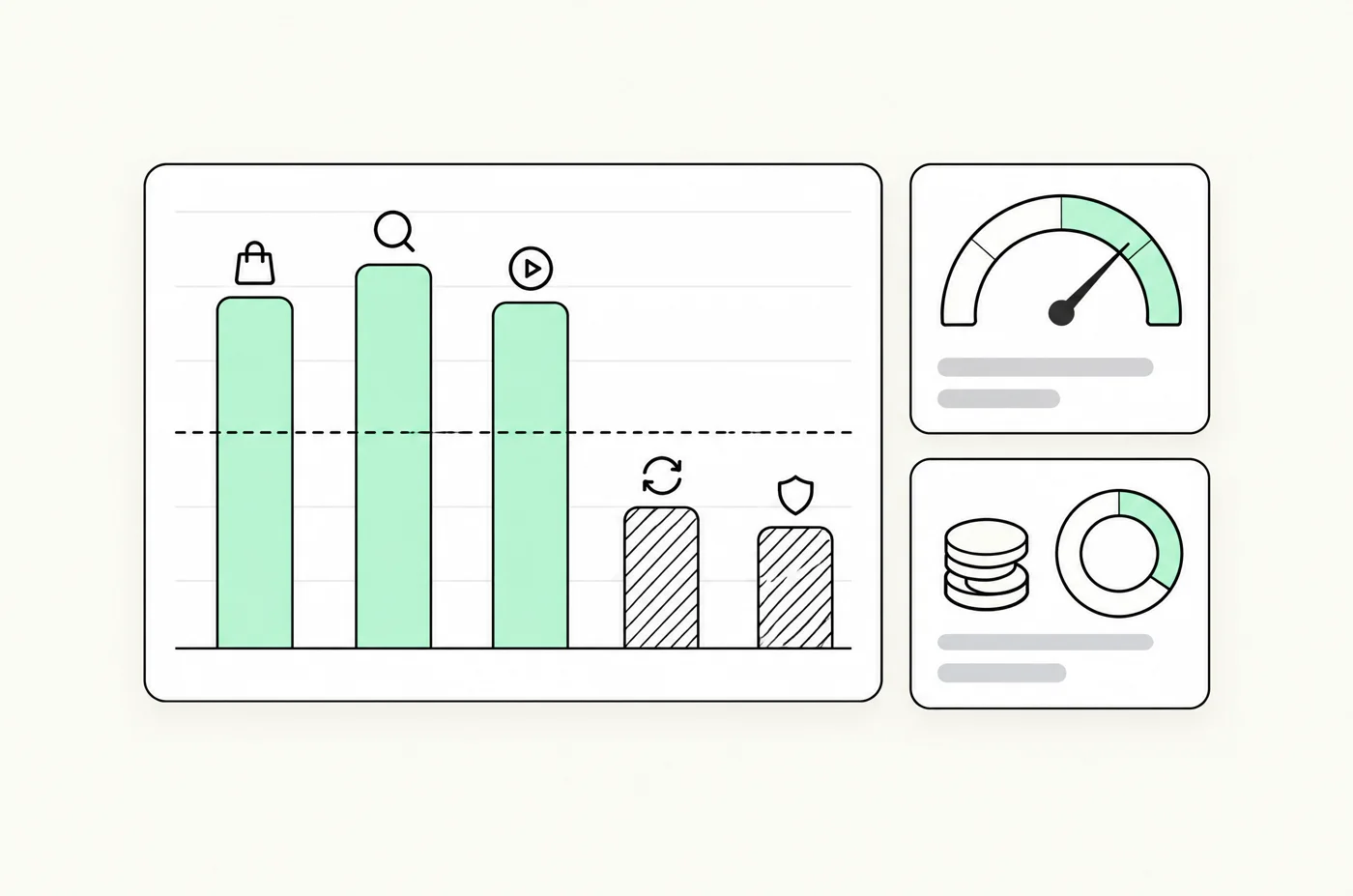
Smart Bidding & margin
Every campaign is judged against break-even ROAS from your gross margin, not one blended target.
Target ROASMax conv. valueBreak-even ROASPOASSeasonalityNew-customer goal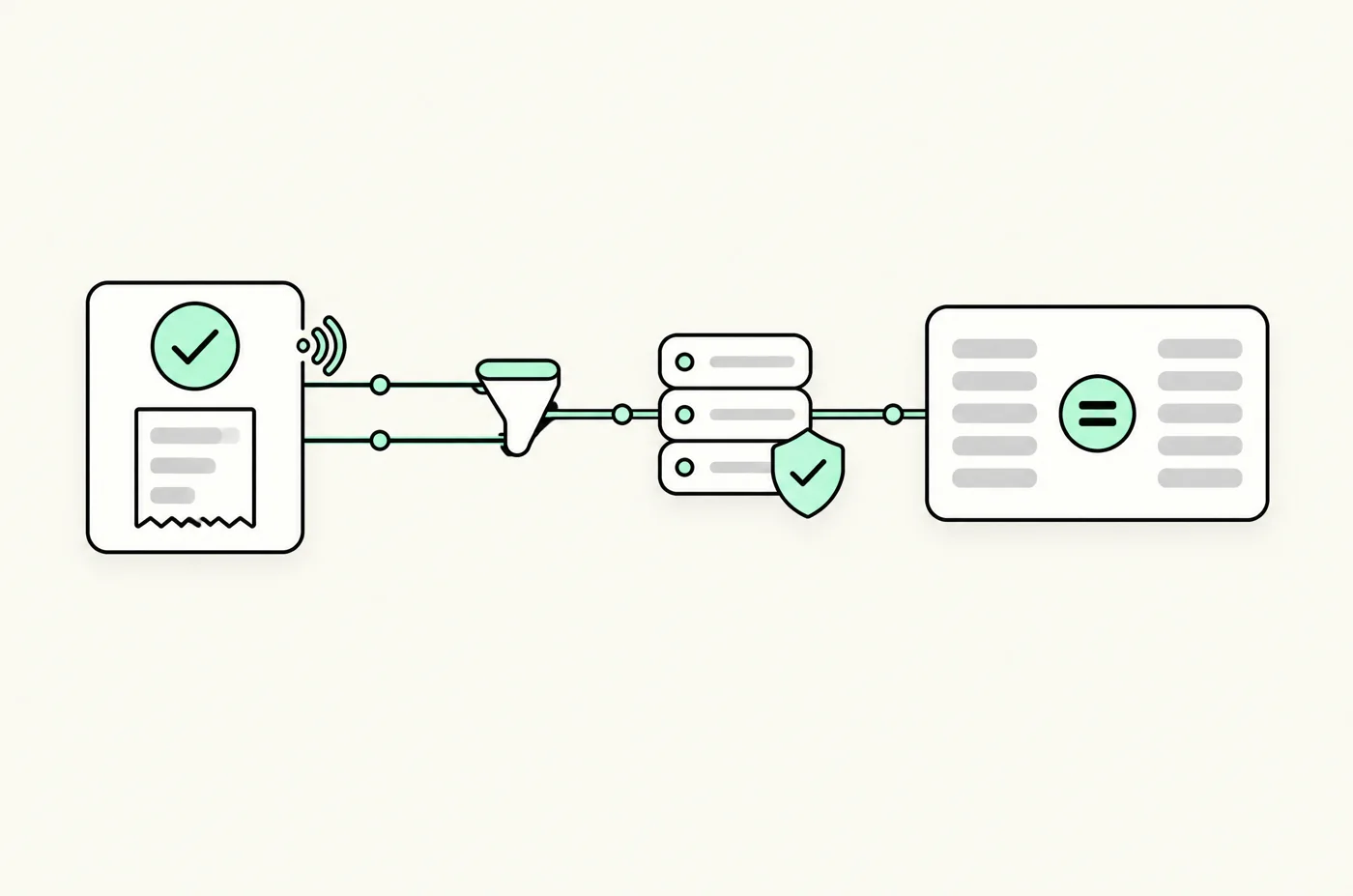
Pixel tracking & data accuracy
One purchase conversion, firing once per order, reconciled weekly against the orders your store actually took.
Google Ads tagEnhanced conversionsServer-side GTMConsent Mode v2GA4 purchase dedupOffline conversions
Smart Bidding is only as good as your conversion data
Most ecommerce Google Ads accounts we audit over-report revenue. We fix the pixel and the data before we touch a bid.
Google Ads tag and purchase event audit
We check that the Google Ads conversion tag fires once per order, on the confirmation page or Shopify's checkout pixel. It should pass the real order value, currency and transaction ID. A missing transaction ID is the most common reason Google Ads reports more purchases than the store took.
One primary conversion, not three
Accounts often count the Google Ads tag, an imported GA4 purchase and a platform app purchase as primary conversions at once. Smart Bidding then optimises toward double or triple the real revenue. We keep one primary purchase action and set the others to secondary.
Enhanced conversions
Hashed first-party data (email and phone at checkout) recovers conversions that cookie loss and Safari ITP would otherwise drop. That gives target ROAS a larger, more accurate signal to learn from.
Server-side tagging
A server-side Google Tag Manager container moves tags off the browser, so ad blockers and short cookie lifetimes lose less data. It also lets you enrich conversions with margin or new-customer flags before they reach Google Ads.
Consent Mode v2
For EU and UK traffic, Consent Mode v2 has to be wired into your cookie banner correctly. Without it, Google can't model the conversions of users who decline cookies, and remarketing audiences stop building.
Weekly reconciliation against real orders
We compare Google Ads conversion value, GA4 revenue and orders in your store backend every week, and document any gap. If the platform reports far more revenue than the store recorded, we fix the data before touching bids.
How we take over an ecommerce account

- Step 01
Audit and margin model
Account, feed, Merchant Center and tracking audit, plus gross margin by category to set break-even ROAS for each margin band.
- Step 02
Fix the inputs
Conversion tracking, enhanced conversions and Consent Mode first, then feed titles, product types, GTINs and custom labels. This often moves results more than any bid change.
- Step 03
Restructure
Brand separated, Shopping and PMax split by margin, Search built around non-brand intent. We then leave structure alone while Smart Bidding finishes its learning period.
- Step 04
Scale what clears margin
Weekly search term and placement reviews, budget moved toward campaigns above break-even, creative and landing page tests, and holdout tests to check what is incremental.
Ecommerce categories we run Google Ads for
Each category has different margin, repeat-purchase and policy constraints, and they change how Shopping and PMax should be set up.
Fashion and apparel
Large variant catalogs where size, colour and material in feed titles decide which queries you show for. Returns rates belong in the margin maths.
Beauty and skincare
Repeat purchase means first-order ROAS understates value. Ingredient and concern terms in titles, and care with health claims that trigger disapprovals.
Supplements and wellness
Tight Merchant Center policy on health claims, so feed and landing page wording matter. Subscriptions change what a customer is worth.
Home and furniture
High AOV, long consideration and heavy shipping costs. Custom labels for margin after delivery, plus YouTube and Demand Gen for the research phase.
Jewellery and accessories
Price-competitive Shopping auctions where image quality and the price-competitiveness report decide the click.
Food, drink and D2C subscription
Low AOV and high repeat. Bidding on first-order ROAS alone underinvests, so we work from contribution and LTV.
What an ecommerce Google Ads agency costs
The three fee models you'll be quoted, with market ranges. We default to a flat fee.
- Most popular
Flat monthly fee
From $4,500/mo
Our default
A fixed fee set by account complexity (catalog size, markets and channels), not by how much you spend.
- No incentive to push spend up
- Feed, tracking and account management included
- Monthly review call and written report
Percentage of ad spend
10–20% of spend
Market norm
Common across the market, with the percentage usually falling as spend rises. Simple, but it rewards higher spend rather than profit.
- Typical minimum of $1,500–$3,000/mo
- Fee rises automatically with budget
- We don't use this model
Hybrid / performance-linked
Base + bonus
For scaling accounts
A lower flat base plus a bonus tied to contribution margin or new-customer revenue, where tracking is clean enough to make that fair.
- Aligned with profit, not reported ROAS
- Needs reconciled conversion data first
- Usually after the first 90 days
Who should run your Google Ads?
Rough market ranges. The right answer depends mostly on ad spend and how much feed and tracking work you need.
Typical monthly cost
- Freelancer
- $500–$2,500
- In-house hire
- $90k–$130k+ salary plus tools
- Specialist agency
- $4,500–$10,000 management fee
Feed and Merchant Center
- Freelancer
- Often out of scope
- In-house hire
- Depends on hire
- Specialist agency
- In scope
Tracking and server-side tagging
- Freelancer
- Rarely
- In-house hire
- Usually needs a developer
- Specialist agency
- In scope
Breadth of account patterns seen
- Freelancer
- Varies
- In-house hire
- One account
- Specialist agency
- Many ecommerce accounts
Best fit
- Freelancer
- Under $3k/mo spend, testing
- In-house hire
- $300k+/mo spend, mature team
- Specialist agency
- $15k–$250k/mo spend, growth stage
Ecommerce Google Ads, answered

What does an ecommerce Google Ads agency do?
How is a Google Ads agency for D2C brands different from a general PPC agency?
What does a Google Shopping management agency actually change?
What's the difference between Google Shopping and Performance Max?
Do we need a Performance Max agency for ecommerce, or can we run PMax ourselves?
How much does Google Ads management for ecommerce cost?
What ROAS should an ecommerce store expect from Google Ads?
What minimum ad budget makes hiring a Google Ads expert worthwhile?
How long until we see results?
Should a Google Ads specialist for ecommerce also handle Merchant Center and the feed?
Which ecommerce platforms do you work with?
Do we keep ownership of our Google Ads and Merchant Center accounts?
How should we choose an ecommerce Google Ads agency?
Where Google Ads gets help
Google Ads works best when it isn't carrying the whole funnel.
Shopify PPC Agency
The same method with Shopify-specific feed, checkout tracking and Shopify Plus multi-market setups.ExplorePPC Conversion Optimization
The landing page decides what each click is worth. We test it alongside the account.ExploreMeta Ads Agency
Meta creates the demand that Shopping and branded search then capture.ExploreEcommerce Marketing Agency
When Google Ads is one channel in a full-funnel plan across paid, organic and retention.ExploreEcommerce SEO Agency
Search term data shows which queries convert, so organic rankings can take over terms you pay for today.ExploreShopify CRO Agency
A higher conversion rate lifts the ROAS on every click, so more queries clear break-even.Explore



Book your free ecommerce Google Ads audit
30 minutes with a Google Ads specialist who runs ecommerce accounts. You get a straight read on whether the constraint is the feed, the tracking, the account or the page.
What happens next
- 1Pick a time for a 30-minute call with a Google Ads specialist who runs ecommerce accounts.
- 2If you're comfortable, share read access to Google Ads, Merchant Center and GA4, and bring your gross margin, so we can check break-even ROAS together.
- 3Get the prioritised findings in writing. They're yours whether or not we work together.
Prefer email? tarun@conversion.is