AEO & GEO
The answer engine optimization agency for brands that rank but never get named
AI answers name two or three brands and skip the rest. We measure what the engines say about you, fix the description they repeat, and build the assets they actually quote.
- A fixed prompt set, tracked weekly across every engine that matters
- Entity and structured-data work that makes your description accurate
- Content built to be extracted, not just to rank
Trusted by 50+ D2C brands · Google, Meta & Shopify partners






Ranking is no longer the same as being recommended
We are an answer engine optimization agency for brands that are tired of ranking and still not being mentioned. Engagements start at $3,000 a month and typically run $3,000 to $10,000, monthly after the first 90 days. If you are still choosing a partner, our guide to the best generative engine optimization agencies compares the market on published pricing and method.
The problem AEO solves is specific. Search moved from ten blue links to one generated answer, and the answer names two or three brands. A store or SaaS product can rank third for a commercial query and be absent from the AI Overview above it, which now absorbs a meaningful share of the clicks. Ranking is no longer the same as being recommended.
Most of the work is unglamorous and mostly overlaps with SEO: clean structured data, one canonical description of what you are, pages that answer a question in the first sixty words, and third-party sources that corroborate your claims. What AEO adds is the discipline of measuring the answer itself — citation frequency on a fixed prompt set, share of voice against named competitors, and whether the model describes you correctly. That measurement is what turns a vague brief into a programme with a scoreboard.
It also changes what content is worth writing. A generic explainer is the least citable asset a brand can publish, because every model already has a version of it. A dated price table, an honest comparison against a competitor, or an original benchmark is citable immediately, because it contains something the model cannot synthesise from its training data. Our content and SEO team builds those assets, and our CRO and paid teams make sure the traffic those citations send actually converts.
Six reasons a brand ranks and still loses the answer
These are the findings that recur in nearly every AI visibility audit we run. None of them show up in a rank tracker, which is why they persist.
You rank, but the answer names someone else
The AI Overview above your position-3 result recommends two competitors and omits you. Nothing in a rank tracker shows this, so it goes unnoticed for months while the clicks above you disappear.
The model describes you incorrectly
An assistant calls you a marketplace when you are a DTC brand, or quotes a price you stopped charging in 2024. Models repeat whatever the most corroborated description on the open web says, which is usually an outdated directory listing.
No entity for the brand to attach to
No consistent sameAs, no authored bylines with a stable identity, no Organization markup matching your legal details. The model has nothing to resolve, so it hedges, or recommends the competitor with a cleaner footprint.
Content that cannot be extracted
Long intros, no direct answer, no table, no number. A model looking for a sentence to quote finds nothing it can lift without rewriting, and rewriting is work it will skip.
AI crawlers blocked by accident
A robots.txt rule, a CDN bot fight mode, or a WAF challenge quietly blocking GPTBot, ClaudeBot or PerplexityBot. The brand is invisible to the engines it is paying to be visible in.
No measurement, so no decisions
Nobody knows the citation rate, the competitor set, or whether last quarter's content changed anything. Without a fixed prompt set there is no baseline, and without a baseline every report is a story.
What the programme covers
Weighted toward measurement and the description of the brand, because those are the two layers that change fastest.
AI visibility audit
A fixed prompt set built from real buyer questions, run across the engines that matter for your category, scored for mention, citation, description accuracy and competitor presence. This is the baseline everything else is judged against.
Entity and structured data
Organization, Product, Service, Person and FAQ markup that agrees with each other and with your off-site listings, plus consistent sameAs and NAP details so models resolve one entity instead of guessing between three.
Extractable content engineering
Answer blocks, comparison tables, dated prices, worked examples and glossary definitions, structured so a passage can be quoted verbatim. Applied to the pages that already rank before new pages are written.
Crawler access and llms.txt
Verifying that GPTBot, ClaudeBot, PerplexityBot and Google's fetchers can reach and render the pages that matter, then shipping a curated llms.txt that points them at the pages worth reading.
Corroboration and digital PR
Third-party mentions on the sources models already retrieve — directories, industry roundups, comparison lists — because a claim only one site makes is a claim a model treats with suspicion.
Prompt-set tracking and reporting
A weekly run against the same prompts, reported as citation rate, share of voice against named competitors, description accuracy, and AI-referred sessions and revenue in GA4.
Agentic commerce readiness
For ecommerce: product data, availability and shipping terms readable by shopping agents, so a brand is not only described correctly but transactable when an assistant offers to buy.
What you get in the free AI visibility call
A 30-minute call, and a live run of a short prompt set in your category.
Your current AI answer set
We run a short prompt set live on the call and show you what ChatGPT, Perplexity and an AI Overview say about your category today.
Whether the gap is entity, content or access
Three very different problems with three different fixes. Most brands assume content and are actually blocked at the crawler or entity layer.
The competitors the models already trust
Who gets named, and which sources the answer cites. That citation list is the shortest path to being included in it.
A realistic shape for the programme
What a first 90 days looks like, what is fixable in weeks versus quarters, and what we would not promise.
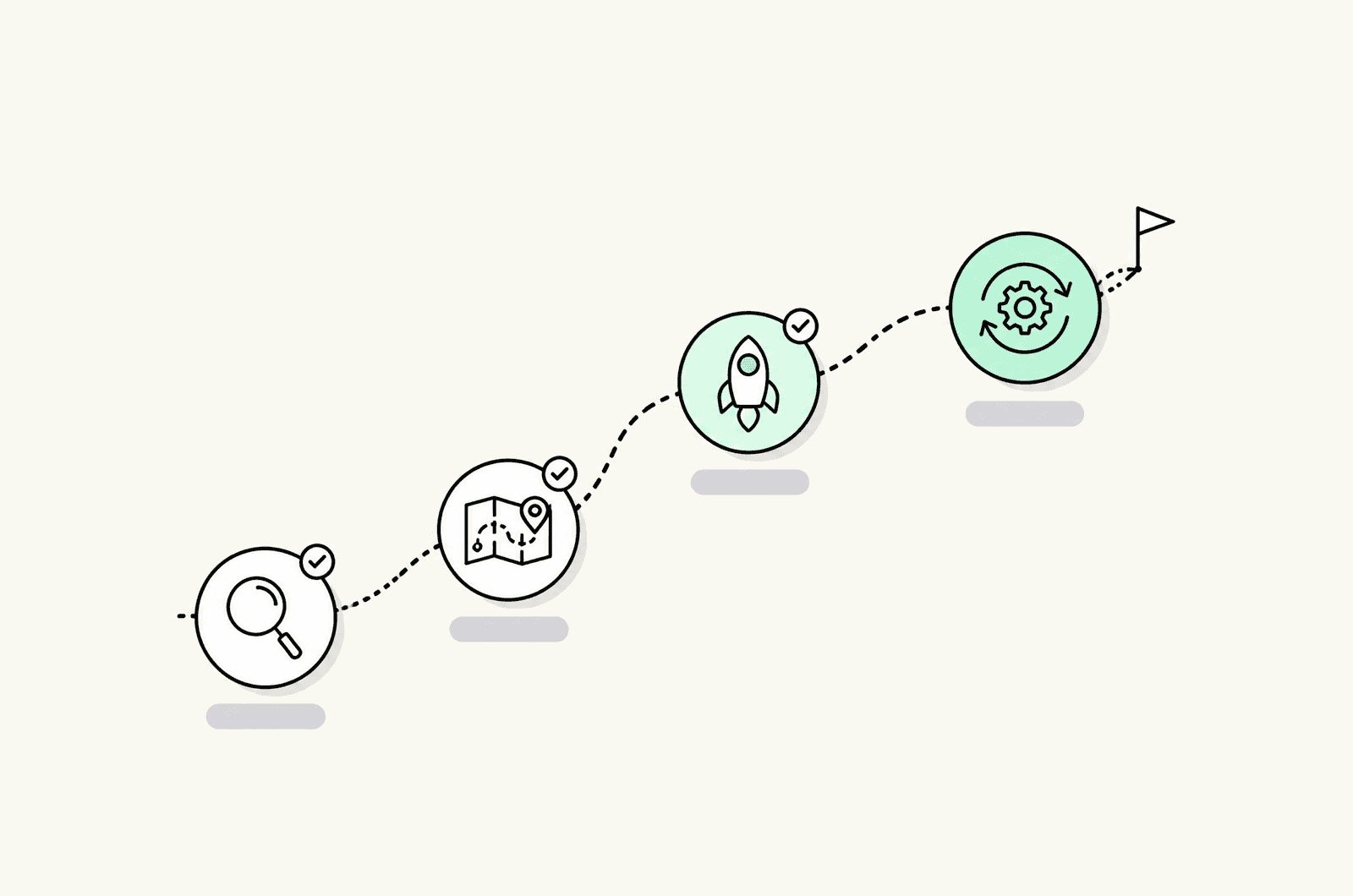
How a 90-day AEO programme runs
- Step 01
Weeks 1–2: prompt set and baseline
We build the prompt set from real buyer questions, sales-call language and search demand, run it across the relevant engines, and record mentions, citations, descriptions and competitors. This becomes the fixed scoreboard.
- Step 02
Weeks 2–4: access and entity audit
Crawler access verified in logs and by fetch, robots and WAF rules checked, structured data compared against off-site listings, and every place the web describes you collected so contradictions are visible.
- Step 03
Weeks 3–8: fix the description
Structured data corrected, the canonical description of the business settled and published, and the high-authority sources that carry the wrong version contacted or updated.
- Step 04
Weeks 4–12: build citable assets
Answer blocks and comparison tables added to the pages that already rank, then the assets a model will actually quote: dated price tables, honest tool comparisons, original benchmarks and glossary definitions.
- Step 05
Month 3 onward: corroborate and re-measure
Digital PR against the sources the answers already cite, then the same prompt set re-run. Reporting is citation rate and share of voice against the baseline, plus AI-referred sessions and revenue.
Same foundation, different scoreboard
AI answers are largely assembled from pages that already rank, so the technical work overlaps almost entirely. What changes is what you optimise for and how you prove it worked.
Unit of success
- Answer engine optimization
- Appearing in the generated answer
- Classic SEO
- Ranking position and clicks
What gets optimised
- Answer engine optimization
- Entities, extractable passages, corroboration
- Classic SEO
- Pages, internal links, authority
Competitor set
- Answer engine optimization
- Who the model names beside you
- Classic SEO
- Who ranks on the same SERP
Primary reporting
- Answer engine optimization
- Citation rate, share of voice, description accuracy
- Classic SEO
- Rankings, impressions, clicks, organic revenue
Fastest wins
- Answer engine optimization
- Crawler access, schema, description accuracy
- Classic SEO
- Titles, internal links, technical fixes
Depends on ranking?
- Answer engine optimization
- Mostly yes — answers are assembled from ranking pages
- Classic SEO
- It is the ranking
Typical first signal
- Answer engine optimization
- Weeks: the model describes you differently
- Classic SEO
- Weeks to months: position movement
How we work
We publish our method and our prices
Most of this category quotes after a call. Our retainers start at a published number, and every figure on this page is either documented platform behaviour or our own pricing.
Measurement before content
A programme without a fixed prompt set is a content retainer with new vocabulary on the invoice. We build the baseline first, so the second report can be compared to something.
We will tell you when AEO is not your constraint
If the site is not indexable, the checkout is broken or the offer cannot convert, AEO spends money on top of a problem. We say so on the first call rather than in month three.
No lock-in
A defined first 90 days with named deliverables, then month-to-month. Pay-on-results is available on the wider growth engagements; AEO is priced as a programme because the work is continuous.
SEO and AEO in one team
The structural work overlaps almost entirely, so running them as separate retainers duplicates the audit and lets two teams disagree about the same page. Our [SEO](/services/seo-agency) and [Shopify SEO](/services/shopify-seo-agency) teams sit beside the AEO work.
Honest about the ceiling
Answers are probabilistic and personalised. We can move citation frequency and description accuracy measurably; we cannot make a model say a specific sentence to a specific buyer.
AEO, answered
What is an answer engine optimization agency?
How is AEO different from SEO?
Is AEO the same as GEO?
How much does AEO cost?
How long does AEO take to show results?
Can you guarantee ChatGPT will recommend our brand?
Do we need special markup for AI Overviews?
How do you measure AI visibility?
Does AEO replace our SEO programme?
Which pages actually get cited by AI?
Do llms.txt and AI crawler access matter?
Should B2B and ecommerce brands run AEO differently?
The pages that make this programme legible
AEO is a young discipline with a lot of repackaged SEO in it. These are the pages that separate the work from the vocabulary.
Best Generative Engine Optimization Agencies (2026)
How the market is priced and how to judge an AEO agency on method rather than case studies.ExploreAnswer Engine Optimization: The Complete Guide
The discipline end to end: how answers are assembled, what gets cited, and how to measure it.ExploreAEO vs GEO vs SEO: What Actually Differs
The terminology, the overlapping work, and the one difference that changes how you brief the work.ExploreAI Visibility and AEO Tracking Tools for Agencies
What each platform actually measures, how much it costs, and where the measurement is still guesswork.ExploreShopify SEO Agency
The technical foundation AI answers are assembled from. Fix the structure before buying citations.Explore

See what the engines say about you today
We will run a short prompt set in your category live on the call and show you the answers, the citations and the competitors you are up against.
What happens next
- 1Pick a time for a 30-minute call.
- 2Tell us the category you want to be recommended in, and the competitors you keep seeing named instead.
- 3We run a short prompt set live and show you what the engines say today — then a straight read on whether the gap is access, entity, or content.
Prefer email? tarun@conversion.is