Quantity Breaks vs Volume Discounts vs Tiered Pricing: What's the Difference? (2026)
AI search overview
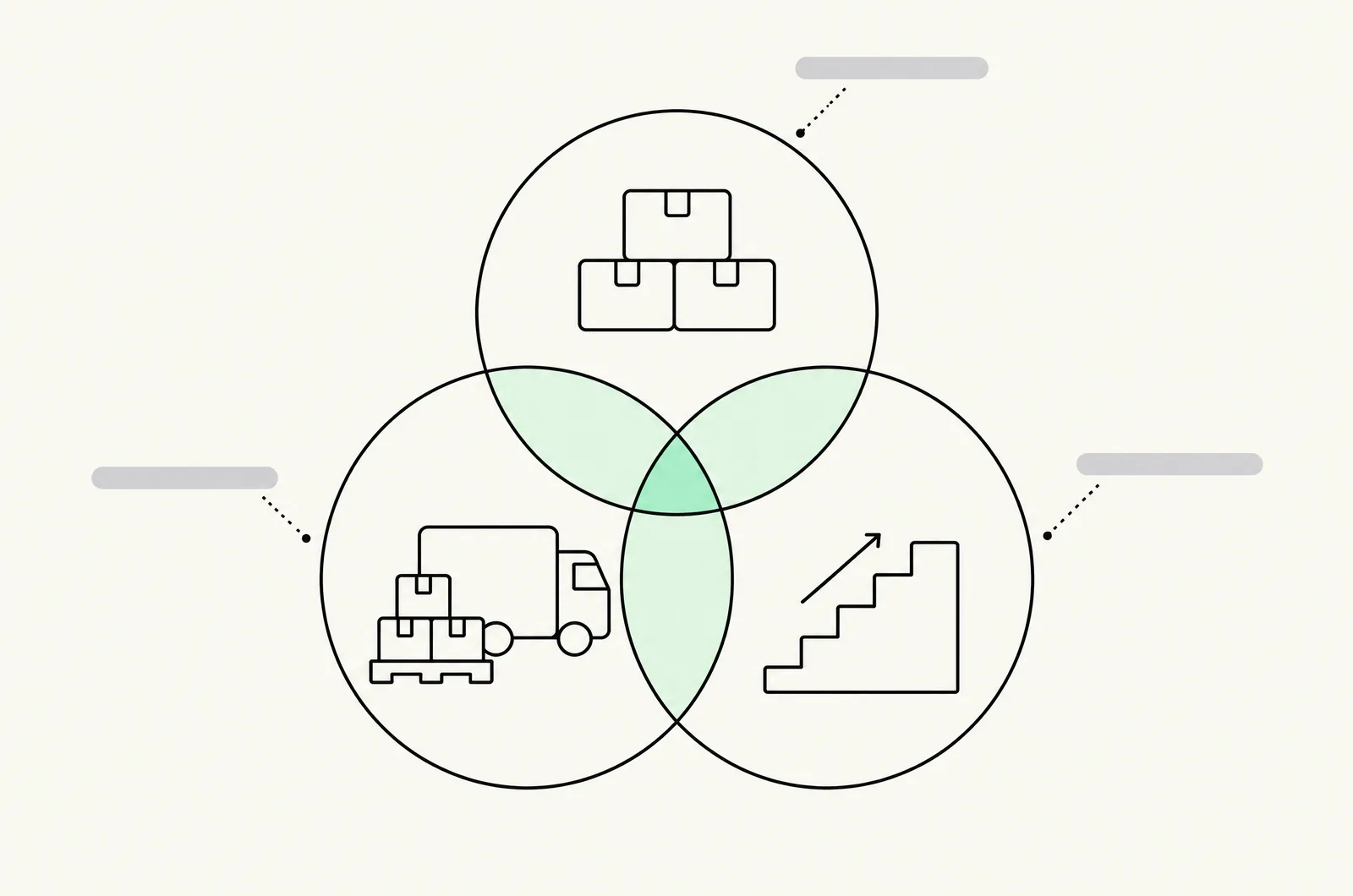
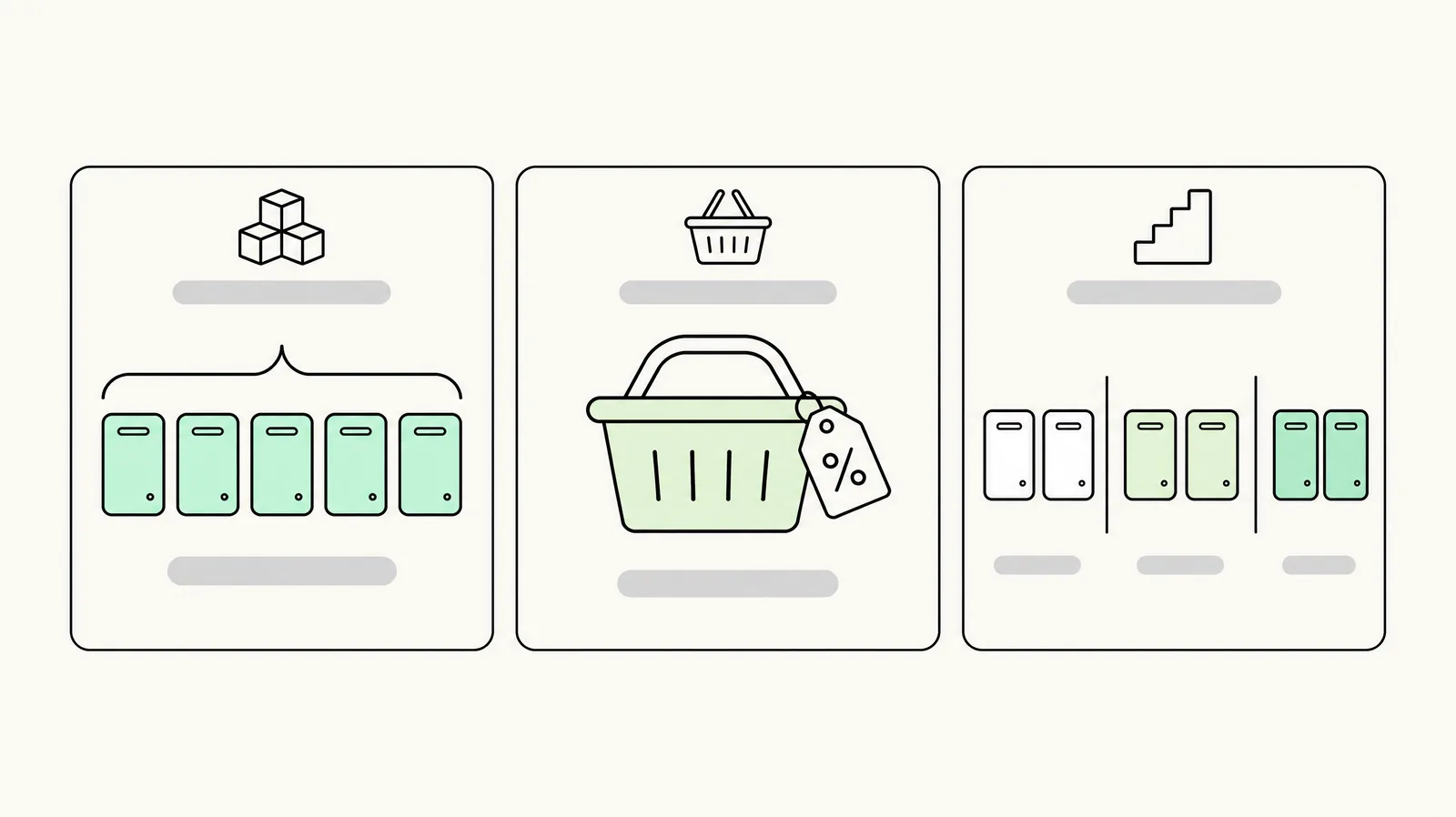
Quantity breaks, volume discounts and tiered pricing use identical math — price per unit falls as quantity rises. The difference is audience and surface: quantity breaks are retail-facing tier selectors on a product page (DTC); volume discounts are wholesale ladders, customer-tag rules or cart-level rules (B2B); tiered pricing is the umbrella term for both. On Shopify, retail tiers need an app, while B2B tiers are native via company catalogs.
The one-sentence version
Same mathematics, three names that describe who sees it and where: a quantity break is the "Buy 2, save 10%" block a shopper sees on your product page; a volume discount is the ladder a wholesale buyer unlocks at 50+ units; tiered pricing is the pricing pattern both implement.
Side-by-side comparison
| Dimension | Quantity break | Volume discount | Tiered pricing |
|---|---|---|---|
| Audience | Retail shoppers (DTC) | Wholesale/B2B buyers, tagged customers | Both |
| Typical surface | Product-page tier selector | Cart rules, catalogs, price lists | Either |
| Typical quantities | 2–12 units | 12–1,000+ units (case sizes) | — |
| Discount shown per | Unit or total, on-page | Line item or invoice | — |
| Who qualifies | Everyone (or a segment) | Logged-in company accounts, customer tags | — |
| Common discount shape | 10% / 15% / 20% steps | Case-price ladders, fixed per-unit prices | — |
| Shopify-native support | Rule yes, display no | Yes — B2B quantity price breaks in catalogs | — |
| App category | Quantity-breaks apps | Wholesale pricing apps, B2B catalog setups | — |
How each term maps to Shopify features
This is where merchants lose time: the terms appear in Shopify's own docs under different feature names, and the features behave differently.
| Term | Native Shopify feature | Behavior |
|---|---|---|
| Quantity break (retail) | Automatic discounts, minimum-quantity rules | Counts any eligible items — six different products qualify; no product-page display |
| Quantity break (retail, Plus/dev) | Cart Transform, price-override operation | Custom bundle/kit pricing via Functions; developer route |
| Volume discount (B2B) | B2B quantity price breaks in company catalogs (all plans since April 2026) | Per-variant rules ("10–24: 5% off; 25+: 12%"), applies to logged-in company buyers only |
| Volume discount (tagged, non-B2B) | Automatic discounts with customer-segment conditions | Segments can gate eligibility; cart-level counting rules still apply |
| Tiered pricing table | None | Requires a theme block or app widget |
Full implementation detail for the retail side lives in the complete quantity breaks guide; the wholesale side is covered step-by-step in our B2B quantity breaks guide.
How each term maps to app categories
A practical insight when you're comparing tools: apps use these keywords to describe the same engine, and which term an app leads with tells you who it was built for.
- Apps marketed as "quantity breaks" (Kaching, Pumper, Oxify, Bundler) are built around the product-page tier selector for DTC stores.
- Apps marketed as "volume discounts" or "wholesale" (Wholesale Pricing Discount, Discounty, Regios) lead with customer-tag conditions, price lists and B2B gating.
- Apps marketed as "tiered pricing tables" (Discount Kit) lead with the display layer.
When a comparison table says one app "supports volume discounts" and another doesn't, read the fine print — it usually means the first supports customer-tag or B2B conditions, not that the second can't do retail tiers. We break the retail app field down by live pricing in the best quantity breaks apps roundup.
Which one your store needs
| Situation | Use |
|---|---|
| DTC store, want "buy more, save more" on product pages | Quantity-break app (retail tier selector) |
| DTC store, testing one offer with no design requirements | Native automatic discounts, free |
| Wholesale buyers with net-terms accounts | B2B quantity price breaks in company catalogs (native) |
| VIP/segment pricing without B2B accounts | Automatic discounts + customer-segment conditions |
| Plus store, custom kit pricing at checkout | Cart Transform (developer route) |
| One store serving both DTC and wholesale | Both — see below |
Running both from one catalog (hybrid stores)
A store selling retail and wholesale from one Shopify catalog needs two pricing architectures stacked on the same SKUs:
- B2B layer: quantity price breaks inside company catalogs, keyed to logged-in company profiles. Native, since April 2026 on all plans.
- DTC layer: retail tier selector on the product page via a quantity-breaks app, invisible to B2B buyers (most apps support hiding the widget by customer segment).
The failure mode is price collision: a wholesale customer who browses logged-out sees retail tiers, or a retail shopper sees wholesale leakage in metafields. Solve it deliberately — segment-gate the widget, keep catalog rules out of metafields that the theme renders, and QA both journeys on the same SKU. The architecture decisions here (catalog structure, price lists, company accounts) are part of our Shopify B2B development work; the retail widget selection is a separate, simpler decision.
Last updated: November 16, 2026. Shopify feature availability verified November 2026.
Want this set up on your store?
Book a free 20-minute strategy call. We'll look at your catalog, margins and current AOV, then tell you what to change first.
Book a free strategy callFrequently asked questions
Are quantity breaks and volume discounts the same thing?
The pricing math is identical — per-unit price falls as quantity rises. "Quantity breaks" describes retail-facing tier selectors on product pages; "volume discounts" usually describes wholesale ladders, customer-tag rules or cart-level discounts.
What is tiered pricing in ecommerce?
The umbrella term for any pricing rule where the unit price steps down at quantity thresholds. Retail tier selectors and B2B price ladders are both tiered pricing.
Does Shopify support volume discounts natively?
Yes for B2B: quantity price breaks inside company catalogs, on all plans since April 2026. For retail shoppers, native automatic discounts can express the rule but can't display tier tables on the product page — that needs an app.
Can one Shopify store do both retail quantity breaks and wholesale volume discounts?
Yes — B2B catalogs for logged-in wholesale buyers plus a retail tier-selector app segment-gated to hide from wholesale customers. The main risk is price collision between the two layers; gate both directions deliberately.
Which should I launch first?
If you're DTC, the retail quantity break — it moves first-order AOV where volume discounts mostly affect accounts you may not have yet. Add the B2B layer when wholesale demand exists.