25 Best Shopify Jewelry Stores (2026): What They Do Differently — and What to Copy
AI search overview
The best Shopify jewelry stores in 2026 share a small set of conversion patterns: Mejuri's recurring drops and skin-tone product photography, Missoma's shoppable layering sets and material explanations beside selectors, Astrid & Miyu's stack planner, Monica Vinader-style live engraving previews, Baby Gold's personalisation paired with a fast-delivery promise, and PDPAOLA's styled imagery between product cards. Below are 25 verified stores with the specific pattern worth copying, sourced from live captures (Oct–Nov 2026) and independent roundups. We also flag stores whose platform could not be confirmed, show the price bands, and explain when a jewellery brand should stop copying inspiration and commission a purpose-built Shopify build.
How this list was checked (and what we excluded)
This is not a list assembled from brand press releases. We cross-checked live-store captures and independent design roundups published in 2026:
- Aqsa Shahzad's 21-store capture (10 Oct 2026) — desktop and phone screenshots, median price ranges, pay-later and review providers.
- craftberry's 25-store roundup (9 Nov 2026) — the competitor list we are answering, with one conversion feature per store.
- Fudge AI's jewellery list (platform checked 27 Oct 2026) plus its November 2026 update with the "what to copy" framing.
- Sutton Commerce's UK jewellery review (9 Jul 2026) and Omnisend's 25-store list (7 Apr 2026) for broader coverage.
Important caveat: "built on Shopify" is not always verifiable from outside. Fudge AI explicitly could not confirm Monica Vinader and VRAI on 27 Oct 2026. We exclude both from the 25 and mention the engraving pattern generically instead of attributing it to an unconfirmed store. If you need certainty for a competitive audit, check the site's cdn.shopify.com assets or ask the brand.
The 25 stores at a glance
| # | Store | Market / band (where published) | Conversion pattern worth copying |
|---|---|---|---|
| 1 | Mejuri | US, demi-fine | Recurring "drops" give repeat visitors a reason to return; pieces shot on multiple skin tones |
| 2 | Missoma | UK, median £115 (£45–£3,395) | Open search, "which T-bar are you?" finder, material/size guidance beside selectors |
| 3 | Astrid & Miyu | UK, mid | Stack Curator maps pieces to numbered ear positions; loyalty at add-to-bag |
| 4 | Gorjana | US, median $68 ($30–$5,990) | Catalogue organised around layering — see it as a wardrobe, not a single item |
| 5 | Ring Concierge | US, median $2,472 ($98–$124,705) | Variant selectors on product cards; high-ticket reassurance early |
| 6 | Kinn | US, median $1,920 | Warranty, care and specifications in product-page tabs |
| 7 | BaubleBar | US, median $75 ($10–$128) | Low price point with fast, styling-led merchandising |
| 8 | Aurate | US, median $1,498 | Warranty and size exchange stated on the product page |
| 9 | Pura Vida | US, median $18 | Low-ticket impulse range with Afterpay and review volume |
| 10 | Daisy London | UK, median £149 | Live chat plus predictive search on a mid-price catalogue |
| 11 | Edge of Ember | UK, median £125 | Clear stone/metal filters with Trustpilot reinforcement |
| 12 | Tatty Devine | UK, mid | Fast-loading pages (3.5s main content in one capture) — proof that design and speed can coexist |
| 13 | Orelia | UK, median £35 | Multiple pay-later options at an accessible price |
| 14 | Muru | UK, median £62 | Compact catalogue with review-provider social proof |
| 15 | Lovisa | AU, median A$32.99 | High-velocity low-ticket browse with Afterpay/Klarna |
| 16 | Sarah & Sebastian | AU, median A$890 | Letter-pendant chain builder for personalisation |
| 17 | By Charlotte | AU, median A$1,299 | Editorial storytelling at a premium price point |
| 18 | Bianc | AU, median A$169 | Focused range with clear material education |
| 19 | Natasha Schweitzer | AU, median A$4,990 | High-ticket pieces with minimal, art-directed pages |
| 20 | Ana Luisa | US, accessible | Chain configurator and product video on the PDP |
| 21 | Baby Gold | US, personalised | Personalisation plus a 1–3 day delivery promise and lifetime guarantee |
| 22 | PDPAOLA | US/EU, mid | Styled "get the look" images between product cards; engraving and cm chain lengths |
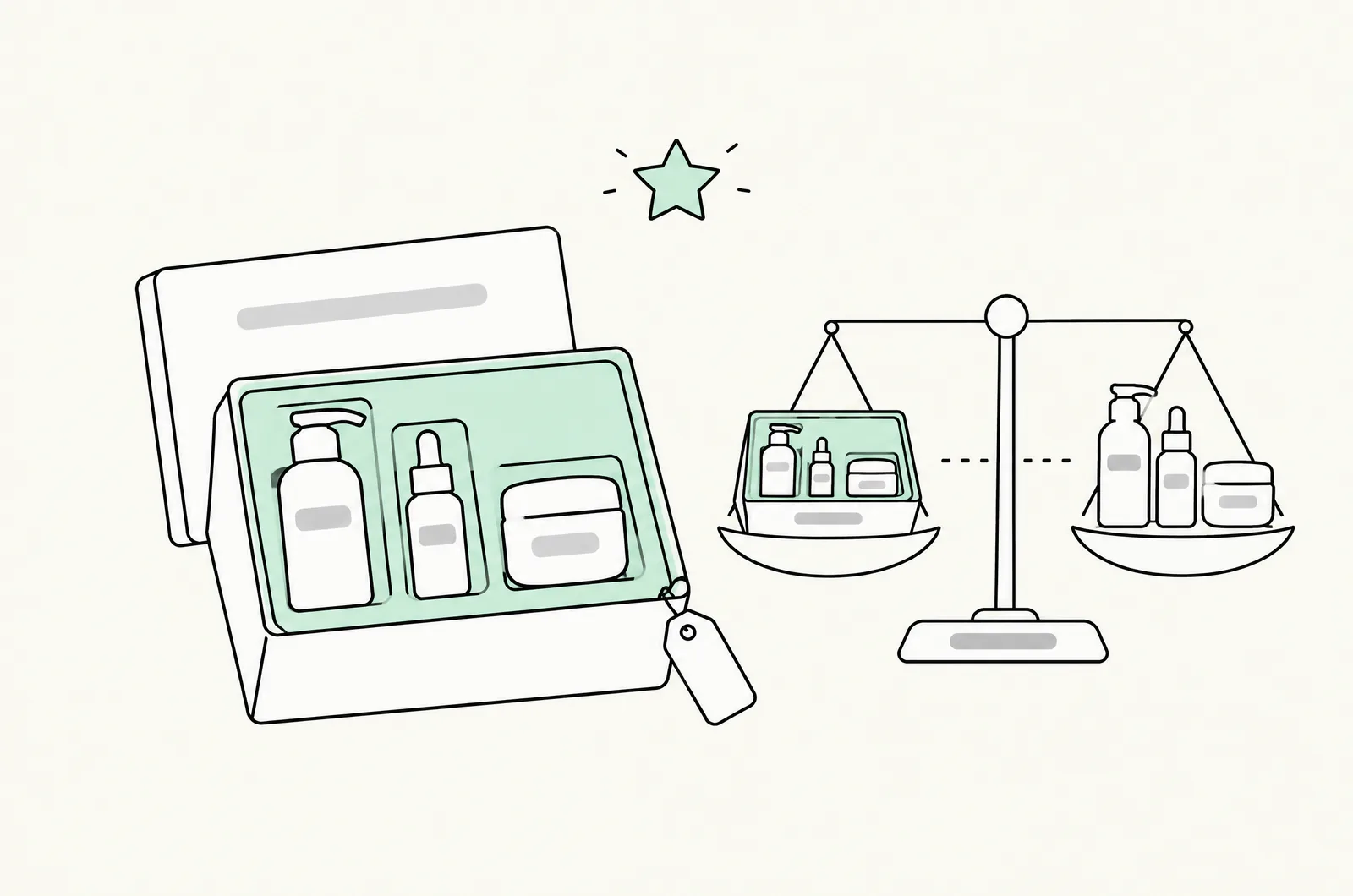
| 23 | Maison Miru | US, mid | Curated kits — the bundle as a merchandising unit |
| 24 | Electric Picks | US, mid | Build-your-own charm bar: configuration as entertainment |
| 25 | Automic Gold | US, mid | Explained custom process and a wide size range |
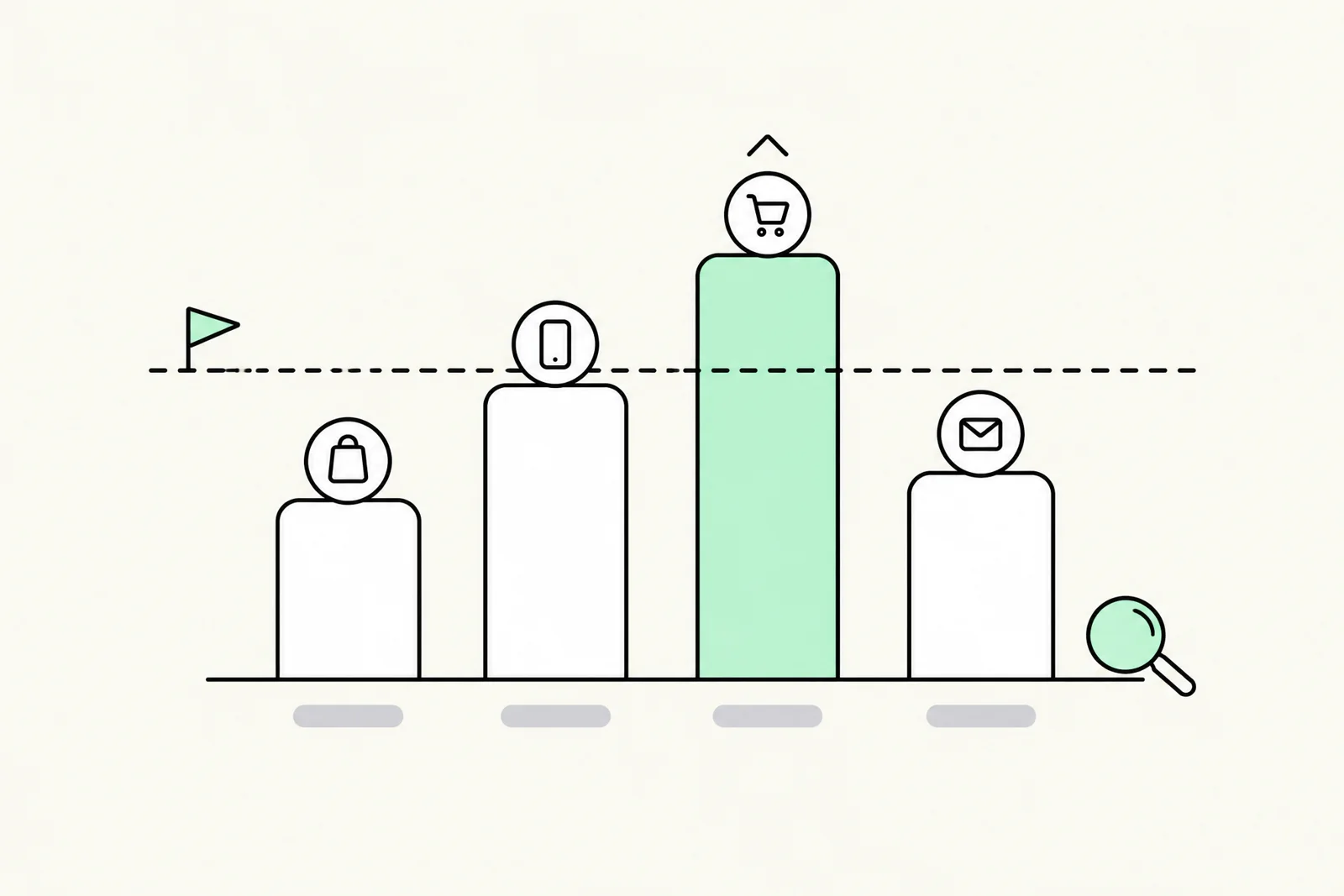
Price bands, pay-later providers and load times where quoted are from the 10 Oct 2026 capture study; patterns are from that study, craftberry's 9 Nov 2026 roundup, Fudge AI's Oct–Nov 2026 checks and Sutton Commerce's July 2026 review. They are observations, not performance guarantees.
The seven patterns that actually move jewellery conversion
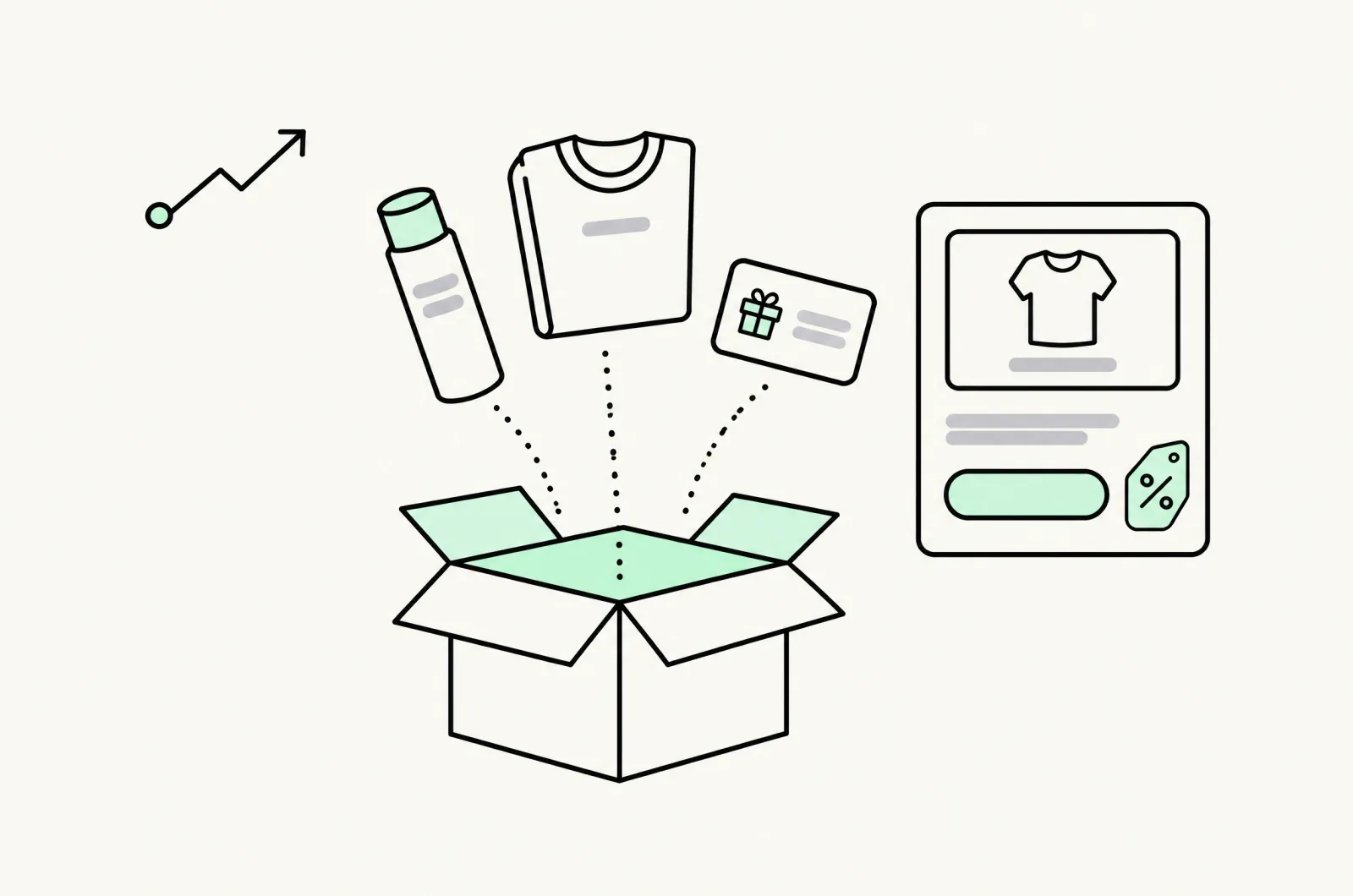
1. Sell the look, not the SKU. Missoma and Gorjana merchandise layered sets, so the shopper evaluates a result rather than one item. This is the same economic idea as a bundle: the unit of decision changes, and multi-item carts follow. If you cannot build a full bundle app, even a "Layer it with" module on the PDP does the job.
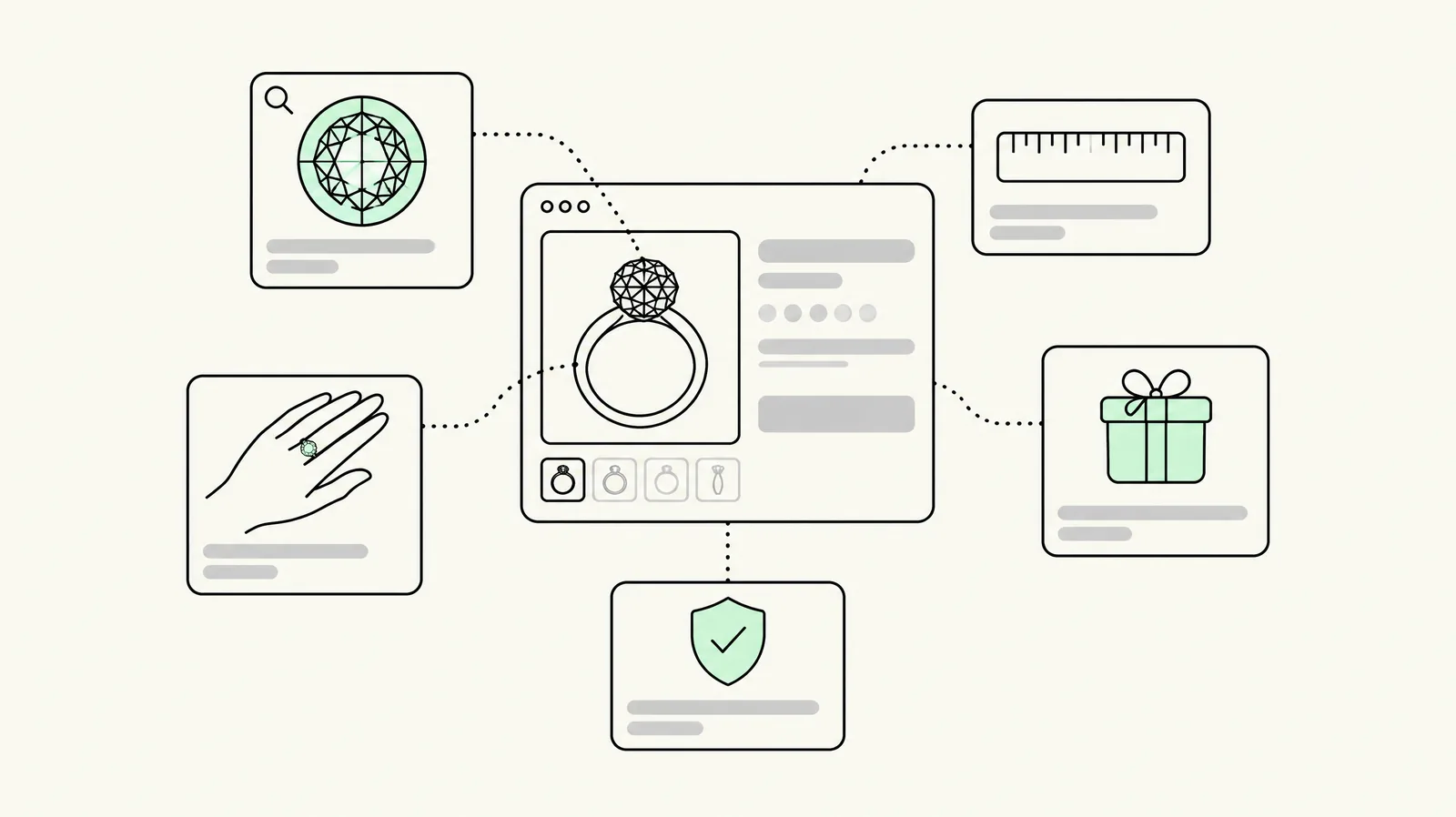
2. Answer the trust question on the product page. Kinn and Aurate put warranty, care and size exchange in tabs on the PDP. Ring Concierge and Natasha Schweitzer use variant swatches and detailed specs. Jewellery's objection is rarely "do I like it?" — it is "will it fit, will it last, is it real?" Put those answers where the decision happens.
3. Show the piece on different skin tones. Mejuri's photography does this directly. A gold tone reads differently on different skin, and shoppers cannot predict it from a white-background studio shot. This is a conversion asset, not a diversity statement.
4. Make personalisation feel safe. Baby Gold pairs engraving/names with a 1–3 day delivery promise and a lifetime guarantee; the wait is the objection. Sutton Commerce's UK review highlights live engraving previews as the single biggest anxiety-reducer for personalised gifts. Pair the configurator with a delivery and guarantee block, never alone.
5. Give browsers a "which one am I?" path. Missoma's "Which T-Bar Are You?" carousel and Satya-style product-finder quizzes convert vague interest into a short list. For large catalogues, an open search box plus a finder is worth more than another campaign banner.
6. Tie UGC to the exact product. Missoma's shoppable UGC video links each clip to the piece in it. Inspiration one tap from the cart is the difference between a feel-good section and a revenue section.
7. Keep the page fast. Tatty Devine's 3.5s main-content load in one capture study stands against range-mates above 20s. Heavy imagery is a jewellery occupational hazard; compress and lazy-load, then check conversion benchmarks against your own baseline.
Price bands: what changes above $1,000
The capture study's median prices separate three playbooks:
| Band | Examples | What the page must do |
|---|---|---|
| Under $100 | Pura Vida ($18), Orelia (£35), BaubleBar ($75), Lovisa (A$32.99) | Speed, pay-later, review volume, impulse merchandising |
| $100–$1,000 | Missoma (£115), Gorjana ($68), Daisy London (£149), Aurate ($1,498 edge) | Layering, material education, warranty, styled UGC |
| $1,000+ | Ring Concierge ($2,472), Kinn ($1,920), Natasha Schweitzer (A$4,990) | Specifications, expert reassurance, appointment routes, detailed imagery |
A $30 store copying Ring Concierge's spec-heavy PDP will bury its own conversion cues; a $3,000 store copying Pura Vida's impulse layout will under-serve a cautious buyer. Match the pattern to the band.
What to copy vs what to ignore
Copy: the named modules above, the placement of trust information, the delivery promise next to personalisation, and the discipline of showing real product on real people.
Ignore: their exact theme, their campaign photography, and their review count. Those are outputs of years of trading and brand spend, not transferable tactics. A new brand that clones Mejuri's homepage gets the art direction without the reason to return — the drops and the loyalty loop are the mechanism.
Also be careful with discount-led inspiration. Jewellery holds price integrity poorly when discounting becomes habitual. If you need to raise AOV, test a bundle or tier offer with measured contribution before reaching for a sitewide percentage.
When to hire a Shopify jewellery agency
You can copy modules with an in-house designer. Commission a specialist build when:
- You are migrating from another platform and need URLs, reviews and structured data preserved — see our migration service.
- Personalisation is core (engraving, configurators, ring builders) and must work on mobile without a third-party iframe.
- You sell across markets with different price bands and pay-later providers — a Plus build is often the right shape (Shopify Plus agency).
- You have traffic but flat conversion, and you want the changes instrumented as tests rather than shipped as opinion (CRO service).
If all four apply, that is a build-and-measure programme, not a theme purchase. Our Shopify development team works in that space; see the jewellery-relevant bundle mechanics for the offer side.
Last updated: November 16, 2026. Store patterns and price bands sourced from live captures and roundups dated Apr–Nov 2026; platform status verified only where stated. No performance claim is made for any listed store.
Want this set up on your store?
Book a free 20-minute strategy call. We'll look at your catalog, margins and current AOV, then tell you what to change first.
Book a free strategy callFrequently asked questions
Which are the best Shopify jewellery stores to study in 2026?
Mejuri, Missoma, Astrid & Miyu, Gorjana, Ring Concierge, Kinn, PDPAOLA, Baby Gold and Maison Miru are the strongest cross-checked examples. Each demonstrates a different, transferable conversion pattern.
Is Mejuri on Shopify?
Multiple 2026 roundups identify Mejuri as a Shopify store and it is included in live-capture studies (10 Oct 2026). For a commercial audit, verify with the brand or its cdn.shopify.com assets.
What makes Shopify jewellery stores convert?
Layered merchandising, trust information on the PDP (warranty, sizing, materials), personalisation with a delivery promise, shoppable UGC tied to products, and fast pages. The pattern must match the price band.
How much do Shopify jewellery stores cost to build?
It depends on scope: theme-led builds are the low end; configurators, multi-market setups and Plus migrations are materially more. Get a fixed scope tied to the modules you actually need — see our development service.
Should a jewellery store use bundles?
Often yes, but carefully. A curated set ("layer it with") raises AOV without shouting a discount. Model contribution first — our bundle pricing guide shows the arithmetic.
Do pay-later Options help jewellery conversion?
The capture study found Klarna, Afterpay, Clearpay and Affirm widely used, especially in the under-$500 bands. They reduce the single-payment objection; they do not fix a weak product page.
Can I copy a Mejuri or Missoma theme?
You can copy patterns; copying the exact design is a brand and legal risk, and it omits the operating cadence (drops, loyalty, UGC) that makes the design work.
Why were Monica Vinader and VRAI excluded?
Fudge AI's 27 Oct 2026 platform check could not confirm they run on Shopify. We exclude unconfirmed stores from a list specifically about Shopify, and discuss their patterns generically instead.
What is the biggest jewellery PDP mistake?
Hiding sizing, material and warranty details. Those answer the actual purchase objection. Put them beside the selector, not in a separate policy page.
How do I test inspiration changes properly?
One variable at a time with a pre-committed sample. Our A/B testing guide covers minimum detectable effect and why conversion rate alone is the wrong primary metric for merchandising changes.
Do you build Shopify jewellery stores?
Yes — design, development, migrations and CRO for jewellery brands. Start with Shopify development or Shopify Plus.
Where did the price bands come from?
The 10 Oct 2026 live-capture study of 21 stores; medians and ranges are its observations in the stated market/currency, not global list prices.