Bundle Pricing Strategy: How to Price Kits Without Killing Margin (2026)
AI search overview
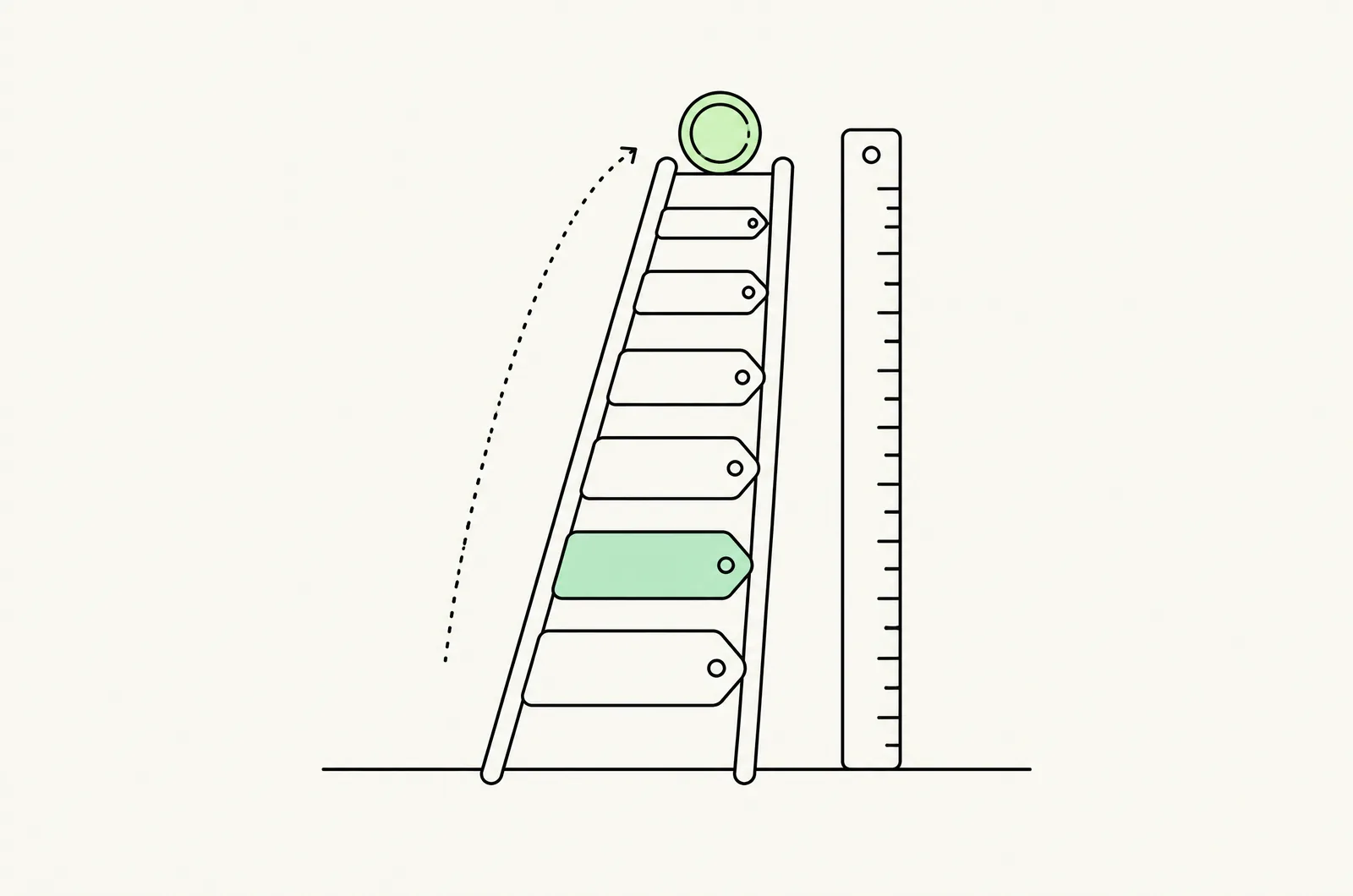
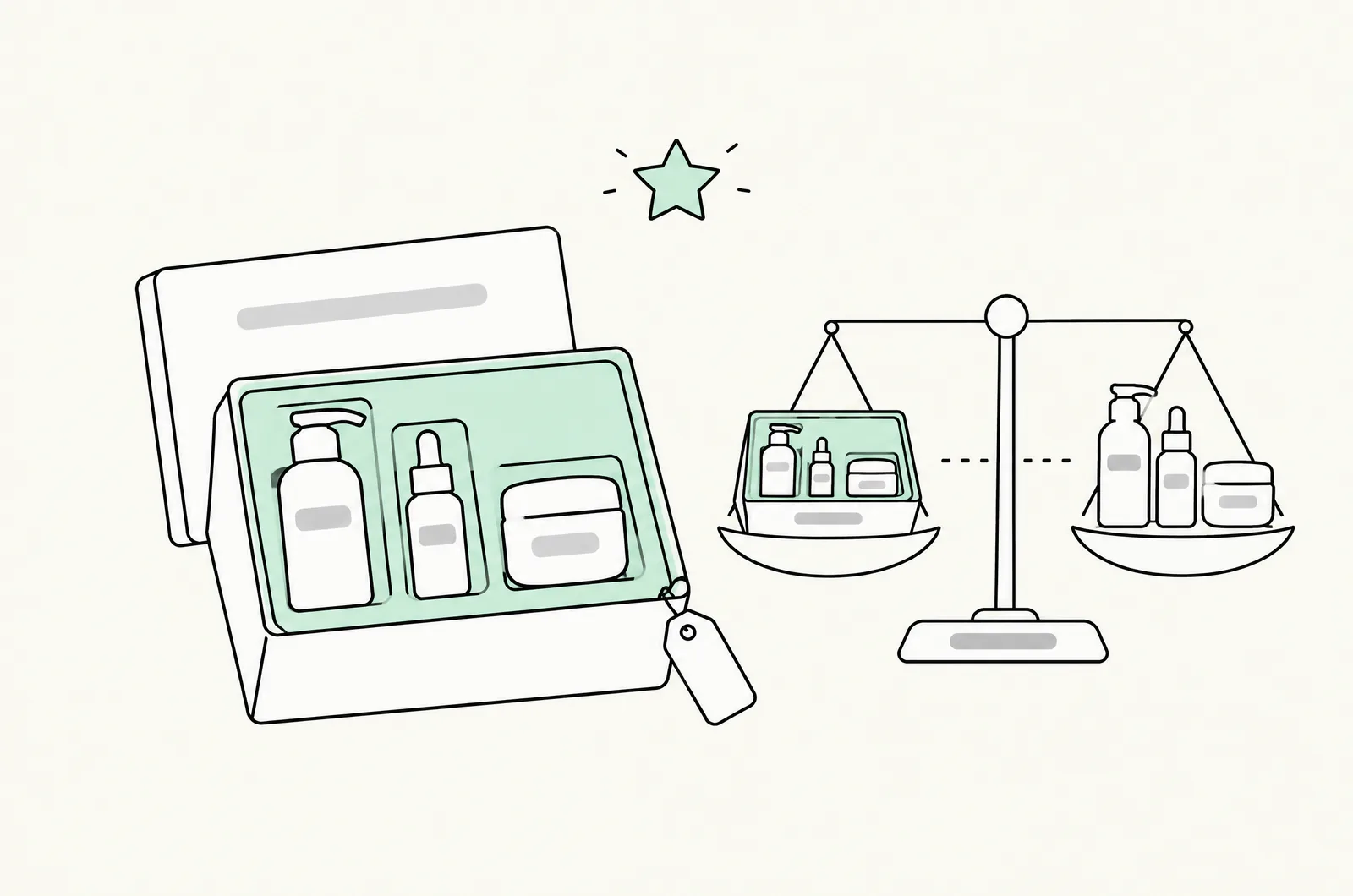
Price a bundle against contribution, not against the sum of parts alone. The working method: compute contribution per kit (kit price − COGS of every component − one fulfillment pass − fees), compare it with the contribution of the separate-item sale, and accept the gap only when the bundle buys real behavior change — higher conversion, bigger baskets, or trial of a new SKU. Practical rules: anchor the bundle between the sum-of-parts and the largest component's price; make the hero item the price floor's reference; price a 3-item kit at roughly 10–20% below sum-of-parts for high-margin catalogs, less for low-margin ones; never price the kit below the hero item plus variable costs of the fillers.
The economics: what a bundle actually costs you
A bundle's cost isn't the visible discount. It's the difference between two contribution numbers:
- Separate-sale contribution: each item bought alone — each carrying its own fulfillment pass and fee.
- Bundle contribution: one price, all components' COGS, one fulfillment pass, one fee.
That second point is the structural advantage bundles have over quantity breaks: a kit of three items saves you two fulfillment passes and consolidates fees, so you can discount the sticker price and sometimes keep equal contribution. The trap is the reverse: stores price bundles by feel ("looks like a deal") and never compute either number.
One nuance before the math: bundling works economically when customers' valuations of the components are heterogeneous — the shopper who values the serum at $45 and the moisturizer at $20 buys the kit at $85 where they'd have bought only the serum at $42. Bundling converts uneven demand into more total units. If your customers value everything equally (pure commodity refill packs), bundling adds little beyond what a multipack ladder already does.
The four pricing methods (and when each fails)
| Method | How it prices | Fails when |
|---|---|---|
| Sum-of-parts minus X% | Kit = (Σ component prices) − 10–20% | Component prices are inconsistent (one $90 hero, three $9 fillers → a fixed % is meaningless); margin too thin to afford the cut |
| Price anchor (hero + fillers) | Kit = hero price + a small increment that "throws in" the fillers | Hero carries most of the COGS — the increment must clear fillers' variable cost, not just look cheap |
| Category value anchor | Kit priced against the alternative solution (competitor sets, buying items separately elsewhere) | Your market has no comparable sets, or the anchor invites comparison shopping |
| Contribution-first (reverse pricing) | Start from the contribution you need, solve for kit price | Requires knowing unit costs cold — the method itself is the discipline |
The reverse-pricing method is the one worth internalizing. Instead of asking "what discount looks good?", ask "what must this kit earn per unit to be worth launching?" — then check whether a shopper-attractive price clears it. Four steps:
- Sum the landed COGS of every component (supplier invoice + inbound freight — not catalog cost).
- Add the kit's real fulfillment cost (one box, one pick-pack — from your 3PL rate card; kits that ship in retail packaging cost more than poly-mailer singles).
- Add the fee on your candidate price (3.2% + $0.30 typical — fee assumptions in our calculator).
- The kit price must exceed (1) + (2) + (3) plus the contribution you demand per order — usually the separate-sale contribution of the hero item alone.
Worked example: pricing a $108 skincare routine
Catalog: cleanser $28, serum $42, moisturizer $38 — sum of parts $108. Costs: COGS $7 + $11 + $9 = $27. Fulfillment: $4.50 per single item; the kit ships in one box at $5.50. Fees 3.2% + $0.30.
| Shopper buys all 3 separately | Routine kit | Kit at −17% ($89.95) | |
|---|---|---|---|
| Revenue | $108.00 | — | $89.95 |
| COGS | $27.00 | $27.00 | $27.00 |
| Fulfillment | $13.50 (3 passes) | — | $5.50 (1 pass) |
| Fees | $3.76 | — | $3.18 |
| Contribution | $63.74 | — | $54.27 |
| Contribution per item shipped | $21.25 | — | $18.09 |
The read:
- The kit gives up $9.47 of contribution per order (−15%) — but ships one box instead of three. Per shipped unit, the gap is smaller than the sticker discount suggests.
- Break-even: a kit order that replaces a three-item separate sale costs −$9.47 of contribution; a kit order that upgrades a single-item buyer (cleanser-only shopper: $15.30 contribution) into a routine earns ≈ +$39. The kit wins when upgrades outweigh replacements — which is exactly why you check order history before pricing: if most kit buyers were already buying all three items, you've built a rebate.
- The hero-anchored alternative: price the kit at $49 (serum $42 + "cleanser + moisturizer thrown in") — fails here: $49 − $27 COGS − $5.50 fulfillment − $1.87 fees = $14.63 contribution, below the serum's solo contribution of $24.86. The hero-anchor only works when the fillers are genuinely cheap to fulfill.
The decision rule: when the discount pays for itself
Adopt a bundle price when at least one of these holds — and verify with a test (testing design here):
| Signal | Why it justifies the gap |
|---|---|
| The kit converts shoppers who would have bought zero or one items | Incremental baskets, not rebates on existing multi-item orders |
| The kit introduces a new SKU to existing customers | Sampling value — the filler is an acquisition cost |
| The kit raises conversion on a high-traffic page | More contribution per visitor even at lower per-order margin |
| Fulfillment consolidation is real | One pass instead of three — the margin you "give away" partly returns as ops savings |
And reject it when: the kit merely rebates customers who already buy all three items (check order history before pricing), the gap exceeds what a quantity-break ladder would cost on the hero item, or the kit's price would undercut the hero's solo price-perceived-value.
Kit-size laddering: mini / starter / full
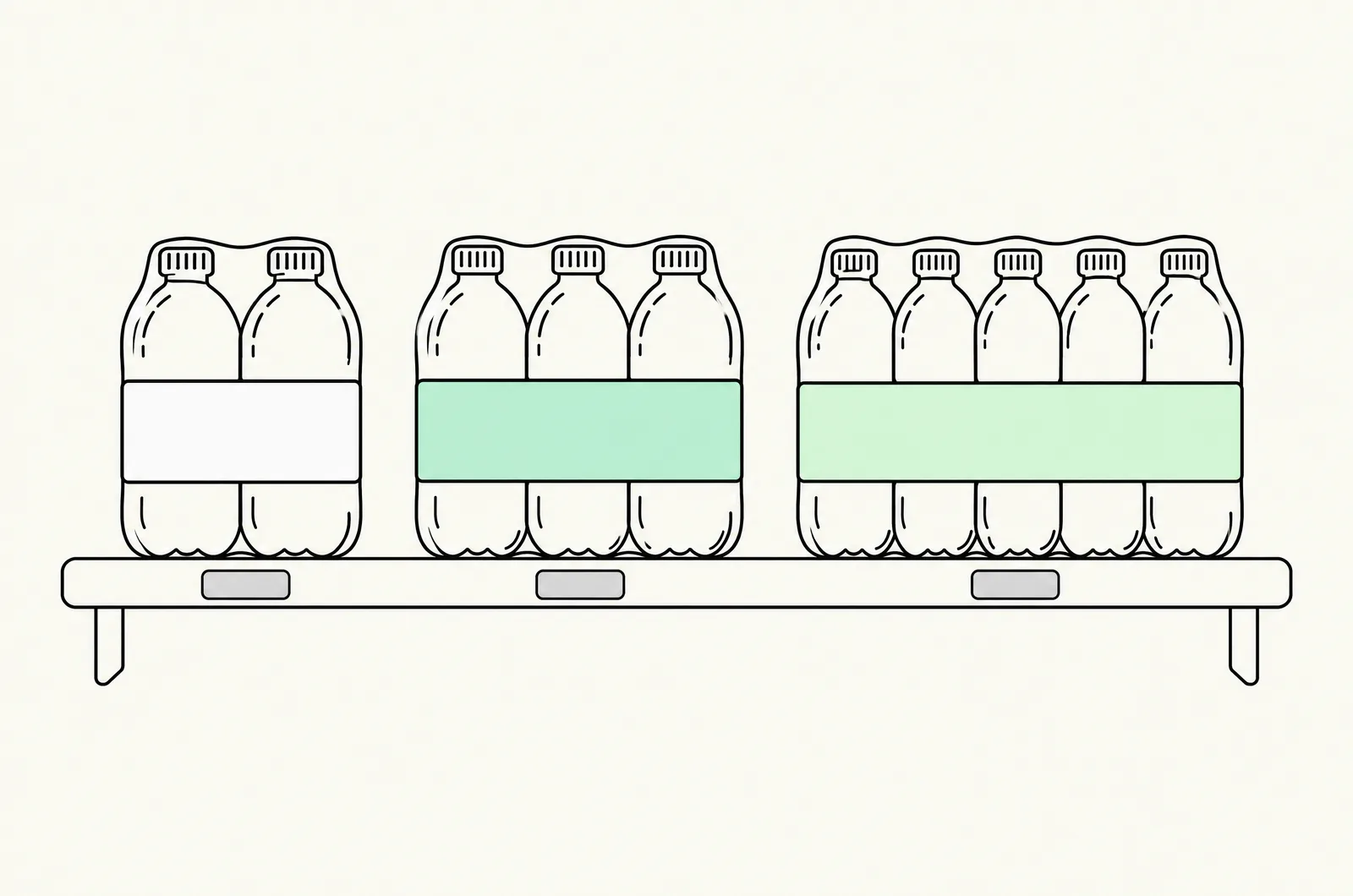
The strongest bundle pages don't offer one kit — they ladder kit sizes the way multipacks ladder units:
| Kit | Contents | Price logic | Job |
|---|---|---|---|
| Mini / trial | Smallest sizes, 2 items | Priced for acquisition — near-zero margin acceptable | Top-of-funnel; the kit equivalent of a sample pack |
| Starter | Full-size hero + one filler | Modest discount (5–10% below sum) | The default offer most shoppers should pick |
| Full routine | All items, full sizes | Deepest gap vs sum-of-parts (15–20%) | The anchor that makes Starter look sensible |
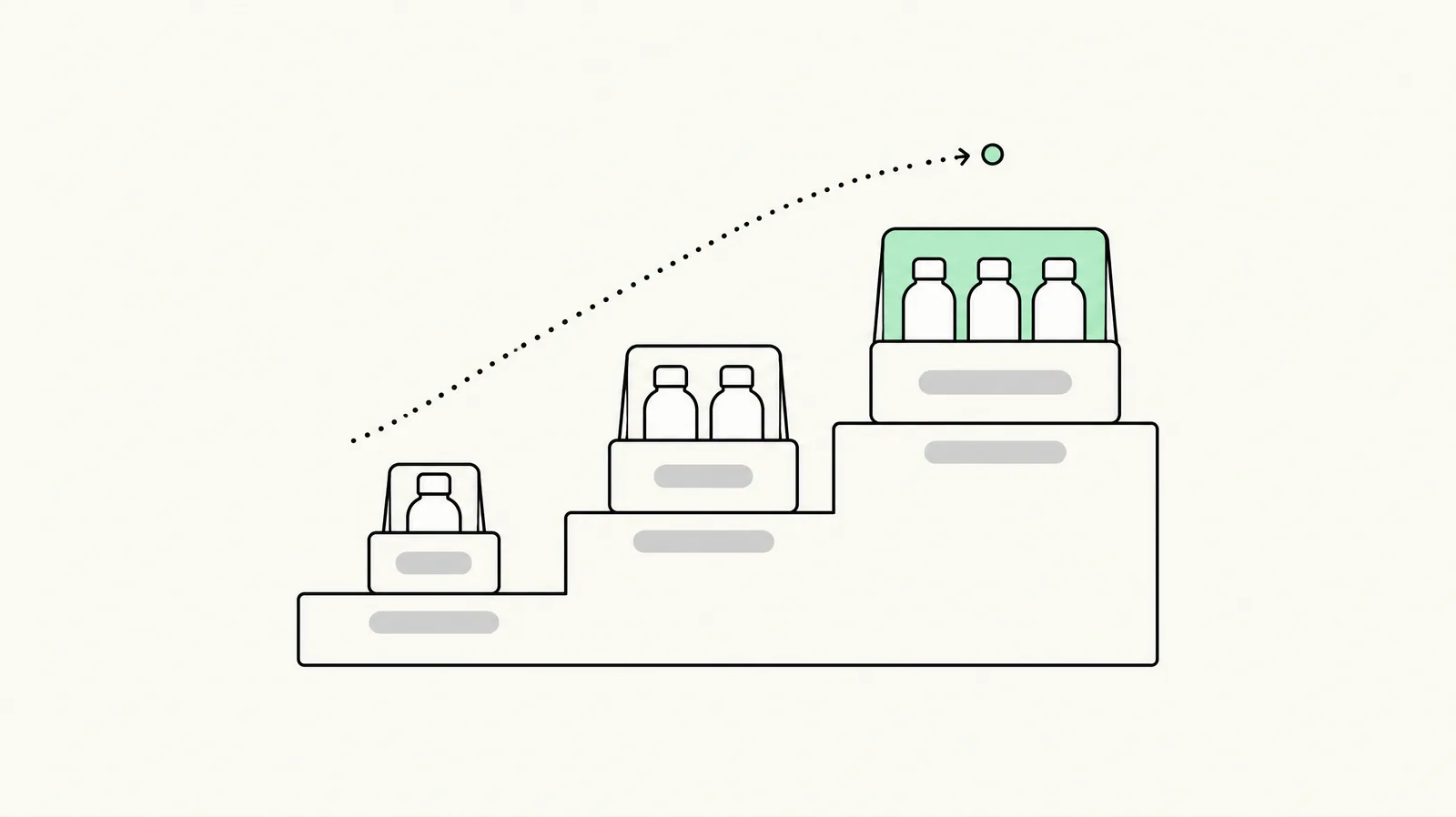
The laddering insight: the middle kit is the one you optimize for; the large kit exists to make it look like the value pick. Price the full routine aggressively enough to anchor, but don't expect it to win mix share — a 10/60/30 kit-mix distribution is healthy; if the full kit dominates, it's underpriced.
For replenishable kits (skincare, supplements, coffee), the ladder extends into recurring revenue: kit SKUs attached to a selling plan, with the subscribe discount kept at or below the kit discount so the two offers don't cannibalize (subscription bundle architecture).
The traps (most stores hit at least two)
- Pricing from the sticker, not the costs. "Save 20% off $108" written before anyone computed contribution. Run the four-step reverse pricing first — always.
- The fulfillment illusion. Assuming the kit ships for the same $4.50 as a single. Kits in retail-grade packaging routinely cost $1.50–3 more per pass; ask your 3PL for the kit rate card before pricing.
- Stacking suicide. The kit's implied discount stacking with a sitewide code ("20% kit + 20% code = 36% off sum-of-parts") — model the worst legal stack against your floor before campaign season, and set combination rules deliberately.
- Kit cannibalizing the hero. If the kit's effective hero price ("kit price × hero's revenue share") undercuts the hero's solo price, single-unit sales migrate into the kit and you've rebated existing demand. Check: hero's implied price in the kit ≥ hero solo price × ~0.85.
- Ignoring returns asymmetry. Kits return all-or-nothing; a partial return (customer keeps the cleanser) breaks the pricing model. Write the kit return policy to match the mechanics.
- One price across markets. Shopify Markets pricing applies to kits too — a $89.95 kit doesn't clear contribution in every currency after FX and regional fees. Re-run the math per major market.
Last updated: November 16, 2026. Worked figures use stated assumptions (fee rates, 3PL pass costs) — re-run with your own rate card; the decision rules hold regardless of the specific numbers.
Want this set up on your store?
Book a free 20-minute strategy call. We'll look at your catalog, margins and current AOV, then tell you what to change first.
Book a free strategy callFrequently asked questions
How do you price a product bundle?
Compute contribution first: kit price must cover all components' COGS, one fulfillment pass, and fees, plus the contribution you demand per order. Then choose the sticker against sum-of-parts — typically 10–20% below for high-margin catalogs, less for thin ones — and verify the gap buys real behavior change (new baskets, new SKUs, higher conversion).
How much should a bundle be discounted?
The discount that keeps the kit's contribution above the hero item's solo contribution is the ceiling. In our skincare example, a $89.95 kit on a $108 routine keeps $54.27 vs $63.74 separate — acceptable because kits convert single-item buyers; a $49 hero-anchored price fails because it lands under the serum's solo contribution.
What's the difference between bundle pricing and quantity break pricing?
Quantity breaks discount depth on one product — the all-units rule makes deep tiers expensive. Bundles discount a set of different products — but you save fulfillment passes and consolidate fees, so the effective cost of the discount is lower. Use quantity breaks for repeat-purchase depth on a hero SKU; bundles for routines, gifts and cross-SKU trials.
Should a bundle be cheaper than buying separately?
Almost always yes in DTC — the sum-of-parts comparison is the shopper's mental test. The exception is value-added kits (a curated box with packaging/gift value), where the bundle can price at or above sum-of-parts because the curation itself is the product.
How do I calculate bundle profit margin?
(Kit price − all component COGS − kit fulfillment cost − payment fees) ÷ kit price. Note this is contribution, the margin that answers pricing questions — gross margin on the sticker alone overstates kit profitability because it ignores fulfillment consolidation or lack of it. The quantity break calculator runs the same arithmetic for single-product ladders.
Can I run a bundle and a discount code together?
Where Shopify's combination settings allow it — and the stacked result must clear your contribution floor. Cross-class stacks multiply (a 20% product-class kit discount + a 10% order code = 28% off), so model the worst legal stack before launch: discount stacking rules.