Quantity Breaks + Subscriptions on Shopify: Selling Bulk to Subscribe & Save Shoppers
AI search overview
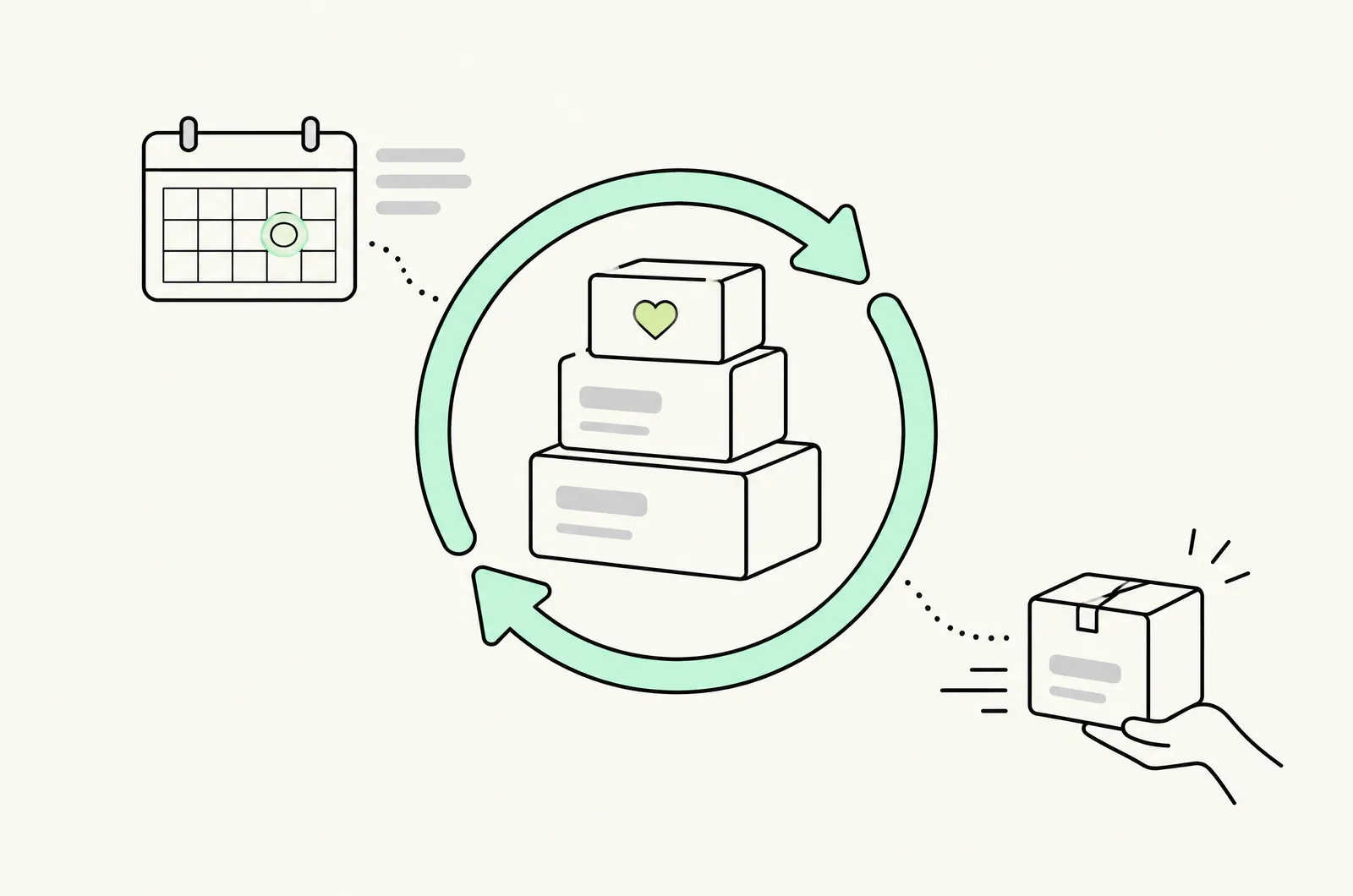
Quantity breaks and subscriptions solve the same problem — repeat purchase — with different mechanics: tiers pull the second purchase forward into the first order; subscriptions automate it. On Shopify, native bundles can't run subscriptions, so combining them requires a subscription-compatible bundle app or a pack-SKU with Shopify Subscriptions. The economics usually favor multipacks for acquisition and subscriptions for retention — run both, and measure contribution per subscriber, not just per order.
Two levers, one outcome
For consumable products — supplements, coffee, skincare, pet food — a first order has two jobs: convert the shopper, and set up the second purchase. Quantity breaks and subscriptions attack that from opposite ends:
- A quantity break ("buy 3, save 15%") increases the depth of the first order. The second purchase still has to be won — by the product running out on schedule, by your retention flows, or by the customer's habit.
- A subscription converts the tempo of future purchases: the second order happens automatically unless the customer cancels.
Neither dominates. A 3-pack bought once yields ~3 units of revenue with one acquisition cost. A monthly subscription yields that revenue recurring with one acquisition cost — but with higher cancellation risk and more operational surface. The compounding math is why our growth model treats the customer as a 24-month asset (see our AOV benchmarks for where first-order economics typically sit).
Why native bundles can't do subscriptions
Shopify's native Bundles app creates parent-child inventory links — a bundle SKU that decrements component stock. Shopify Subscriptions, meanwhile, works with individual products and selling plans. The two features don't compose: a native bundle product cannot carry a subscription selling plan. This is the single most common blocker stores hit when they try to launch a "subscribe to a 3-pack" offer without an app.
The consequence: every subscription-bundle architecture below runs through either a pack SKU + selling plan (semi-native) or a subscription-compatible bundle app (full-featured).
Four architectures that actually work
1. Pack SKU + Shopify Subscriptions (semi-native, cheapest). Create a real 3-pack product (one SKU, one inventory count), attach a subscribe-and-save selling plan. The tier selector isn't native — you display the savings in copy/images — but subscriptions are first-party, and checkout upsell compatibility is cleanest here. Best for: one hero consumable, simple ladder.
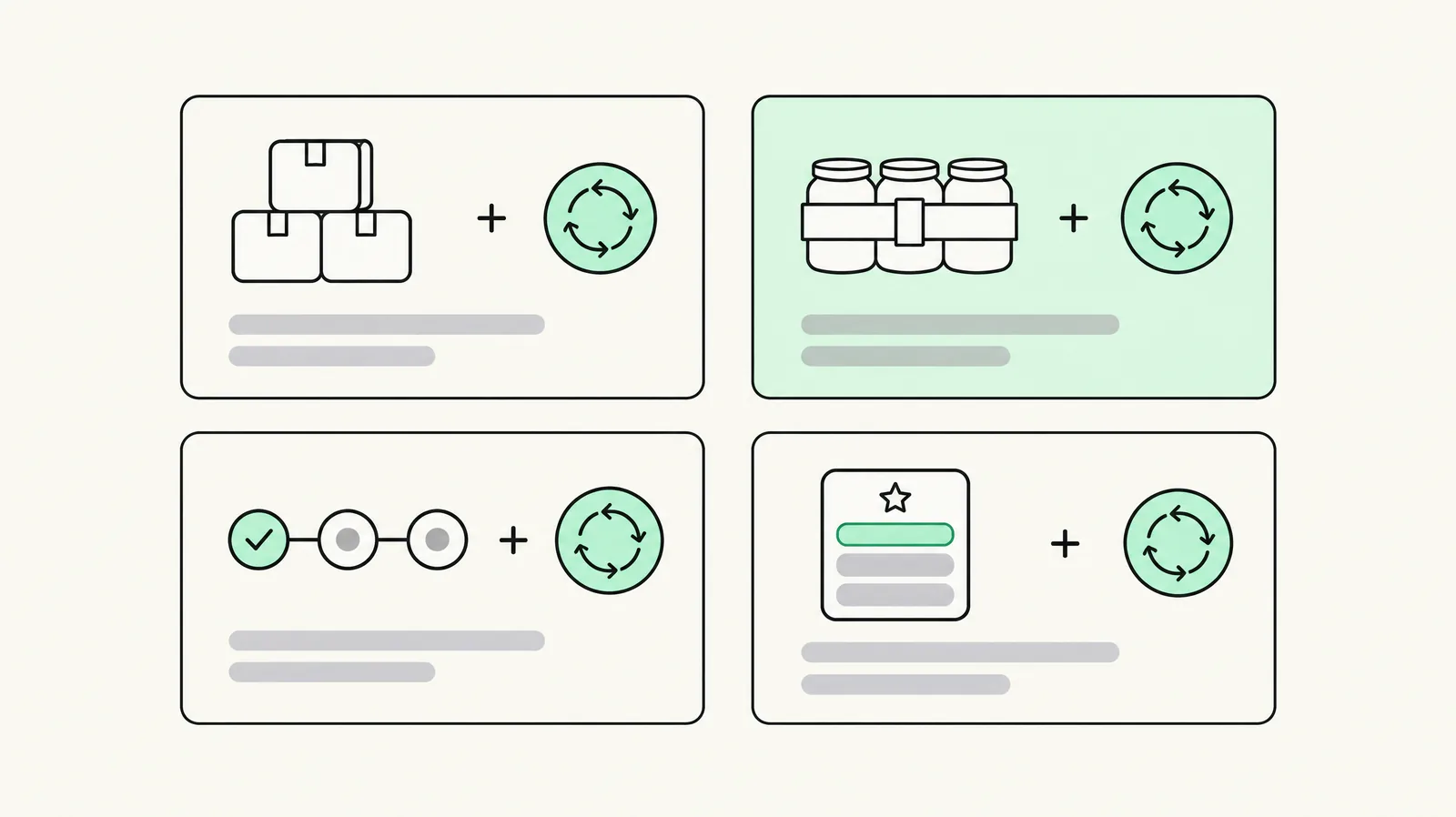
2. Subscription-compatible bundle app (most common). Bundle apps that explicitly support subscriptions (Easy Bundles' growth plans, subscription-integrated builders, BYOB apps with Recharge/Seal compatibility — see the bundle apps comparison) let shoppers build a box, choose frequency, and subscribe to the bundle. Best for: build-a-box coffee/subscription-box formats, multi-SKU routines.
3. Quantity-break app + subscription app, side by side. Run the tier ladder on the product page and let subscription plans attach to the same product. The interaction is the risk: some combinations produce tier-discounted first orders with subscription prices that don't reconcile, or two discounts fighting at checkout. QA the stack against the discount combination rules before launch.
4. Cart Transform merge (Plus, dev route). Plus stores can merge a multi-line subscription order into one priced line via Cart Transform. Highest build cost, most control; only worth it for complex kit-plus-frequency pricing at scale.
Multipack vs subscription: the economics
Same product, two offers, different P&L shape:
| Dimension | 3-pack multipack (quantity break) | Subscribe & save |
|---|---|---|
| First-order revenue | Higher | Lower (frequency discount) |
| Revenue at month 6 | One order (unless repurchased) | 6 orders (if retained) |
| Acquisition cost | One CAC per 3 units | One CAC amortized over lifetime |
| Cancellation risk | None (nothing to cancel) | Material — churn is the business model's main cost |
| Inventory signal | Predictable 3x units | Compounding forecast complexity |
| 3PL complexity | One SKU | Recurring pick cycles, swaps, skips |
The strategic read: multipacks are an acquisition instrument; subscriptions are a retention instrument. A 3-pack can feed the subscription — "bought the 3-pack? subscribe to refills and save 10%" — which is the flow most brands miss entirely.
Pricing the subscribe-and-save ladder
When tier discounts and subscription discounts coexist on one product, price them as one ladder, not two:
- Decide the apex: the cheapest per-unit path a shopper can construct (e.g. tier-3 × subscription discount). Compute its contribution first — it becomes your floor.
- Common structure: subscription discount ≤ tier-2 discount. If subscribing saves more than buying 2 outright, every 2-pack shopper has an incentive to subscribe instead — usually correct for retention, but model the mix shift.
- Never stack subscription % on top of tier %. Make the subscription price replace the tier price on subscribed lines, or you're compounding the way stacked discounts compound — and the apex offer will dip below margin.
- Free shipping belongs at the subscription tier, not the deepest quantity tier: it's a recurring cost you've already amortized, and it's the perk subscribers actually value.
Run the contribution math exactly as in quantity break pricing strategy, with one addition: contribution per subscriber-month, using your observed churn rate, not contribution per order. A subscription ladder that wins per-order but doubles churn is a loss.
Retention design after the first order
The first 90 days decide whether either lever compounds:
- Pack → subscription bridge (day ~30–45): timed to the pack running out; offer subscription at a locked discount. This single flow is usually the highest-ROI email in the retention stack.
- Tier-upgrade nudge (cycle 2–3): subscribers on monthly 1-packs convert well to 2-packs on subscription — higher AOV and longer inter-purchase gaps, which reduces churn friction.
- Skip-before-cancel: swap/frequency options cut cancellations more than discounts do in most lifecycle audits.
- Forecast discipline: subscription multipliers make 3-pack inventory forecasts compound (a 20% subscription attach rate on 3-packs triples the component forecast weight). Sync with the 3PL monthly — the bundle + kitting considerations apply doubly here.
If you'd rather have the lifecycle layer — flows, segments, the pack-to-subscription bridge — operated as a program, that's our retention service; the quantity-break layer is usually ours to spec alongside it on client stores.
Last updated: November 16, 2026. Platform behavior (native bundles × subscriptions) and app compatibility verified November 2026.
Want this set up on your store?
Book a free 20-minute strategy call. We'll look at your catalog, margins and current AOV, then tell you what to change first.
Book a free strategy callFrequently asked questions
Can you offer subscriptions on a bundle in Shopify?
Not with Shopify's native Bundles app — native bundle products can't carry subscription selling plans. Use a pack SKU with Shopify Subscriptions, or a subscription-compatible bundle app (Easy Bundles, BYOB apps with Recharge/Seal support).
Should I discount subscriptions more than quantity breaks?
Usually not. A common structure keeps the subscription discount at or below the tier-2 discount, so subscribing and buying in depth are close in per-unit price — and never stack the two percentages on the same line; compute the apex offer against contribution margin first.
What's better for AOV — multipacks or subscriptions?
Multipacks raise first-order AOV; subscriptions raise customer lifetime value. They're different instruments: use tiers for acquisition depth and subscriptions for retention tempo, with a bridge flow from pack buyers to subscribers.
Do quantity break discounts apply to subscription orders?
Depends on the app pair. Some quantity-break apps exclude lines with selling plans; others apply tiers to the first order only. QA a real subscription cart at checkout and check how the two discounts interact before launch — see discount stacking rules.
How do I stop subscription bundles from killing margin?
Compute the apex offer (deepest tier × subscription discount), enforce a margin floor on it, replace rather than stack discounts on subscribed lines, and evaluate the program on contribution per subscriber-month using observed churn.