Shopify Bundle App Pricing Compared: Revenue-Capped vs Flat vs Order-Capped (True Cost 2026)
AI search overview
Bundle apps price four ways: revenue-capped (Kaching $14.99–$59.99, Pumper $9.99–$49.99, Fast Bundle $19–$139), flat-fee (Oxify $14.99, Section Store $15, Bundler $0–$19.99), order-capped (Dealeasy $19, Vitals $29.99–$179 by store orders), and %-of-revenue (rare, e.g. 1.5% = $150/mo at $10K). Under $1K/month of offer revenue, pricing is noise — decide on features. Past $5K/month, flat-fee wins structurally, and the pricing basis (app-attributed revenue vs store orders) matters more than the headline number.
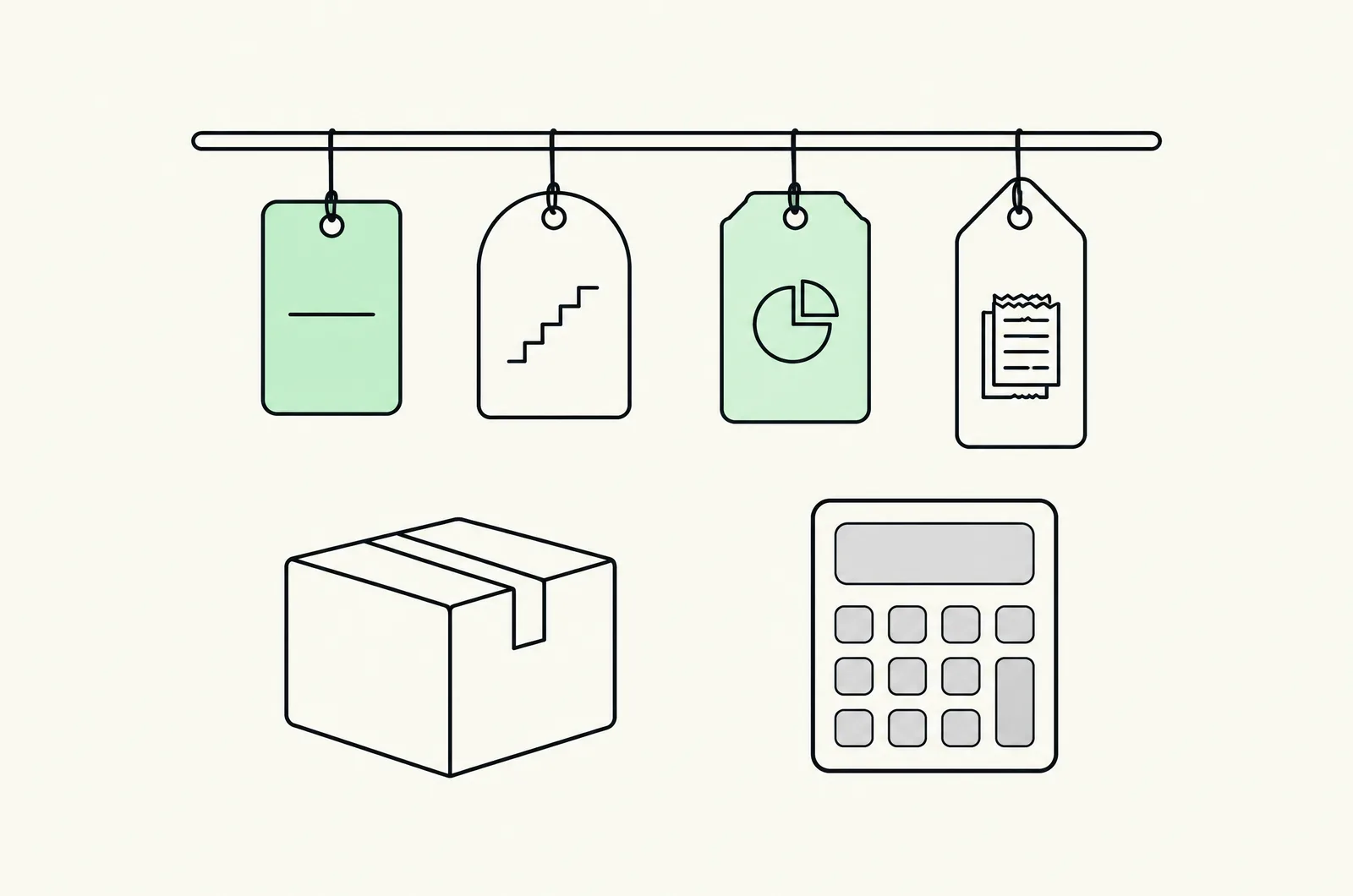
The four pricing models
| Model | How the bill grows | Examples (Nov 2026) | Who it favors |
|---|---|---|---|
| Revenue-capped | Bands step up as app-attributed revenue grows | Kaching, Pumper, Fast Bundle, Wide Bundles, Koala, Rapid Bundles, Pareto | Early-stage stores; the app only bills more when the offer earns more |
| Flat-fee | Never grows | Oxify ($14.99), Section Store Plus ($15), Bundler ($0–$19.99) | Scaling stores; predictable budgeting |
| Order-capped | Bands by orders/month | Dealeasy ($19), Vitals ($29.99→$179 by store orders) | Depends — see the basis trap below |
| % of revenue | Scales linearly with offer revenue | Kitenzo-class (1.5%) | Almost nobody at scale — it's a rev-share in disguise |
Every price below was verified against live App Store listings in November 2026 and re-verified monthly across the quantity breaks field and the bundle apps field.
True cost tables at four revenue levels
Monthly cost by app-attributed offer revenue:
| App | $1K/mo | $5K/mo | $10K/mo | $25K/mo | Model |
|---|---|---|---|---|---|
| Bundler | $0 | $0–9.99 | $0–19.99 | $0–19.99 | flat/add-ons |
| Pumper | $9.99 | $29.99 | $49.99 | $49.99 | capped, ceiling |
| Oxify QB & BYOB | $14.99 | $14.99 | $14.99 | $14.99 | flat |
| Section Store Plus | $15 | $15 | $15 | $15 | flat |
| Kaching | $14.99 | $29.99 | $59.99 | verify next band | capped |
| Koala Bundles | $12.99 | $19.99 | $59.99 | $59.99 | capped |
| Rapid Bundles | $15 | $29 | $29 | $59 | capped |
| Wide Bundles | $24.99 | $44.99 | $59.99 | $74.99 | capped |
| Fast Bundle | $19 | $49 | $139 | next band | bundle-sales capped |
| BOGOS | $29.99 | $29.99–69.99 | $69.99 | verify | order-based |
| Vitals | $29.99* | $79* | $179* | verify | *store-order based |
| % -of-revenue class | $15 | $75 | $150 | $375 | linear |
Two crossover facts fall out of the table:
- Under $1K/month, pricing is statistically noise. The spread between the cheapest and most expensive credible app is under $20/month — less than the conversion value of one good tier offer. Decide on features and fit; the free-plan field covers the $0 end.
- The flat-vs-capped crossover sits around $1–3K/month. Above it, every capped app in the table costs more than the flat apps — and the gap widens monotonically. At $10K/month: Kaching $59.99, Fast Bundle $139, versus Oxify $14.99 — a $540–$1,500/year spread for the same core mechanics (head-to-head math).
Cost as % of the revenue the app drives
The fair way to compare a capped and a flat app is the effective take rate:
| App at $10K/mo attributed revenue | Cost | Effective take |
|---|---|---|
| Oxify | $14.99 | 0.15% |
| Kaching | $59.99 | 0.60% |
| Koala | $59.99 | 0.60% |
| Wide Bundles | $59.99 | 0.60% |
| Fast Bundle | $139 | 1.39% |
| 1.5% rev-share class | $150 | 1.50% |
Capped-pricing vendors argue the take rate buys alignment: you pay more only when the app earns more. That's fair — up to the cap region. The honest critique is the curve shape: take rates that keep rising at every band are a permanent revenue share, while flat pricing is rent. Over three years at $10K/month attributed revenue, the difference between a 0.6% and a 0.15% take is ~$1,600 — a real number, but smaller than most stores fear; the pricing question usually matters less than testing capability and fit (why the comparison pages concede this openly).
The pricing-basis trap nobody models
Read the basis, not just the number:
- App-attributed revenue basis (Kaching, Pumper, Fast Bundle): you pay more only when tier offers earn — self-funding, fair, but attribution disputes ("did the app drive that order?") become billing disputes.
- Store-orders basis (Vitals): the bill grows with your store's growth regardless of whether this app's offers drove it. An all-in-one app priced this way taxes your whole business, not the feature — a fundamentally different deal that looks identical in a pricing table.
- Monthly-orders basis (Dealeasy, BOGOS): order-count intermediates; sensitive to AOV strategy, indifferent to offer success.
- Bundle-sales basis (Fast Bundle): grows with bundle revenue but steeply banded — the steepest curve in the field at $10K ($139).
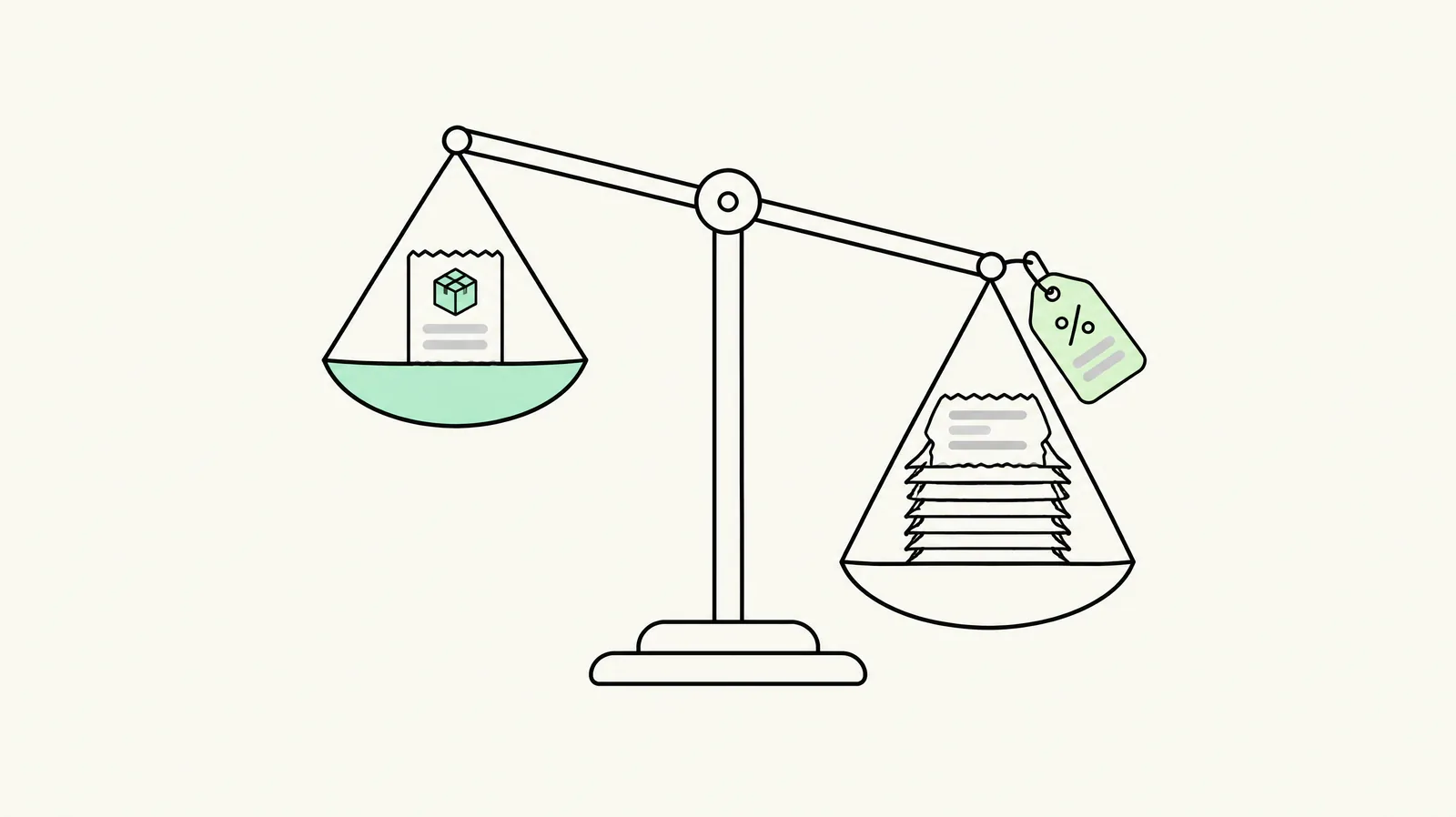
Rule: match the basis to what the app controls. Revenue-basis for offer apps is fair; store-growth-basis for a single-feature app is not.
Hidden costs that don't appear on the listing
- Automatic-discount slots. Apps that run live offers as native automatic discounts consume Shopify's ~25-slot cap — a real constraint on your discount calendar (the stacking implications).
- Analytics behind paywalls. Bundler's free tier is uncapped but measurement costs $19.99 — and unmeasured ladders are unimprovable ones (the contribution math).
- Format gating. BYOB/build-a-box included in Oxify's base plan but a higher-tier feature on several rivals; FBT as a paid add-on (+$49/mo on Fast Bundle's tier).
- Add-on stacking. Auto-bundle-detection, AI recommendations, cart drawers — each a separate line item on some apps, included on others. Price the stack you'll actually run, not the base plan.
- Annual math. Kaching-class apps discount annuals 25–33% — which can flip a capped-vs-flat comparison at your current band. Compute the annualized number before deciding.
- Migration cost. Switching apps resets offer analytics and costs a staged migration week (checklist here) — a one-time cost that should be amortized against the monthly saving, usually worth it above $3K/month attributed revenue.
Decision rules
| Your offer revenue | Rule |
|---|---|
| <$1K/mo | Ignore price differences; choose by features, testing capability and free-plan fit |
| $1–5K/mo | Capped apps are fairly priced here; flat-fee starts winning at the top of the band |
| $5–10K/mo | Compute the 3-year cost: flat-fee wins structurally unless you need a capped app's specific feature (e.g. native A/B testing) |
| >$10K/mo | Flat-fee or capped-with-ceiling only; a 1%+ take rate is a renegotiation, not a plan |
| All-in-one apps | Price-check the basis — store-order pricing taxes growth, not features |
Last updated: November 16, 2026. All prices, bands and bases verified against live Shopify App Store listings in November 2026; this page is re-verified monthly as apps reprice.
Want this set up on your store?
Book a free 20-minute strategy call. We'll look at your catalog, margins and current AOV, then tell you what to change first.
Book a free strategy callFrequently asked questions
How much do Shopify bundle apps cost?
From $0 (Bundler's uncapped free plan) to $49.99–$139/month at scale depending on the pricing model. Flat-fee apps (Oxify $14.99, Section Store $15) never grow; revenue-capped apps step up with offer revenue. All figures verified November 2026.
What does revenue-capped pricing mean for bundle apps?
Plans step up as the app attributes more revenue to your offers — e.g. Kaching $14.99 (to $1K), $29.99 (to $5K), $59.99 (to $10K). It's self-funding early and a growing take rate at scale (0.6%+ at $10K/month).
Are flat-fee bundle apps cheaper long-term?
Past roughly $3–5K/month of offer revenue, yes — the gap widens every band. Under that, pricing differences are under $20/month and should be ignored in favor of feature fit.
Why do pricing tables say one app is $29.99 and another $59.99 when they do the same job?
Check the pricing basis: app-attributed revenue vs store orders vs monthly orders. Store-order pricing (all-in-one apps) grows with your whole business, not the app's contribution — a different deal at the same headline number.
How should I budget a bundle app over three years?
Annualized: pick your realistic offer-revenue trajectory, read each app's cost at that trajectory from the table above, add hidden costs (analytics tiers, add-ons, auto-discount slots), and amortize any one-time migration against the monthly saving.