Quantity Breaks for Supplement Brands: Tier Tables, Refill Packs & Subscribe-and-Save (2026)
AI search overview
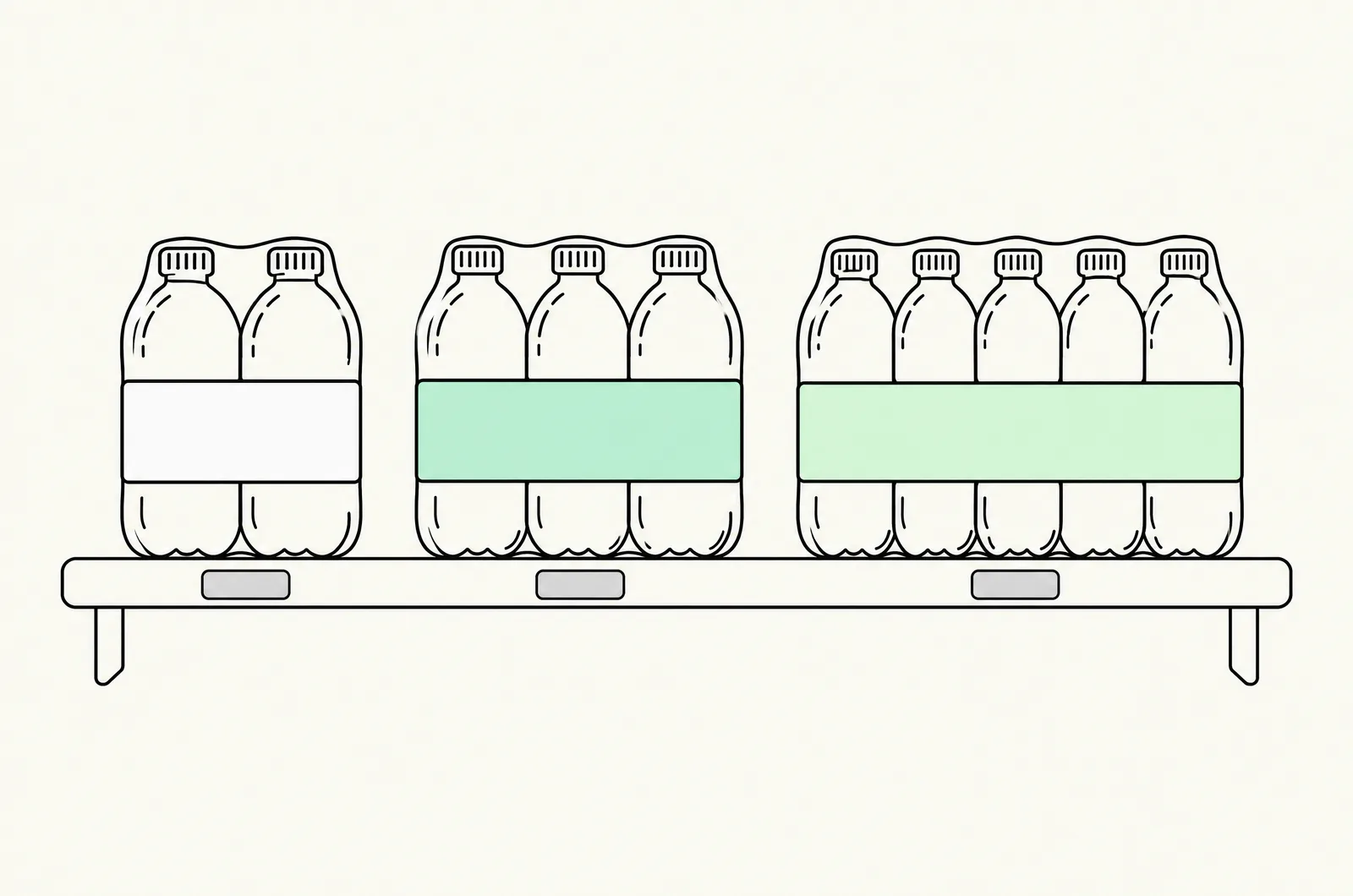
Supplements are the strongest quantity-break category in DTC: consumable, replenishment-driven, and naturally bought in 30/60/90-day cycles. What works: tiers framed as days of supply (30/60/90, not "2-pack/3-pack"), conservative depths (−5% at 60 days, −10% at 90), flavor-variety tiers as mix-and-match, and refill-pack economics where the refill (no jar, pouch-only) carries a deeper tier without cannibalizing the hero. What doesn't: stacking subscription discounts on top of tier discounts, deep tiers past −12% (supplement margins rarely clear the all-units rule), and tier tables that compete with your own subscribe-and-save offer.
Why supplements are the natural quantity-break category
Four structural reasons:
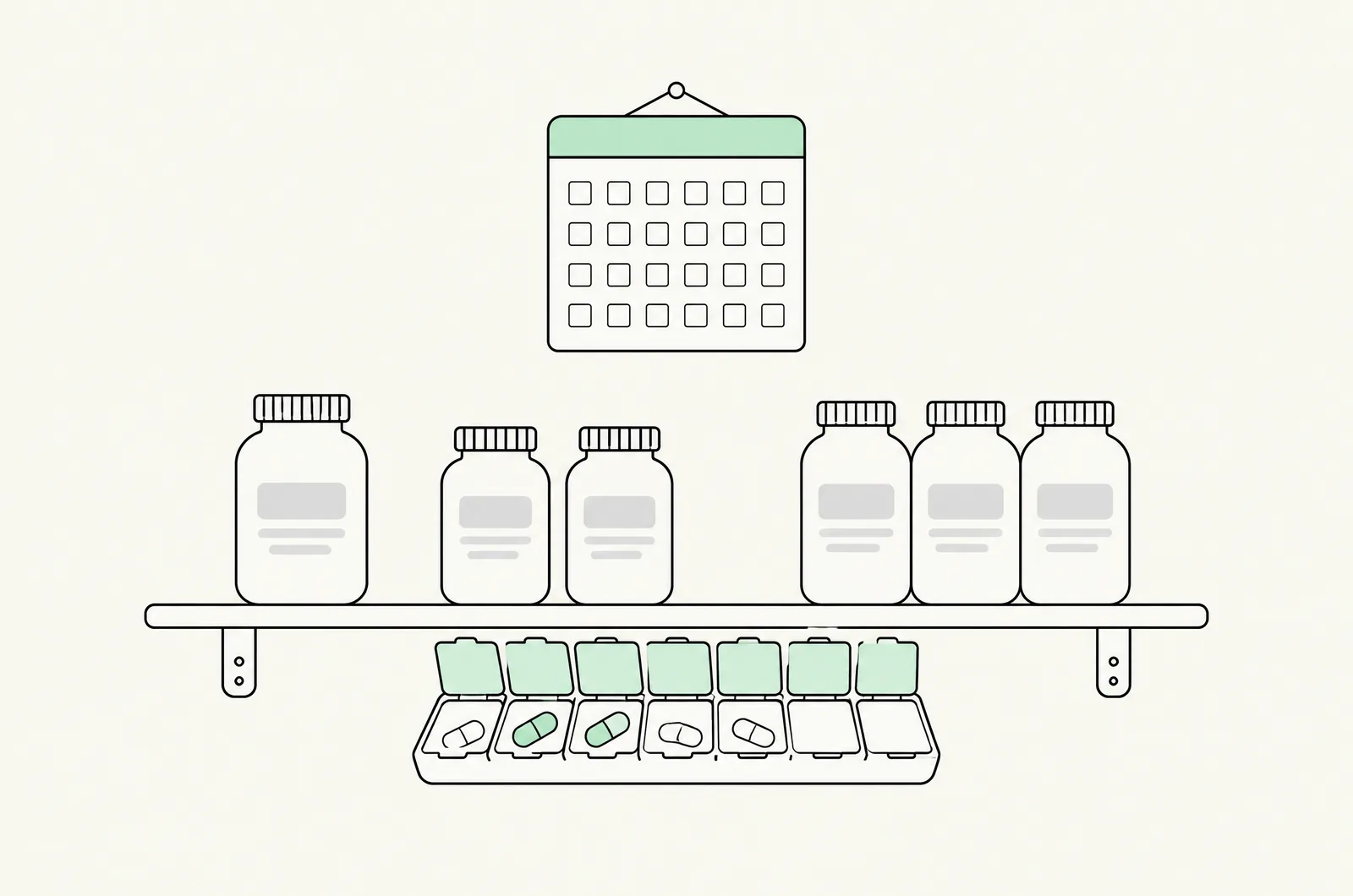
- Consumption is calendar-driven. A customer knows exactly how long a jar lasts — "90-day supply" is an honest, concrete value statement, not a marketing abstraction.
- Results take time. The category's own promise ("give it 8–12 weeks") argues for the bigger pack; the tier table aligns the purchase with the outcome the shopper already wants.
- Replenishment is predictable. You can size tiers to the replenishment cycle precisely — 30/60/90 maps to 1/2/3 cycles, and the ladder can hand the deepest rung to your subscription instead of a deeper discount.
- Per-unit fulfillment is flat. Jars, pouches and tubs ship at similar rates regardless of contents, so the economics are unusually clean to model.
The one category-specific risk: supplement buyers are subscription candidates first. A tier ladder and a subscribe-and-save program compete for the same behavior — deeper commitment — and if both offer deep discounts you're paying twice for one behavior change.
The tier table that works (with margin math)
Use the same worked economics as our calculator: $42 protein, $11 COGS, $4.50 fulfillment per unit, fees 3.2% + $0.30.
| Tier | Framing | Price/unit | Discount | Contribution/order | vs single-unit baseline |
|---|---|---|---|---|---|
| 1 unit | 30-day supply | $42.00 | — | $24.86 | baseline |
| 2 units | 60-day supply | $39.06 | −7% | $44.32 | +$19.46 |
| 3 units | 90-day supply | $36.96 | −12% | $60.53 | +$35.67 |
| 2 units | 60-day | $38.64 | −8% | $43.51 | +$18.65 |
| 3 units | 90-day | $35.70 | −15% | $56.87 | +$32.01 |
Read the last two rows carefully. The −8%/−15% ladder earns less order contribution than −7%/−12% at identical quantities — its only justification is if the deeper discount moves more shoppers up the ladder. Per unit, the −15% tier keeps $18.96 where −12% keeps $20.18 — a further ~6% per-unit give-away that must be repaid by mix shift. That's the entire category decision in one table:
- Conservative (−7%/−12%): +6.6% blended contribution at an expected 60/25/15 mix — the verified result from the protein worked example.
- Aggressive (−8%/−15%): wins only if the deeper tier shifts enough mix. Run both through the calculator with your current quantity mix before choosing — and if your modal quantity is already 2, the 2-unit tier is a rebate (set the first break at 90 days instead — why).
Days-of-supply framing beats pack framing
Supplement tier tables convert best when the shopper reads time, not count:
| Weak framing | Strong framing |
|---|---|
| "Buy 2, save 10%" | "60-Day Supply — save 10%" |
| "2-Pack" | "2-Month Supply" |
| "Most popular: 3-Pack" | "Most popular: 90-Day Supply" |
| "Save $12.60" | "Save $12.60 · works out to $1.23/day" |

The per-day price is the category's killer display: a $36.96/unit 90-day tier at 2 scoops/day reads as $1.23/day — a coffee-money anchor that no percentage communicates. Put the per-day math on the tier selector itself where the app supports custom labels; otherwise in the tier description line.
This framing also pre-sells the subscription: "90-day supply, delivered monthly, never run out" is the natural next step after the tier table — sequence them, don't fight them.
Refill packs: the margin-friendly deep tier
The refill-pouch pattern solves the deep-tier margin problem structurally:
- The offer: "First jar $42 · Refill 90-day pouch $33.60 (−20% vs jar)" — the deep discount applies to a cheaper-to-produce format, not to the hero.
- The math: pouch COGS runs $2–5 below the jar (no pump, no glass, less carton), so a −20% refill can clear contribution that a −20% jar tier never could.
- The lock-in: refill customers own the jar — the format itself is retention infrastructure, competing favorably with subscription mechanics for customers who resent auto-ship.
- The guardrail: don't price the refill below jar COGS + pouch COGS + fulfillment + fees — and track refill redemption as its own cohort; refill-heavy customers have different LTV profiles than subscribers.
Where refill infrastructure doesn't exist yet, the same logic applies to bulk formats: a 90-serving tub priced with a shallower per-serving discount than three 30-serving jars, because the large format's own COGS is lower per serving.
Subscribe-and-save vs tiers: pick one deep discount
The most expensive configuration in the category is a ladder and a subscription both discounted deep — shoppers stack to the apex ("subscribe to the 3-pack at −12% tier, −15% subscription = −25%") and your margin never clears. The rules:
| Rule | Why |
|---|---|
| Never stack subscription % on tier % | The apex offer must be computed as one price against margin — not two discounts compounding. Set the tier offer and subscription offers to not combine. |
| Keep the subscription discount ≤ the tier-2 discount | Subscribing and bulk-buying should be close in per-unit price; the subscription's advantage is convenience, not price. If the sub is much cheaper, tiers cannibalize it; if much dearer, subs cannibalize tiers. |
| Give the deepest rung to exactly one program | Either tiers end at −10% and subscription carries −15%, or tiers carry −15% and the subscription is a convenience offer (free shipping, flexible dates). Both deep = margin leak. |
| Evaluate on contribution per subscriber-month | With observed churn, not vendor benchmarks — subscription economics |
Sequence them instead of fighting: the tier table teaches the value of volume; the subscription callout converts the shopper who just selected "90-day supply" into "90-day supply, auto-refill." That's one funnel, not two offers.
Flavor variety: tiers as mix-and-match
Supplements are the best mix-and-match category in DTC — flavor fatigue is real, and "any 3 flavors" solves the objection no single-flavor ladder can:
- Variant-level tier on one flavor: the classic ladder for the shopper who found their flavor.
- Collection mix-and-match ("any 3 tubs, save 12%"): for the variety shopper — native minimum-quantity rules or a tier app across the flavor collection (setup guide).
- Pre-built variety packs as SKUs: the flavor-flight 3-pack as its own listing — the strongest merchandising surface for discovery, and the easiest to feature in feeds.
- Stacking note: flavor mix-and-match and single-flavor tiers usually shouldn't run on the same product simultaneously — pick the pattern per SKU and keep eligibility scopes clean.
Compliance & claims guardrails
Two category-specific guardrails that don't apply elsewhere:
- Tier copy inherits claim risk. "90-day supply" is safe; "90 days to visible results" is a claim. Keep tier labels to supply/quantity framing — outcome claims belong to the product page copy that legal already reviewed, not to the tier widget your app renders.
- Discount depth and drug-pricing optics. In some markets, aggressive per-day price framing ("cheaper than your coffee") draws regulatory attention in the supplement-adjacent space; the framing is fine, keep comparative health claims out of it.
Also practical: returns on opened supplements are typically restricted — write the tier-offer return policy to match (the multipack returns mechanics apply identically to deep tier orders).
Measurement: the metrics that differ in this category
Beyond the standard tier-mix and contribution-per-visitor set (testing guide), supplements-specific:
| Metric | Why it's different here |
|---|---|
| Tier mix by subscription status | Subscribers choosing the 90-day tier may be double-committing — watch for sub cancellations following tier adoption |
| Refill redemption rate | The refill format's cohort health — refill customers who never subscribe are a distinct LTV profile |
| Days-between-orders on tier buyers | Did the 90-day buyer actually stretch to ~90 days, or reorder early (demand pull-forward — you gave a discount for nothing)? |
| Return rate by tier depth | Opened-product return policies make deep-tier returns costlier; monitor |
| CAC payback on tier mix | Higher contribution per order improves break-even ROAS — recompute with post-ladder margins before scaling ads |
The pull-forward metric deserves emphasis: if 90-day buyers reorder at day 55, the tier didn't create demand depth — it discounted it. Watch the reorder interval cohort against the tier table.
Last updated: November 16, 2026. Contribution figures use the worked unit economics from our calculator and pricing guides — run your own COGS and subscription mix before setting depths; platform behaviors verified November 2026.
Want this set up on your store?
Book a free 20-minute strategy call. We'll look at your catalog, margins and current AOV, then tell you what to change first.
Book a free strategy callFrequently asked questions
Do quantity breaks work for supplement brands?
They're the strongest fit in DTC: consumable products with calendar-driven replenishment make "60/90-day supply" tiers an honest value story. The margin math still applies — conservative depths (−5% to −12%) survive typical supplement COGS; deeper tiers need the refill-pack structure or genuinely low COGS.
How deep should supplement tier discounts be?
−5% at the second tier and −10% to −12% at the third, unless your gross margin clears 60%+ — the all-units rule makes deeper tiers expensive because the discount applies to every unit. In our $42-protein worked example, −7%/−12% earned +6.6% contribution; −15% only pays with a proven mix shift.
Should supplement tiers stack with subscribe-and-save?
No — never stack subscription percentages on tier percentages. Keep the subscription discount at or below the tier-2 discount, make the two offers mutually exclusive at checkout, and give the deepest rung to one program only. Sequence them: tier table → subscription callout on the selected tier.
What are refill packs and why do they work?
Pouch-format refills (no jar/pump) sold at a deeper per-unit discount — the lower COGS of the pouch format funds the deeper tier without margin damage, and the customer's existing jar acts as retention infrastructure. Track refill buyers as their own cohort.
Should tiers be framed as packs or days of supply?
Days of supply for consumables: "90-Day Supply — save 12%" and per-day price display ("$1.23/day") convert better than "3-Pack — save 12%" because shoppers buy time-to-results, not unit counts.
How do I handle flavors in a tier offer?
Three patterns: a single-flavor variant ladder, a mix-and-match collection tier ("any 3 flavors, save 12%"), or pre-built variety-pack SKUs. Run one pattern per product — mixing a single-flavor ladder and a collection offer on the same SKU creates eligibility confusion and stacking surprises.