Quantity Breaks on Shopify: 40 Merchant Questions Answered (FAQ Hub)
AI search overview
Quick answers to the 40 questions merchants ask about Shopify quantity breaks: what they are, how to set them up (native vs app), how to price tiers profitably, whether they stack with codes, how they work with subscriptions, B2B and POS, and which app fits which store. Each answer below is a 40–60 word extract; every section links to the full guide with the math and setup steps.
Basics
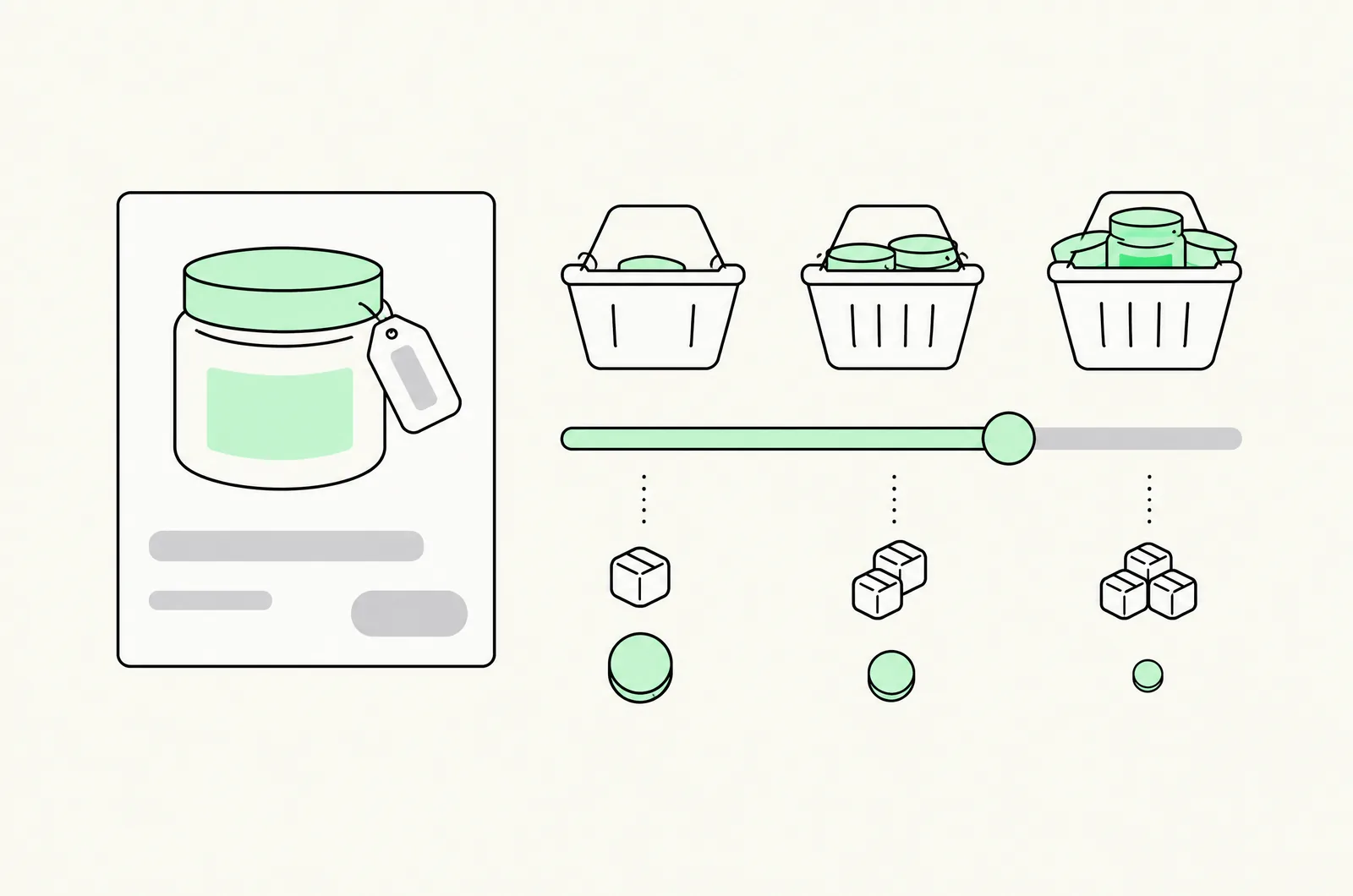
What is a quantity break? A tiered discount that lowers the per-unit price as quantity increases — buy 2 save 10%, buy 3 save 15% — shown as a tier selector on the product page so shoppers see savings before adding to cart. Full definition: what are quantity breaks.
Are quantity breaks and volume discounts the same? Same math, different audience: quantity breaks are retail-facing tier selectors on product pages; volume discounts usually mean wholesale ladders or customer-tag rules. Shopify treats them through different features too.
What's the difference between a quantity break and a bundle? A quantity break discounts more units of the same product. A bundle discounts a set of different products sold as one offer — different inventory mechanics and different apps.
Do quantity breaks increase AOV? Usually, but that's the wrong test. Deep ladders reliably raise AOV while sometimes lowering profit, because the discount applies to every unit. Judge ladders on contribution profit per order or per visitor — see the worked example in our pricing guide.
Why do quantity breaks work? They change the unit of decision from "do I want this?" to "which pack do I want?", anchor the single unit as the expensive option, and concentrate discounting on the behavior you want instead of sitewide markdowns.
What products work best with quantity breaks? Consumables and naturally multi-unit purchases: supplements, coffee, skincare, pet food, socks, canned beverages. Poor fits: high-ticket low-frequency items, scarcity-positioned premium products, and very low-margin goods.
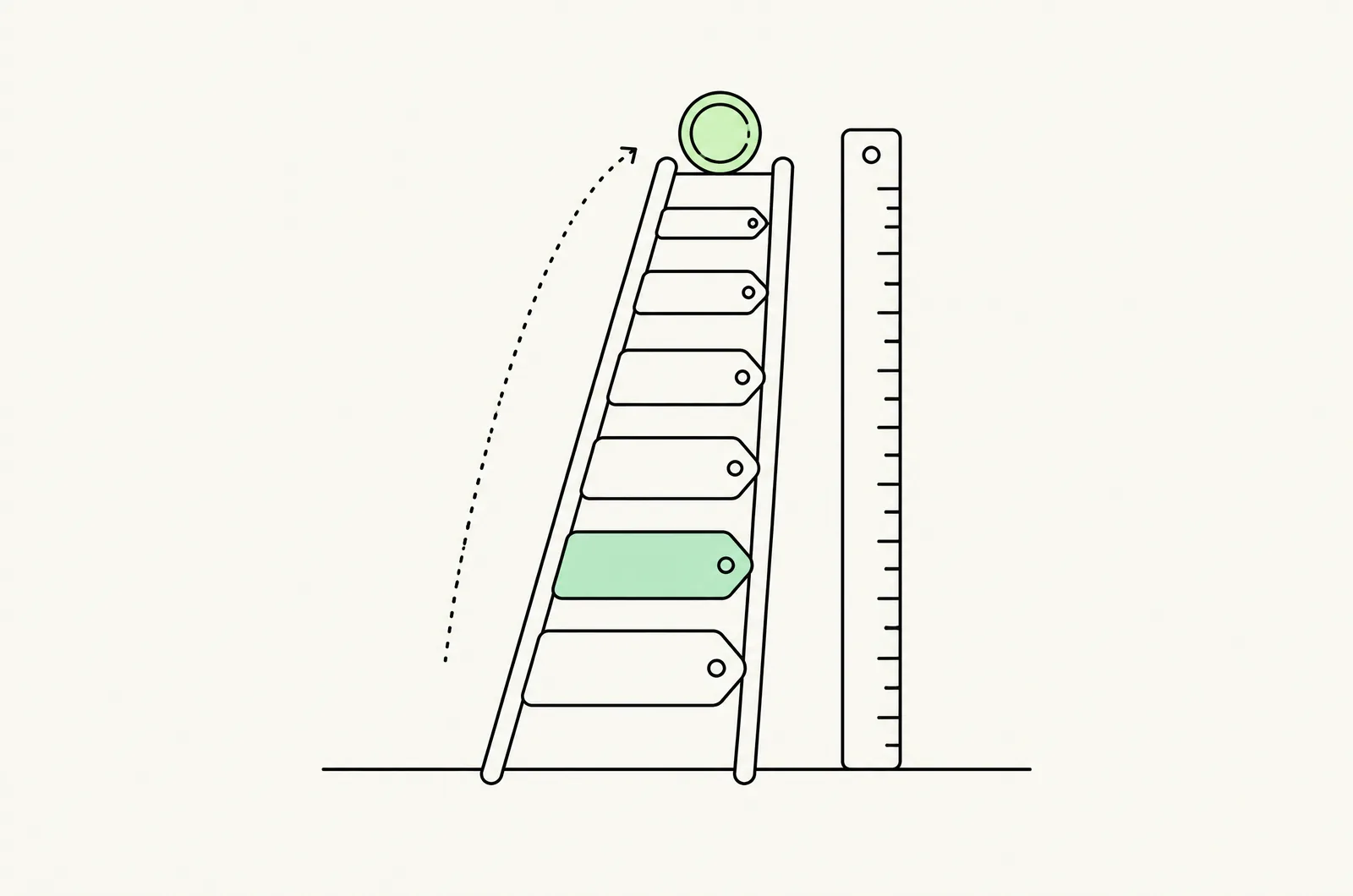
How many tiers should I show? Three is the working maximum, especially on mobile — deeper ladders collapse into noise. Tier 2 starts one step above your modal order quantity; tier 3 is the aspiration anchor.
What does "most popular" tier labeling do? It pre-selects a pack and anchors the shopper against it — behavioral research on default effects means the pre-selected tier captures a disproportionate share of selections. Test which tier deserves the label.
Setup
Can Shopify do quantity breaks without an app? Yes — stack automatic discounts with minimum-quantity rules (free, every plan). Limits: no product-page tier table, minimums count any eligible items, and each tier consumes an automatic-discount slot. Full setup: native guide.
Does Shopify have built-in quantity breaks? Partly. Automatic discounts express the pricing rule; B2B quantity price breaks (all plans since April 2026) cover wholesale catalogs. Neither displays a tier table on the retail product page — that requires an app.
How do I add a quantity breaks app to my theme? Modern tier apps install as Online Store 2.0 theme app blocks: install the app, add the block in the theme editor on the product template, position it above the buy box, and QA a real cart at every tier.
Where should the tier selector go on the product page? Above the Add-to-Cart button — it's part of the purchase decision. Below the buy box is the fallback and costs conversions on mobile, where the buy box sits above the fold.
Do quantity breaks work at checkout? Only if the discount runs on Shopify Functions — then the price applies in checkout, Shop Pay, and express wallets. Apps built on theme scripts can show a tier price the checkout doesn't honor; always QA a real cart.
Can I use quantity breaks with a headless/Hydrogen storefront? Yes, via Shopify Functions discounts plus a custom tier UI using Storefront API — the display is yours to build. Plus stores can go further with Cart Transform merged pricing.
Do quantity breaks work on Shopify POS? Some apps support POS (Bundler includes it on the free plan; Kaching lists it). Native automatic discounts apply at POS too. Verify your specific app's POS behavior in a trial before committing.
How do I set up quantity breaks for B2B/wholesale? Use Shopify's native B2B quantity price breaks in company catalogs — per-variant quantity rules with price bands, applied to logged-in company buyers on all plans since April 2026. Guide: B2B quantity breaks.
Pricing & margin
How deep should quantity-break discounts be? Enough to change behavior (5–10% steps), never past contribution margin on every unit. Our worked example: −5%/−10% earned +5.7% per order while −15%/−25% lost −5.6% — depth depends entirely on your unit economics.
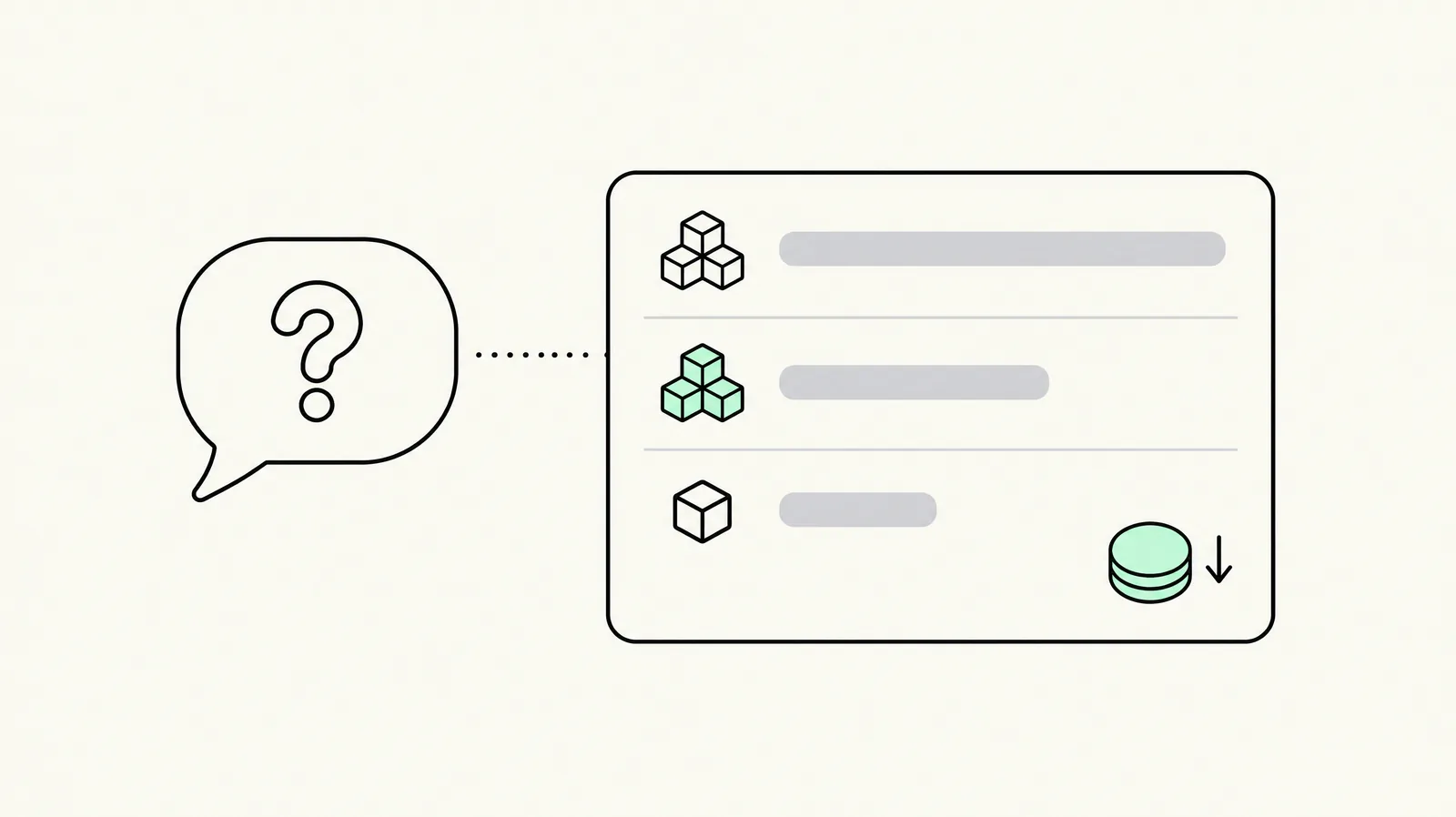
Does the discount apply to all units or just the extras? All of them. "Buy 3, save 15%" gives up 15% on unit one, which the shopper was buying at full price. That's the all-units rule — the single most common source of margin leaks.
How do I calculate if my ladder is profitable? Contribution per cart at each tier: (tier revenue − COGS − fulfillment − fees), weighted by expected quantity mix, compared against the no-ladder baseline. Use the quantity break calculator.
What margin do I need for quantity breaks? Rule of thumb: tier discounts of 5–12% need ~40%+ gross margin to survive the all-units rule. The precise answer comes from your own COGS, fulfillment and quantity mix — run the math, not the rule of thumb.
Should the first tier match what customers already buy? No — that's a rebate on existing behavior. Set the first break one step above your modal order quantity so the discount rewards new depth.
Are quantity breaks better than sitewide sales? For AOV with margin control, usually yes: the discount is only reachable by buying more, instead of handed to every buyer including the ones who'd have paid full price. For brand price-integrity, GWP is often better than visible markdowns.
What about "buy 2, get 1 free"? Emotionally powerful, margin-heavy: it's a 33% effective discount. Beat by "buy 3, save 15%" on contribution in most unit economics. Right for high-margin products where the free unit's cost is small; wrong at 40% margins.
Can I offer free shipping instead of a deeper discount? Often better: free shipping at the deepest tier costs less than the equivalent percentage and is the perk shoppers value most. Stack it as a threshold, not a deeper tier discount.
Apps & tooling
Which quantity breaks app should I use? By fit: Kaching for the largest review base and native A/B testing; Pumper for cheapest entry (free to $300); Bundler for a genuinely free plan; Oxify for flat $14.99 with BYOB included. Full live-priced comparison: best quantity breaks apps.
Are there free quantity breaks apps that work on live stores? Yes — Bundler's free plan includes quantity breaks and volume discounts with no cap; Pumper is free until $300 of extra revenue; Pareto offers one free offer. "Free" on Kaching/Fast Bundle means dev stores only. Details: free bundle apps.
Do bundle apps slow down my store? Apps built as native theme app blocks on Shopify Functions are server-side and negligible for speed; older script-tag widgets can add render-blocking weight. Prefer Built-for-Shopify apps and check Core Web Vitals after install.
How much do quantity breaks apps cost? $0 (Bundler free) to $49.99–$59.99/month at scale for revenue-capped leaders; flat-fee apps (Oxify $14.99, Section Store $15) never grow. Model the fee at your realistic offer revenue — full cost tables.
Can I switch quantity breaks apps later? Yes, with a staged migration: snapshot offers and revenue, build in the new app while the old renders, QA every tier at checkout, uninstall last. Analytics typically reset at cutover — note the date.
Do apps support same-SKU minimums ("6 of this product")? Quality apps do — native automatic discounts can't (they count any eligible items in the cart). If same-SKU enforcement matters, that alone decides the app-vs-native question.
Stacking & combinations
Can quantity breaks stack with discount codes? Where combination settings allow it: tiers apply as product-class discounts and can combine with order codes and shipping offers. Same-class discounts never stack — two product discounts take the better one. Rules: discount stacking guide.
Do stacked discounts add or multiply? Cross-class stacks multiply: 20% product + 10% order = 28% off (0.9 × 0.8), not 30%. Model the worst legal stack against your margin floor before campaign season.
How do I stop a tier from stacking with codes? Set the offer's combination settings to "combine with nothing" (many apps default to this). An exclusive ladder has one controllable price; a stacking ladder has a distribution you must model.
Why did a customer get a bigger discount than I configured? Usually combination settings that outlived a campaign: tier + code + free shipping all enabled to combine. Audit active discounts, compute the worst legal stack, and time-box combination settings with calendar reminders.
Does free shipping stack with quantity breaks? If enabled, yes — free shipping is a shipping-class discount and combines with product-class tiers. Decide which cart value triggers it (pre- or post-discount) and QA the threshold on a real tiered cart.
Subscriptions, B2B & POS
Can quantity breaks work with subscriptions? Yes, with care: native bundles can't carry selling plans, so use a pack SKU with Shopify Subscriptions or a subscription-compatible bundle app. Never stack subscription % on tier % — compute the apex offer against margin first. Guide: subscription bundles.
Should subscription discounts be deeper than quantity tiers? Usually not — keep the subscription discount at or below the tier-2 discount so subscribing and bulk-buying are close in per-unit price, and evaluate the program on contribution per subscriber-month with observed churn.
Do B2B quantity price breaks work on non-Plus plans? Yes — Shopify rolled B2B quantity price breaks to all plans in April 2026. They apply to logged-in company buyers via catalogs; retail shoppers see nothing.
Can one store do retail tiers and wholesale tiers? Yes: B2B catalogs for logged-in buyers plus a retail tier app segment-gated to hide from wholesale sessions. Design against both leakage directions — that's the hard part. See quantity breaks vs volume discounts.
How do quantity breaks handle multi-currency / Shopify Markets? Capable apps support per-market tier values so the ladder prices correctly per currency. Verify your markets in a trial cart — per-market tier behavior is where apps most often diverge from their marketing.
Strategy & measurement
How do I test a quantity break ladder? One variable at a time — current page vs one candidate ladder — with contribution profit per visitor as the primary metric, run to a pre-committed sample size over two purchase cycles. Design and sample-size math: A/B testing quantity breaks.
What metric should I watch after launch? Tier mix first (did behavior change?), contribution per visitor second (did margin survive?), refunds third (bulk orders return more in some categories). AOV alone lies.
When should I NOT use quantity breaks? High-ticket low-frequency products, scarcity/premium positioning, margins below ~40% on 5%+ tiers, and catalogs where most orders are already multi-unit (the ladder rebates existing demand).
How do quantity breaks interact with paid ads? Higher order values improve CAC payback math — but only if the ladder's contribution survives. Recompute break-even ROAS with ladder-adjusted margins, and keep stacking rules frozen during campaigns.
What's the fastest win with quantity breaks? A conservative ladder (−5%/−10%) on your hero SKU with tier 2/3 labeled "Most Popular," plus the "add 2 more to save X" nudge in the cart drawer. Then measure tier mix and iterate depth.
Last updated: November 16, 2026. Answers reflect Shopify platform behavior and app pricing verified November 2026; each linked guide carries the full math and setup steps.
Want this set up on your store?
Book a free 20-minute strategy call. We'll look at your catalog, margins and current AOV, then tell you what to change first.
Book a free strategy call