Commercial real estate \u00b7 California
Commercial real estate marketing for California's office, industrial and lab space
Tenants, tenant reps and investors for California office, industrial and lab assets, with tours and LOIs reported to ownership.
Trusted by 50+ D2C brands · Google, Meta & Shopify partners











Two markets, two different jobs
San Francisco, CA
Statewide submarkets
Account-based
Named tenants and investors
Owner reporting
Tours, proposals, LOIs
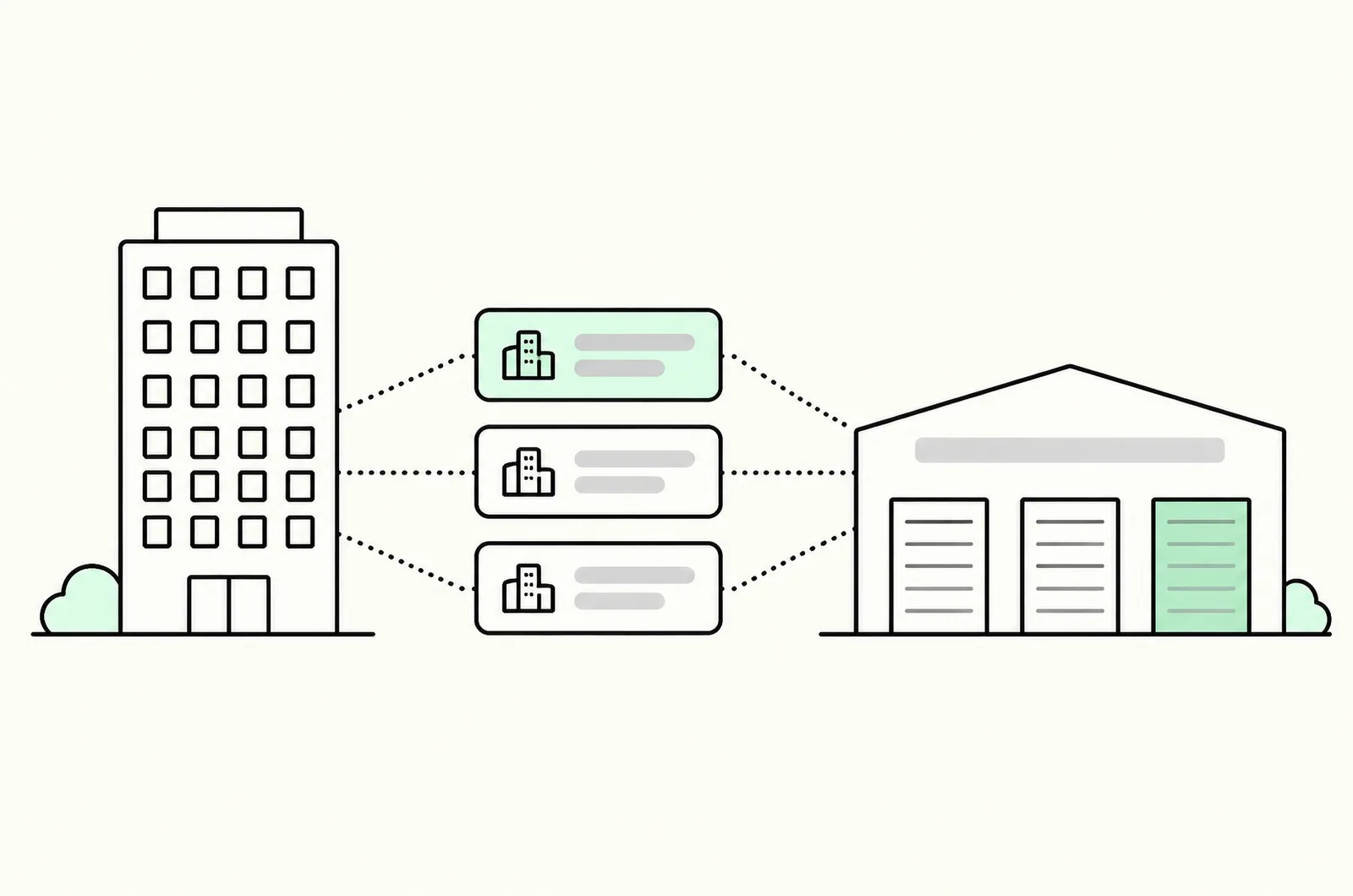
San Francisco's office vacancy rate was 26.0% at the end of Q3 2026, according to Kidder Mathews, down from 31.1% a year earlier. A few miles east, Inland Empire industrial direct vacancy was 7.1%. Those numbers describe two different jobs. One market needs to win scarce tenants away from a sea of sublease space; the other needs to fill big boxes quickly as new supply delivers.
Either way, CRE marketing is B2B marketing with a short list. The decision for a 40,000-square-foot lease is made by a few people at one company, usually advised by a tenant rep, and a ten-month vacancy costs the owner far more than any campaign. Yet most CRE marketing still means one listing flyer, a LoopNet post and an email blast to the same broker list everyone else uses.
We run commercial work as part of our California real estate practice, from our San Francisco office. It's built for leasing teams, investment-sales brokers and owner-operators who need to reach named companies and investors, prove activity to ownership, and shorten the time a space or asset sits.
Three reasons a space sits longer than it should
These are the problems behind most slow lease-ups and dispositions we see.
The listing platforms are where everyone is
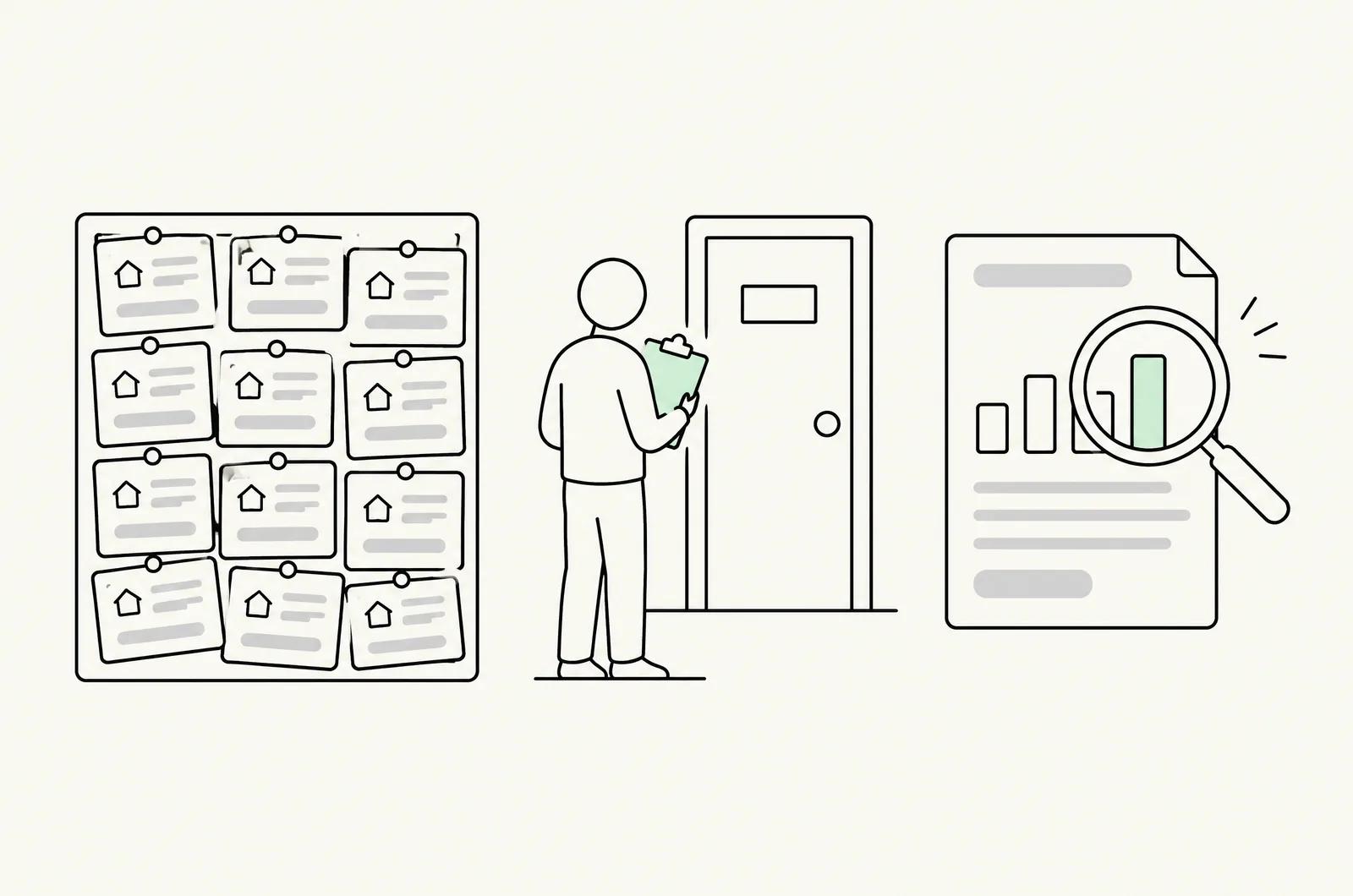
CoStar and LoopNet put your space in front of every broker, but next to every competing sublease. In San Francisco, with roughly a quarter of office space vacant, a listing alone is a commodity. What wins is reaching the tenants who are growing, whose leases are expiring or who just raised money, before they shortlist with their rep.
Tenant reps gatekeep the decision
Most mid-size and large California tenants hire a tenant rep, and the rep builds the tour list. If your marketing only targets end users, you're invisible to the person picking the tours. If it only targets brokers, you lose the end user who searches directly. Campaigns have to reach both, with different messages.
Ownership wants proof of activity
Owners, lenders and asset managers ask the same question every month: how many tours, proposals and LOIs, and why not more? Lease-up and disposition timelines are tied to loan covenants and fund cycles. Marketing that can't report activity at the deal level gets cut first, even when it's working.
Six pieces of work around one asset
Property and portfolio websites
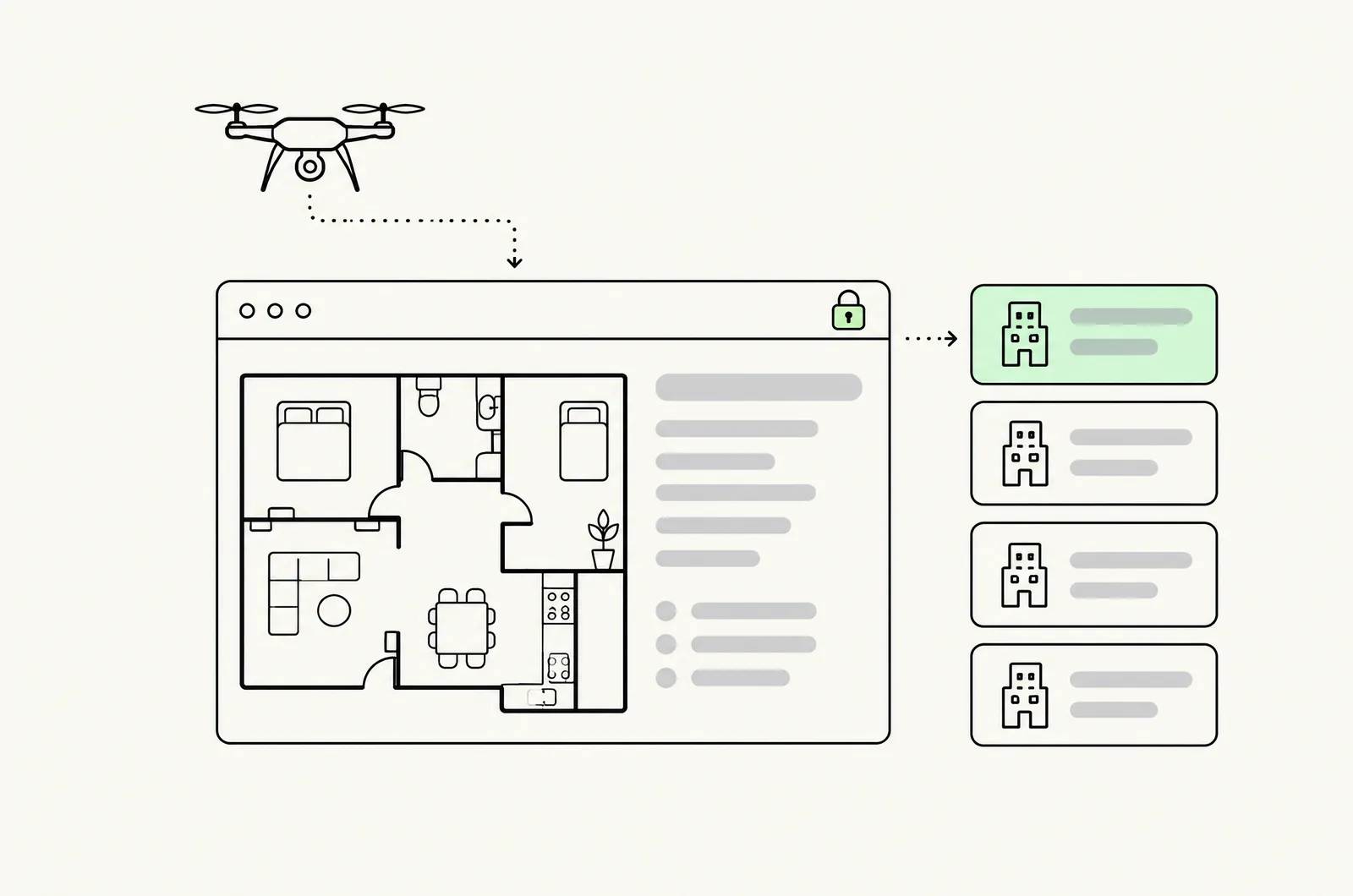
Single-asset sites with floor plans, specs, loading and power data, and drone video, ranking for '[submarket] office for lease' or '[city] warehouse for lease'. A good site is what tenant reps forward internally.
Tenant-targeted LinkedIn and display
Account-based campaigns to companies whose leases expire, who are hiring in your submarket, or who just raised capital. You're paying to reach a few hundred decision-makers, not a city.
Tenant-rep and broker outreach
Broker-specific email, events and co-op messaging, timed to when reps are building tour lists. Track which brokers open, forward and tour.
Search for direct tenants
Google Ads and SEO for direct searches by businesses looking for space, especially industrial, flex and small office. Paid search is cheap here compared to residential, because few CRE owners bother.
Investment-sales marketing
Confidential offering campaigns with gated data rooms and NDA flows, sent to targeted investor lists. Gated pages follow CCPA notice rules, which since 2023 cover business contact data too.
Deal-level activity reporting
Monthly owner reports showing inquiries, tours, proposals and LOIs by asset and source, matched to your CRM. The same numbers your asset managers already ask for.
Six submarkets, six different tenants
What's actually true in each submarket right now, and who you're marketing to.

San Francisco office
Vacancy fell to 26.0% in Q3 2026 (Kidder Mathews), with AI companies leading much of the leasing. Marketing works when it targets growing tenants by funding and headcount, and sells quality and amenities over price.
Peninsula & Silicon Valley
R&D, office and lab space for tech tenants who buy on proximity to talent and transit. Long decision cycles and well-advised tenants make tenant-rep relationships decisive.
Inland Empire industrial
Direct vacancy was 7.1% in Q3 2026, but availability was 12.9% (Kidder Mathews), so there is real competition for big-box tenants. Logistics and 3PL tenants search on clear height, dock doors, trailer parking and freeway access.
LA & Long Beach port submarkets
Carson, Compton, Torrance and the South Bay sit behind ports that moved about 20.1 million TEUs in 2025. Port-adjacent warehouse and yard space is marketed to importers and drayage operators by drive time to the terminals.
Orange County
Irvine and the Airport Area for office and medical office, and industrial in Anaheim and Santa Ana. Healthcare tenants and professional firms sign longer leases and value parking and access.
San Diego life sciences
Torrey Pines, Sorrento Valley and UTC lab space, aimed at venture-backed biotech tenants. Funding rounds and clinical milestones decide when tenants expand, so targeting follows the funding news.
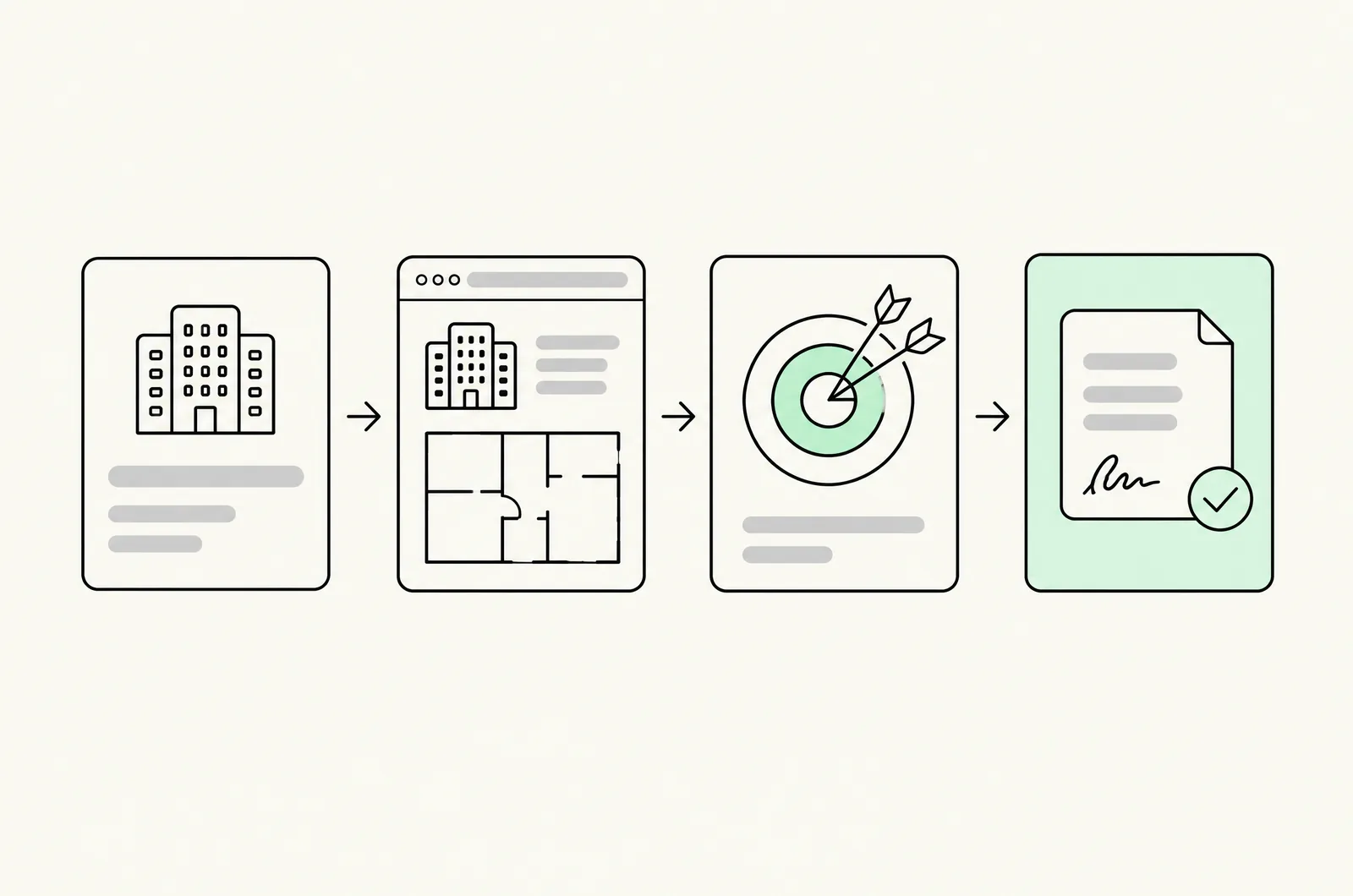
From tenant profile to signed LOIs
- Step 01
Asset and tenant profile
We define who can realistically take the space or buy the asset: tenant size, industry, submarket draw and the reps who represent them.
- Step 02
Build the property assets
Property site, specs, video and gated data room, plus a target account list of tenants, reps and investors.
- Step 03
Run account-based outreach
LinkedIn and display to named accounts, broker outreach, and search for direct tenants, each with its own message.
- Step 04
Report deal activity
Monthly report of inquiries, tours, proposals and LOIs by asset and source, in the format your ownership already uses.
A CRE specialist vs a listing-flyer shop vs an in-house marketer
In-house costs are directional and depend on seniority and metro.
Targets named tenants and investors
- Listing-flyer marketing
- Broad broker blasts
- In-house marketing hire
- Limited tools
- Conversion (San Francisco)
- Yes
Reaches tenant reps and end users separately
- Listing-flyer marketing
- Brokers only
- In-house marketing hire
- Depends on time
- Conversion (San Francisco)
- Yes
Gated, CCPA-compliant offering pages
- Listing-flyer marketing
- PDF attachments
- In-house marketing hire
- Rarely
- Conversion (San Francisco)
- Yes
Reports tours, proposals and LOIs by source
- Listing-flyer marketing
- Email open rates
- In-house marketing hire
- Anecdotal
- Conversion (San Francisco)
- Yes
Typical cost per asset
- Listing-flyer marketing
- $1,500–$5,000 flat
- In-house marketing hire
- $8,000+/mo per marketer (directional)
- Conversion (San Francisco)
- From $4,000/mo
B2B proof, honestly labelled
- B2B services · national
95%
Brand impression share
NP Digital: owning the short list
Not a CRE client; we have no published commercial real estate result. The relevant part is B2B. NP Digital's brand campaigns held 95% search impression share while conversions rose 388%. That's the same discipline we use to keep an asset in front of the few tenants and reps who matter.
Priced per asset or per portfolio
USD. Media, photography and drone video are billed at cost.
Single asset
From $4,000/mo
Per asset · lease-up or sale
Property site, target account list, tenant and broker campaigns, and monthly activity reporting for one building or offering. Media billed at cost.
- Property site and video
- Account-based campaigns
- Monthly owner report
- Most popular
Portfolio
$10,000–$20,000/mo
Multiple assets · ongoing
Every asset in a leasing or disposition portfolio, portfolio-level SEO and a dashboard for asset managers.
- All assets covered
- Portfolio SEO
- Asset-manager dashboard
Pay-on-results
Base + per lease
Qualifying owners
A lower base plus a fee per executed lease or closed sale attributed to our campaigns, against an agreed baseline.
- Baseline agreed up front
- Paid on executed deals
- Shared risk
Commercial real estate marketing questions

How is commercial real estate marketing different from residential?
What's the office vacancy rate in San Francisco?
How do you market Inland Empire industrial space?
Do CRE marketing campaigns need to follow CCPA?
Should we target tenants directly or go through tenant reps?
Which California submarkets do you cover?
How much does commercial real estate marketing cost?
Does the DRE license disclosure apply to commercial listings?
Related California pages


Sources and statutes
Every figure and regulation cited on this page.
Facts and thresholds last checked 19 November 2026.
- Kidder Mathews — San Francisco office market report, Q3 2026Overall vacancy 26.0% at the end of Q3 2026, down from 31.1% a year earlier. Other brokers report 24.6%–29.3% depending on definitions.
- Bisnow — AI surge driving San Francisco office leasing to its strongest totals in decades
- Kidder Mathews — Inland Empire industrial market report, Q3 2026Direct vacancy 7.1%, total including sublease 8.3%, availability 12.9% at the end of Q3 2026.
- FreightWaves — Port of Los Angeles tops 10M containers for third time (2025 totals)Los Angeles ~10.2M TEU and Long Beach 9.9M TEU in 2025, about 20.1M combined.
- California Attorney General — California Consumer Privacy Act (CCPA)Since CPRA took full effect on 1 January 2023, B2B contact data and employee data are no longer exempt.
- California DRE — RE 559 license and advertising disclosure chartBusiness & Professions Code §10140.6 and 10 CCR §2773: name and license number on first-point-of-contact materials.
- California DRE — Subdivision public reports (developers)Subdivided Lands Law (B&P Code §11000 et seq.): five or more lots or interests need a DRE public report before marketing; no sales negotiation before a conditional or final report.
Shorten your next lease-up
30 minutes with a senior strategist. Bring the asset, the target tenant and your current activity numbers.
What happens next
- 1Pick a time for a 30-minute call.
- 2Share the asset, specs and leasing timeline.
- 3Get a target-account plan for the space.
Prefer email? tarun@conversion.is