Automotive \u00b7 California
Automotive marketing in California, built for the CARS Act
Sold units and repair orders for California dealers, with total-price ads, compliant feeds and campaigns for petrol, hybrid and EV buyers.
Trusted by 50+ D2C brands · Google, Meta & Shopify partners










A new law, and a market in flux
San Francisco, CA
Dealers statewide
CARS Act-ready
Total-price ads
Units and ROs
Not leads
On 1 October 2026, California's CARS Act (SB 766) took effect for licensed dealers selling or leasing light-duty vehicles. Advertised prices must clearly show the total price, worthless add-ons are banned, optional add-ons must be disclosed as optional, and most used cars now come with a three-day return right. It's the most detailed car-buyer protection law in the country, and every ad, vehicle detail page and inventory feed has to match it.
At the same time, California's EV market has been through a swing. Zero-emission vehicles reached a record 29.1% of new sales in the third quarter of 2025, before the federal tax credit ended on 30 September, then fell to 13.8% in early 2026 and recovered to 17.8% in the second quarter. Dealers now sell petrol, hybrid and electric cars to buyers whose priorities changed within a year.
We run automotive as one of nine verticals in our California practice, from San Francisco. The work covers inventory marketing, conquest and loyalty campaigns, service-lane revenue and EV education, with CARS Act pricing built into every template and reporting tied to sold units and repair orders.
This page covers automotive broadly: franchise and independent dealers, EV and charging businesses, and aftermarket and powersports. Dealer groups, EV and charging, and aftermarket and powersports each have their own page.
Why dealer marketing changed in California
Each problem comes from the CARS Act, the EV swing or third-party control of the shopping journey.

Advertised prices now have to be the real price
The CARS Act requires the total price of a vehicle, excluding only taxes and certain government charges, to appear clearly in advertising. It bans add-ons that give the buyer no benefit and requires optional add-ons to be labelled as optional. 'Starting at' prices that exclude dealer add-ons, prep fees or mandatory packages now create legal risk in every ad, feed and VDP.
EV demand moved fast, in both directions
California's ZEV share swung from a record 29.1% in Q3 2025 to 13.8% in Q1 2026, then 17.8% in Q2 2026, after the federal credit ended. Hybrids gained in between. Inventory, messaging and incentives have to adjust every quarter, and buyers need clear information about total cost, charging and state incentives.
Third-party sites own the shopping journey
Most car shoppers start on marketplaces and OEM sites, and in LA and Orange County dealer competition for the same buyers is intense. Dealers end up paying marketplaces for leads on their own inventory. Owned channels, including Vehicle Listing Ads, local SEO and first-party data, cut that cost.
Eight workstreams, one sold-unit report
Inventory search and Vehicle Listing Ads
Google Vehicle Listing Ads and search campaigns fed by your live inventory, with CARS Act total prices in the feed. A feed that drops a mandatory add-on now breaks the law in every ad.
CARS Act pricing compliance
VDPs, specials pages, ads and third-party listings checked for total price, add-on disclosure and used-car return-right language.
Conquest and loyalty campaigns
Paid social and search to in-market shoppers and to your own customers nearing lease end or trade-in equity, using first-party data.
Service-lane marketing
Service and parts campaigns, recall outreach and maintenance reminders. Fixed operations are often a dealer's steadiest profit.
EV and hybrid education
Pages and campaigns on total cost of ownership, charging at home and on the road, and current state and utility incentives.
Local SEO and reviews
Google Business Profiles for sales, service and parts, plus review programmes. 'Dealer near me' and 'service near me' searches start in the map pack.
Spanish-language and multilingual campaigns
Spanish, Chinese, Korean and Vietnamese ads and pages where your buyers need them, with pricing disclosures translated properly.
Sold-unit and RO attribution
Reporting from lead to sold unit and repair order by source, connected to your DMS and CRM.
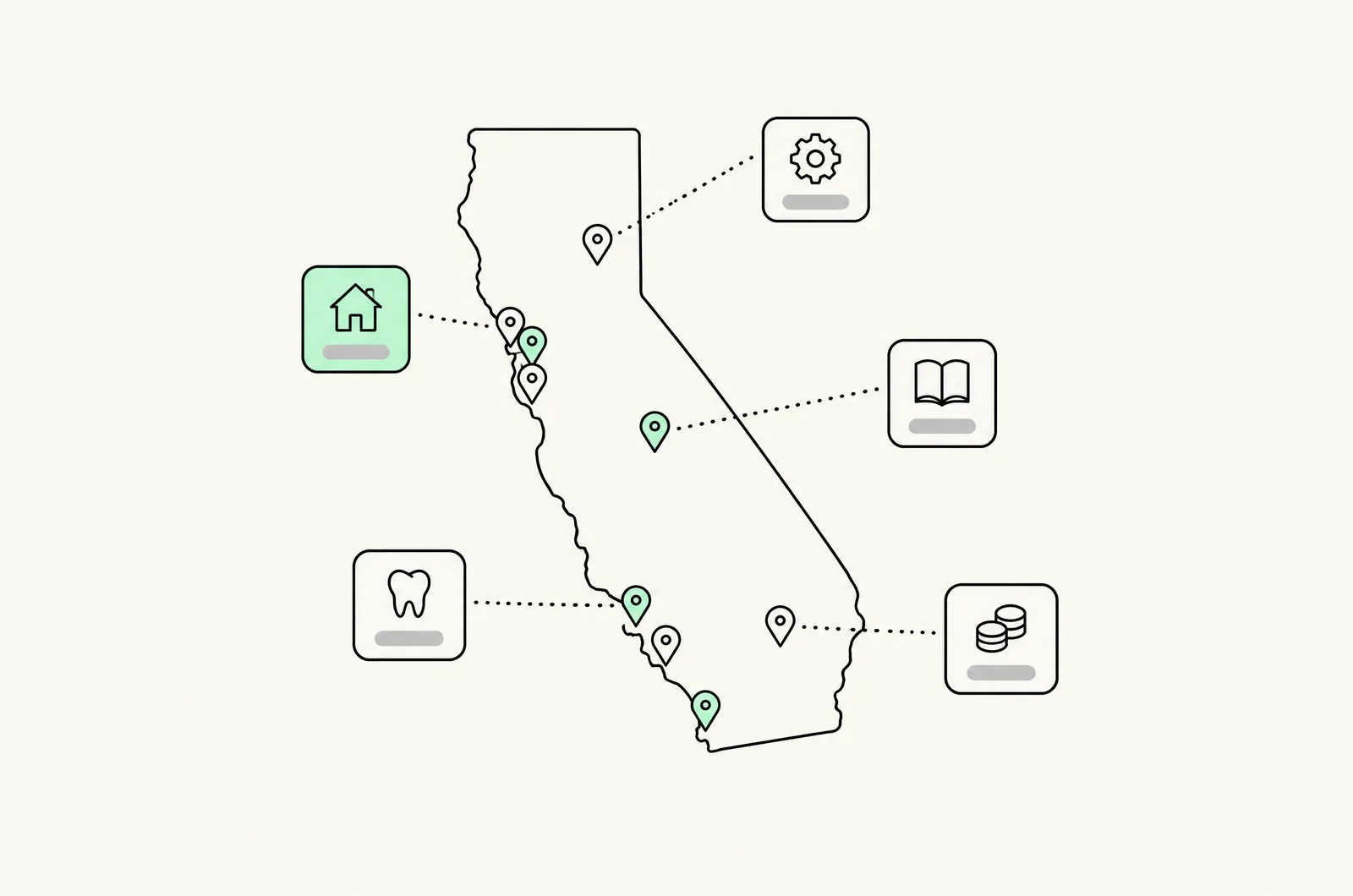
Seven automotive markets, seven kinds of buyer
Who's buying in each market, and what they need from a dealer.

Los Angeles
The country's largest new-car market, with dense dealer rows and intense conquest competition. Spanish- and Korean-language marketing and service-lane campaigns separate dealers.
Orange County
Premium and luxury brands, high lease penetration and affluent buyers. Lease-end loyalty campaigns and concierge service sell.
San Francisco Bay Area
California's strongest EV market, with buyers who research heavily online. EV expertise, charging guidance and online buying tools matter most.
San Diego
Military buyers, cross-border shoppers and a large truck and SUV market. Military incentives and clear total pricing win trust.
Inland Empire
Long commutes, families and a big used-car and truck market. Credit-challenged buyers need clear, compliant finance information.
Sacramento
Bay Area movers, state employees and a strong mid-market. Service departments compete with independent shops on convenience.
Central Valley
Trucks, work vehicles and price-sensitive buyers across large distances. Plain total-price ads and Spanish-language service matter.
From pricing audit to sold units
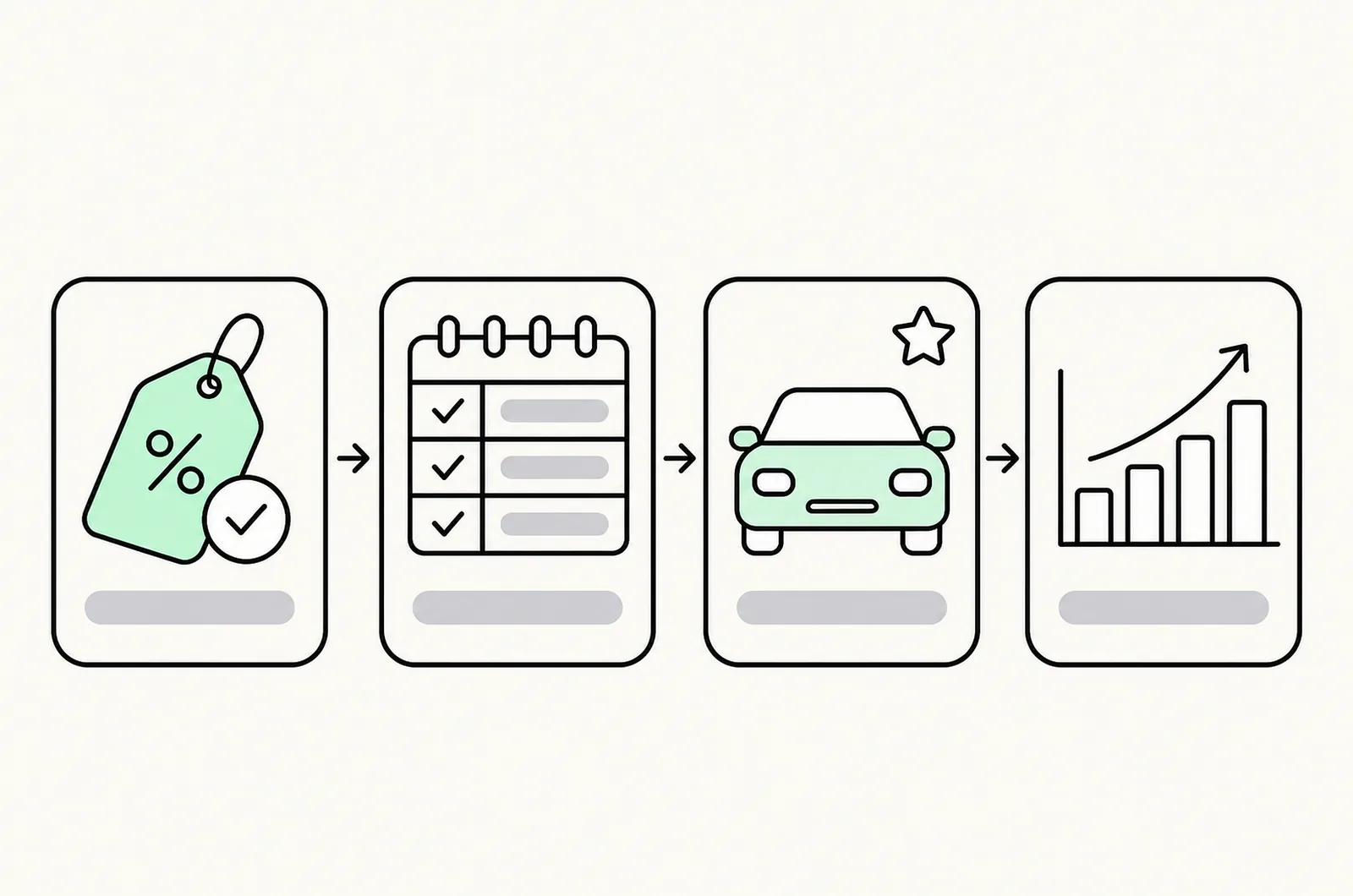
- Step 01
Pricing and feed audit
Ads, VDPs, feeds and third-party listings checked against the CARS Act for total price and add-on disclosure.
- Step 02
Sales and service baseline
Sold units, gross, repair orders and lead sources from your DMS and CRM.
- Step 03
Build owned demand
Vehicle Listing Ads, conquest and loyalty campaigns, service-lane and EV campaigns.
- Step 04
Report units and ROs
Monthly sold units, gross per unit and repair orders by source and rooftop.
A California automotive agency, an OEM vendor or an in-house marketer
In-house costs are directional and depend on seniority and metro.
CARS Act total pricing in ads and feeds
- OEM-certified vendor
- Template disclaimers
- In-house California hire
- Depends
- Conversion (San Francisco)
- Yes
Plans by rooftop and metro
- OEM-certified vendor
- OEM tier-3 templates
- In-house California hire
- Limited time
- Conversion (San Francisco)
- Yes
Service-lane and recall campaigns
- OEM-certified vendor
- Separate vendor
- In-house California hire
- Manual
- Conversion (San Francisco)
- Yes
EV and hybrid education content
- OEM-certified vendor
- OEM copy only
- In-house California hire
- Varies
- Conversion (San Francisco)
- Yes
Reports sold units and ROs by source
- OEM-certified vendor
- Leads and VDP views
- In-house California hire
- DMS reports
- Conversion (San Francisco)
- Yes
Typical monthly cost
- OEM-certified vendor
- $2,000–$10,000 per rooftop
- In-house California hire
- $9,000+ fully loaded (directional)
- Conversion (San Francisco)
- From $4,500 fee
Search structure, honestly labelled
- Search restructure · national
-70%
Cost per acquisition
NP Digital: intent tiers and weekly negatives
NP Digital isn't a dealer or a California client, and we have no published automotive result. What carries over is search structure: campaigns split by intent and tuned weekly, cutting CPA 70%. For dealers that means separating in-market model searches from research and job searches.
Where automotive splits into different businesses
Groups, EV companies and aftermarket sellers each need their own plan.
- Live
Dealer groups
Multi-rooftop groups in LA and Orange County: CARS Act compliance across every store, co-op funds and group-level attribution.
- Live
EV & charging
EV brands, charging networks and installers after the federal credit ended: total cost, charging access and state incentives.
- Live
Aftermarket & powersports
Parts sellers and powersports dealers under CARB Executive Order rules, from Riverside to San Diego.
What dealership marketing costs in California
USD, excluding media. We work within your OEM's co-op guidelines.
Single rooftop
From $4,500/mo
One dealership
CARS Act pricing audit, Vehicle Listing Ads and search, local SEO and sold-unit reporting. Media is separate.
- CARS Act pricing audit
- Vehicle Listing Ads
- Sold-unit report
- Most popular
Dealer program
$9,000–$18,000/mo
One to three rooftops
Sales, service and EV campaigns run as one plan, with conquest and loyalty audiences and multilingual campaigns.
- Service-lane campaigns
- Conquest and loyalty
- EV education
Pay-on-results
Base + per unit
Qualifying dealers
A lower base plus a fee per attributed sold unit or repair order above an agreed baseline.
- Baseline agreed up front
- Paid per sold unit
- Same reporting
Dealership marketing questions
What does the California CARS Act require of dealer advertising?
Do dealer ads on Google and marketplaces need the total price too?
How has the end of the federal EV tax credit affected California dealers?
How can dealers rely less on third-party lead sites?
Is service-lane marketing worth it?
Which California automotive markets do you work in?
How much does dealership marketing cost?
Do you work with OEM co-op advertising programmes?
Should a dealer hire an in-house digital marketer?
More from the San Francisco team
California digital marketing hub
All nine California verticals, the state rulebook and the metros we plan for.ExploreDealer group marketing
Multi-rooftop groups, CARS Act compliance and co-op funds.ExploreFinancial services marketing in California
A sibling vertical: auto finance and insurance partners.ExploreManufacturing marketing in California
A sibling vertical: parts and EV supply-chain manufacturers.ExploreNP Digital case study
Intent-tiered search: +388% conversions, -70% CPA.ExploreEcommerce Google Ads agency
The feed and Shopping discipline behind Vehicle Listing Ads.Explore



Sources and statutes
Every figure and regulation cited on this page.
Facts and thresholds last checked 19 November 2026.
- Senator Ben Allen — California CARS Act (SB 766) signed into lawSigned 6 October 2025, in force 1 October 2026: advertised vehicle prices must show the total price; worthless add-ons banned; optional add-ons disclosed; 3-day return on most used cars.
- Comply Auto — California enacts the CARS Act, overhauling vehicle sales and leasing rules
- California Energy Commission — California surpasses 2.5 million ZEV sales (January 2026)ZEVs were 29.1% of new sales in Q3 2025, a record before the federal credit ended on 30 September 2025, then 18.9% in Q4 2025.
- Ford Authority — EV sales in California after the federal credit (CNCDA data)California EV share fell to 13.8% in Q1 2026 and recovered to 17.8% in Q2 2026; registrations down 24.9% in H1 2026.
- CalChamber — California 2026 minimum wage increases to $16.90 per hourExempt salary floor = 2 × $16.90 × 2,080 = $70,304 a year from 1 January 2026.
Get a CARS Act pricing and feed audit
30 minutes with a senior strategist. We'll check your ads, VDPs and feeds against the new rules.
What happens next
- 1Pick a time for a 30-minute call.
- 2We review pricing, feeds and lead sources.
- 3Get a plan measured on units and ROs.
Prefer email? tarun@conversion.is