Healthcare \u00b7 California
Healthcare marketing in California, without the privacy risk
New patients for California practices and clinic groups, with tracking, images and claims built to the CMIA and B&P Code \u00a7651.

Trusted by 50+ D2C brands · Google, Meta & Shopify partners










One pixel can become your biggest risk
San Francisco, CA
Practices statewide
CMIA-aware
Privacy-safe tracking
Attended visits
Not form fills
California health systems have spent the last few years defending class actions over a few lines of tracking code. After reporting showed Meta's Pixel running on hospital websites, patients sued under the Confidentiality of Medical Information Act (CMIA) and California's wiretapping law. Courts have split on public pages versus patient portals, but the lesson for every practice is the same: the pixel that powers your ads can also be your biggest legal risk.
That's what makes healthcare marketing in California different. The CMIA reaches some businesses HIPAA doesn't and carries statutory damages per violation. Business & Professions Code §651 bans misleading healthcare advertising and sets rules for before-and-after images. SB 351, in force since January 2026, limits how private-equity owners can steer physician and dental practices. Marketing has to work inside all of it.
We run healthcare as one of nine verticals in our California practice, from San Francisco, alongside our national healthcare marketing agency work. The job is patient acquisition: local search and maps, paid search and social, booking flows that convert, and reporting on booked and attended appointments, with privacy-safe measurement built in from the start.
This page covers healthcare broadly: multi-site practices, specialty groups, urgent care and outpatient clinics. Dental groups, IVF and fertility clinics, and med-spas each have their own page, because their patients, rules and economics differ.
Why healthcare marketing is harder in California
Each problem comes from California's privacy law, its advertising rules or its cost and competition.

Tracking pixels became a liability
Patients have sued California health systems over Meta and Google tags that shared page visits and form data. Claims typically plead the CMIA, which reaches beyond HIPAA, and the California Invasion of Privacy Act. Many practices responded by removing tracking entirely and lost the data their ads optimise on. You need measurement that keeps conversions flowing without sending health information to ad platforms.
Advertising rules are stricter than most templates
B&P Code §651 bans false or misleading healthcare advertising online and offline. Before-and-after images must name the procedure, match in pose and lighting and say results may vary, and only cropping or masking is allowed. Testimonials need material facts. Specialty and board-certification claims are restricted. A national agency's template routinely breaks at least one rule.
Your cost base and competition are both high
California practices pay high wages, rents and malpractice costs, and compete with large integrated systems that dominate brand search and map packs in LA, the Bay Area and San Diego. SB 351 also limits how investor-backed groups can direct clinical operations. Growth has to come from efficient, local patient acquisition, not broad awareness spending.
Eight workstreams, one attended-visits report
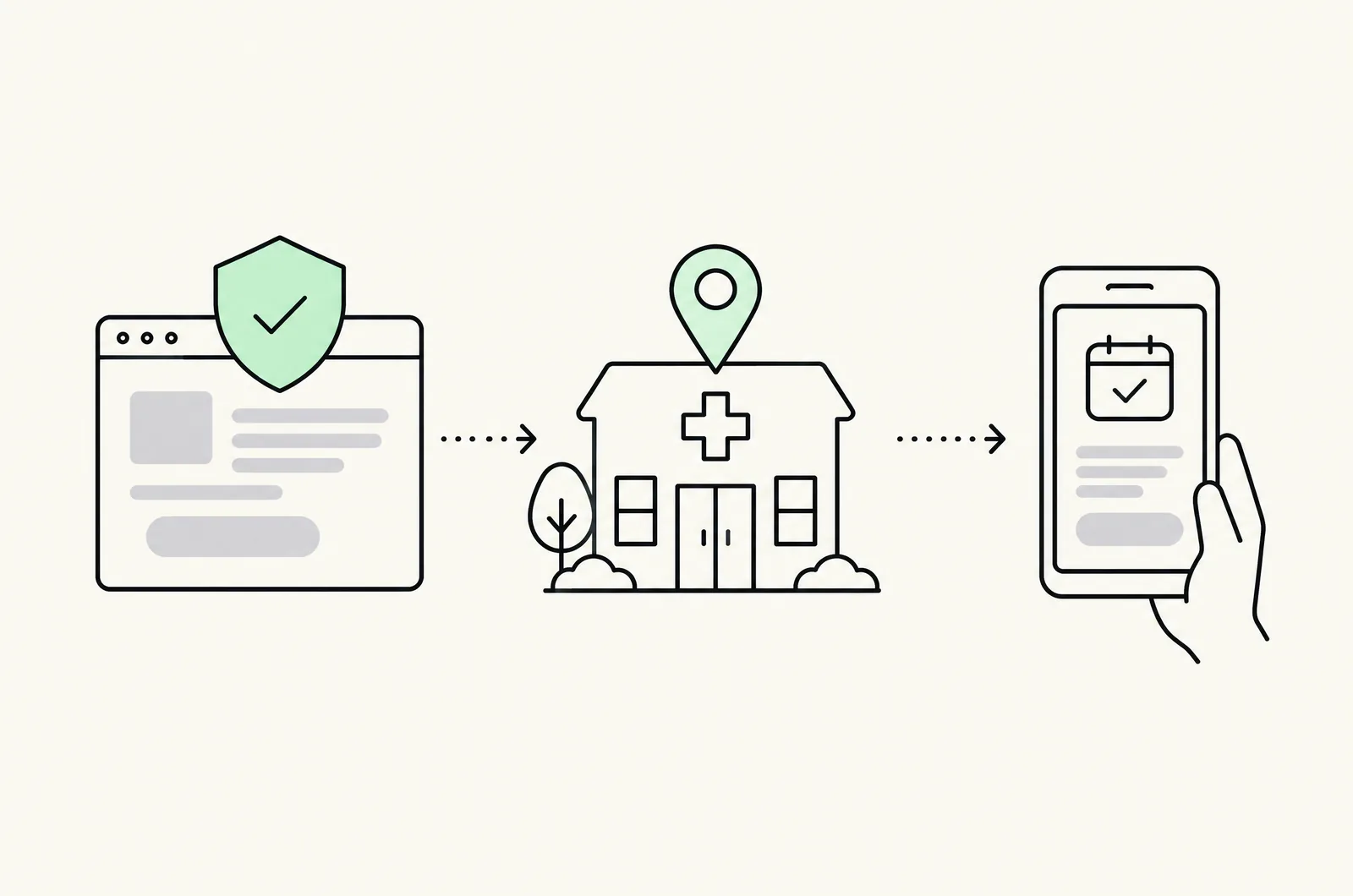
Privacy-safe conversion tracking
Server-side tagging that strips health information, conversion events limited to non-sensitive steps, and no ad pixels on portal, condition or intake pages. Get this wrong in California and the CMIA turns your ad stack into evidence.
Local SEO and maps for every location
Google Business Profiles, service and provider pages, and review programmes for each site. In the state's big metros, the map pack is where new patients choose between you and the large systems.
Google Ads for high-intent services
Search campaigns on services and symptoms patients actually book for, within Google's healthcare and medicines policy. Mis-targeted health ads waste spend and risk disapproval.
Paid social without health targeting
Meta and TikTok campaigns built on location, broad interests and first-party audiences, with no targeting or creative that implies a viewer has a condition, as platform rules and CMIA prudence require.
§651-compliant creative
Before-and-after images, testimonials and provider claims reviewed against B&P Code §651 and the relevant board's rules before they run. A non-compliant image can mean a board complaint.
Online booking and intake optimisation
Booking flows that work on phones, insurance and self-pay clarity, and intake forms that collect only what scheduling needs. Every unnecessary field is a drop-off and a data risk.
Spanish-language and multilingual patient pages
Service pages, ads and booking flows in Spanish, and in Chinese, Vietnamese or Korean where your patients need them. An English-only funnel misses a large share of California patients.
Attended-appointment reporting
Booked, attended and no-show appointments by source and location, from your practice-management system, without sending health data back to ad platforms.
Seven healthcare markets, seven payer mixes
Who the patients are in each market, and what wins their first appointment.

Los Angeles
The state's largest and most crowded healthcare market, with dense specialty competition and strong demand for Spanish- and Korean-language care. Neighbourhood-level local SEO decides most new-patient choices.
San Francisco Bay Area
Large integrated systems dominate, and many patients have narrow-network commercial plans. Independent practices win on access, appointment availability and specialist depth.
San Diego
A big military and veteran population with TRICARE and VA coverage, plus cross-border patients. Insurance-acceptance pages and bilingual booking pay off.
Orange County
High-income patients, strong demand for elective and specialty care, and many multi-site groups. Provider pages and reviews carry more weight than broad brand ads.
Sacramento
Large health systems and state-employee plans set the market. Access and wait times are a strong selling point for independent and specialty practices.
Inland Empire
Fast-growing population, provider shortages in many specialties and a large Medi-Cal share. Clinics win with clear insurance information, Spanish-language booking and evening hours.
Central Valley
Fresno, Bakersfield and Modesto face provider shortages and long travel distances. Telehealth options and plain, bilingual information drive bookings.
From tracking audit to attended visits
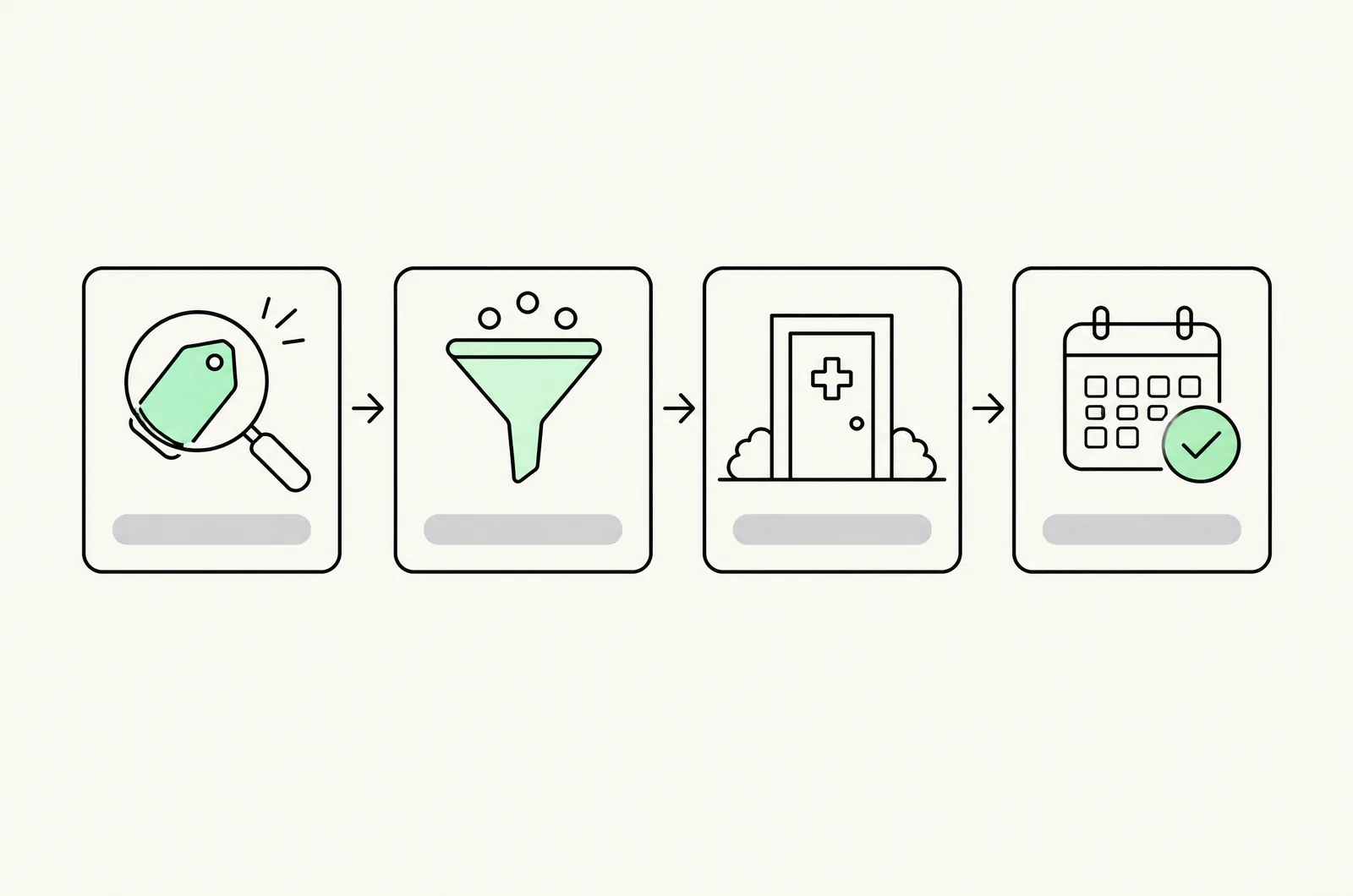
- Step 01
Tracking and privacy audit
Every tag, pixel and form checked for what it sends and where, against the CMIA, HIPAA and platform health policies. Risky tags come off first.
- Step 02
Patient-funnel baseline
New-patient bookings, attended visits and no-shows by source, service and location from your practice-management system.
- Step 03
Build compliant acquisition
Local SEO, search and social, §651-compliant creative and booking-flow fixes, location by location.
- Step 04
Measure without health data
Server-side conversions on non-sensitive events, offline imports of attended visits, and monthly reporting by location.
A California healthcare agency, an out-of-state agency or an in-house marketer
In-house costs are directional and depend on seniority and metro.
CMIA-aware, privacy-safe tracking
- Out-of-state agency
- Pixels everywhere
- In-house California hire
- Depends on the hire
- Conversion (San Francisco)
- Yes
§651 review of images and testimonials
- Out-of-state agency
- Rarely
- In-house California hire
- Varies
- Conversion (San Francisco)
- Yes
Plans by location and metro
- Out-of-state agency
- One national template
- In-house California hire
- Limited bandwidth
- Conversion (San Francisco)
- Yes
Reports attended appointments
- Out-of-state agency
- Leads and calls
- In-house California hire
- Spreadsheet
- Conversion (San Francisco)
- Yes
Local SEO, paid and booking CRO in one team
- Out-of-state agency
- Usually one channel
- In-house California hire
- Several hires
- Conversion (San Francisco)
- Yes
Typical monthly cost
- Out-of-state agency
- $2,000–$10,000 fee
- In-house California hire
- $9,000+ fully loaded (directional)
- Conversion (San Francisco)
- From $4,500 fee
Regulated acquisition, honestly labelled
- Regulated acquisition · Canada
4x
App user base
NDAX: growth under strict rules
NDAX is a Canadian fintech app, not a healthcare provider and not a California client, and we have no published patient-acquisition result. What carries over is running acquisition across channels in a regulated category where tracking, claims and targeting are all constrained. That grew users 4x.
Where healthcare splits into different practices
These practices have different patients, rules and economics, so each gets its own plan.
- Live
Dental groups & DSOs
Multi-location dental groups filling chairs across metros: new-patient flow, Medi-Cal Dental versus fee-for-service mix and SB 351.
- Live
IVF & fertility
Fertility clinics after SB 729 brought IVF coverage to large-group plans: long consideration, sensitive data and honest success-rate claims.
- Live
Aesthetics & med-spas
Med-spas and aesthetic practices in LA and beyond: physician ownership rules, §651 before-and-after images and repeat treatments.
What healthcare marketing costs in California
USD, excluding media. Pay-on-results terms are reviewed for referral-fee compliance.

Single location
From $4,500/mo
One site · one or two channels
Privacy audit, local SEO or paid search, booking-flow fixes and attended-visit reporting for one location. Media is separate.
- Tracking and privacy audit
- Local SEO and reviews
- Attended-visit report
- Most popular
Multi-site program
$9,000–$20,000/mo
Multi-location · multi-metro
Every location planned on its own demand and competition, with search, social, §651 creative review, multilingual pages and group-level reporting.
- Per-location plans
- §651 creative review
- Multilingual booking
Pay-on-results
Base + per visit
Qualifying groups
A lower base plus a fee per attended new-patient visit above an agreed baseline, structured to comply with California and federal referral-fee rules.
- Baseline agreed up front
- Counted on attended visits
- Compliance-reviewed terms
Healthcare marketing questions

What does a healthcare marketing agency in California do?
Is the Meta Pixel safe to use on a California medical website?
How is the CMIA different from HIPAA?
What are California's rules on before-and-after photos?
Can practices use patient testimonials in California?
Does SB 351 affect healthcare marketing?
Which California healthcare markets do you work in?
How much does healthcare marketing cost in California?
How do you measure results without sharing patient data?
More from the San Francisco team
Healthcare marketing agency (national)
Our national patient-acquisition practice and its specialty pages.ExploreCalifornia digital marketing hub
All nine California verticals, the state rulebook and the metros we plan for.ExploreDental group marketing in California
New-patient flow for multi-location dental groups and DSOs.ExploreEducation marketing in California
A sibling vertical with its own privacy rules for minors' data.ExploreHospitality marketing in California
A sibling vertical: local search, reviews and bookings.ExploreNDAX case study
Acquisition in a regulated category: 4x app users.Explore





Sources and statutes
Every figure and regulation cited on this page.
Facts and thresholds last checked 19 November 2026.
- California Civil Code §56 et seq. — Confidentiality of Medical Information Act (CMIA)California's medical-privacy law; it reaches some businesses HIPAA doesn't and carries statutory damages per violation.
- Bloomberg Law — Meta's Pixel cases stir trouble for health site tracking toolsCalifornia class actions against health systems over tracking pixels typically plead CMIA and CIPA claims; outcomes are split on public versus authenticated pages.
- California Business & Professions Code §651 — healthcare advertisingBans false or misleading healthcare advertising, including online; before-and-after images must name the procedure, be comparable in pose and lighting, and state that results may vary.
- Foley & Lardner — California SB 351 signed: limits on private equity management of medical practicesSigned 6 October 2025, in force 1 January 2026: bars private-equity and hedge-fund investors from interfering with clinical judgment in physician and dental practices; AG enforcement.
Get a tracking and patient-funnel audit
30 minutes with a senior strategist. We'll look at what your tags send and where new patients come from.
What happens next
- 1Pick a time for a 30-minute call.
- 2We review your tags, booking flow and locations.
- 3Get a privacy-safe patient-acquisition plan.
Prefer email? tarun@conversion.is