IVF & fertility \u00b7 California
IVF and fertility marketing for the SB 729 era
More consultations and started cycles for California fertility clinics, with coverage answered up front and no fertility data in your ads.

Trusted by 50+ D2C brands · Google, Meta & Shopify partners











New coverage, and a lot of confused patients
San Francisco, CA
Clinics statewide
SB 729-ready
Coverage-check flows
Privacy-first
No fertility data in ads
From their first renewal on or after 1 January 2026, fully insured large-group health plans in California have to cover infertility diagnosis and treatment, including IVF, under SB 729. The law also widened the definition of infertility to include same-sex couples and single people building families. Self-funded employer plans aren't covered by the mandate, so many patients still don't know whether their plan pays.
That makes 'Does my insurance cover IVF?' one of the first questions a new fertility patient asks, and one of the hardest for a clinic website to answer. The rest of the journey is long and personal: months of research, a consultation, testing, a decision about treatment and often more than one cycle. Marketing that treats a fertility consultation like a dental check-up loses patients and trust.
We work with fertility clinics as part of healthcare marketing in California, and statewide from San Francisco, alongside our national IVF clinic marketing work. The work is careful and long-cycle: clear coverage information, consultations booked, patients supported through a decision, and no sensitive data leaking to ad platforms.
Three things fertility clinics have to get right now
Each one decides whether a first enquiry becomes a consultation, and whether you keep the patient's trust.

Patients don't know if they're covered
SB 729 applies to fully insured large-group plans at their first renewal from 2026, not to self-funded plans, and small-group plans only have to offer the coverage. Most patients can't tell which they have. Clinics that answer the coverage question clearly, with a simple check and a benefits-verification step, convert far more first enquiries into consultations.
The decision takes months
Fertility patients research for a long time, often in private, before booking a consultation, and the step from consultation to treatment can take months more. Campaigns optimised to quick form fills miss most of this. You need content and nurture that support people through the whole decision, at their pace.
Data and claims are especially sensitive
A visit to an egg-freezing or IVF page is health information. Under the CMIA, it shouldn't reach ad platforms, and audiences can't be built on it. Success-rate claims must not mislead: B&P Code §651 applies, and selective statistics are a common complaint. Many standard ad setups break both rules.
Six pieces of work, built for a long decision

Coverage-check and benefits flows
A plain-language SB 729 explainer, a quick coverage check and a benefits-verification request built into consultation booking.
Consultation-focused search
Google Ads and SEO for IVF, egg freezing, IUI and LGBTQ+ family-building searches, optimised to booked consultations rather than form fills.
Long-cycle, consent-based nurture
Email education sequences that patients opt into, covering tests, timelines, costs and coverage, with no fertility details passed to ad platforms.
Honest outcomes content
Success-rate pages based on clinic data reported to national registries, with the context patients need. No cherry-picked numbers.
Employer and benefits-broker outreach
Partnerships with HR teams and benefits brokers whose employees gained coverage under SB 729 or through fertility-benefit platforms.
Privacy-safe measurement
Server-side tagging and counts of booked and attended consultations and started cycles, never diagnoses or treatment details.
Five fertility markets, five coverage pictures
How coverage and demand differ across California's main fertility markets.

San Francisco Bay Area
Many large employers already offered fertility benefits before SB 729, and egg freezing is common among professionals. Patients compare clinics on data, access and benefits support.
Los Angeles
The state's largest fertility market, with many clinics, international patients and strong LGBTQ+ family-building and surrogacy demand.
Orange County
Established clinic networks and high-income self-pay patients. Patients look for experienced physicians and clear package pricing.
San Diego
Military families with TRICARE limits on fertility coverage, and biotech employers with generous benefits. Coverage explainers matter more than anywhere.
Sacramento
State employees on CalPERS plans, whose SB 729 coverage start date is later, from July 2027. Clinics need clear, plan-specific information.
From journey audit to started cycles
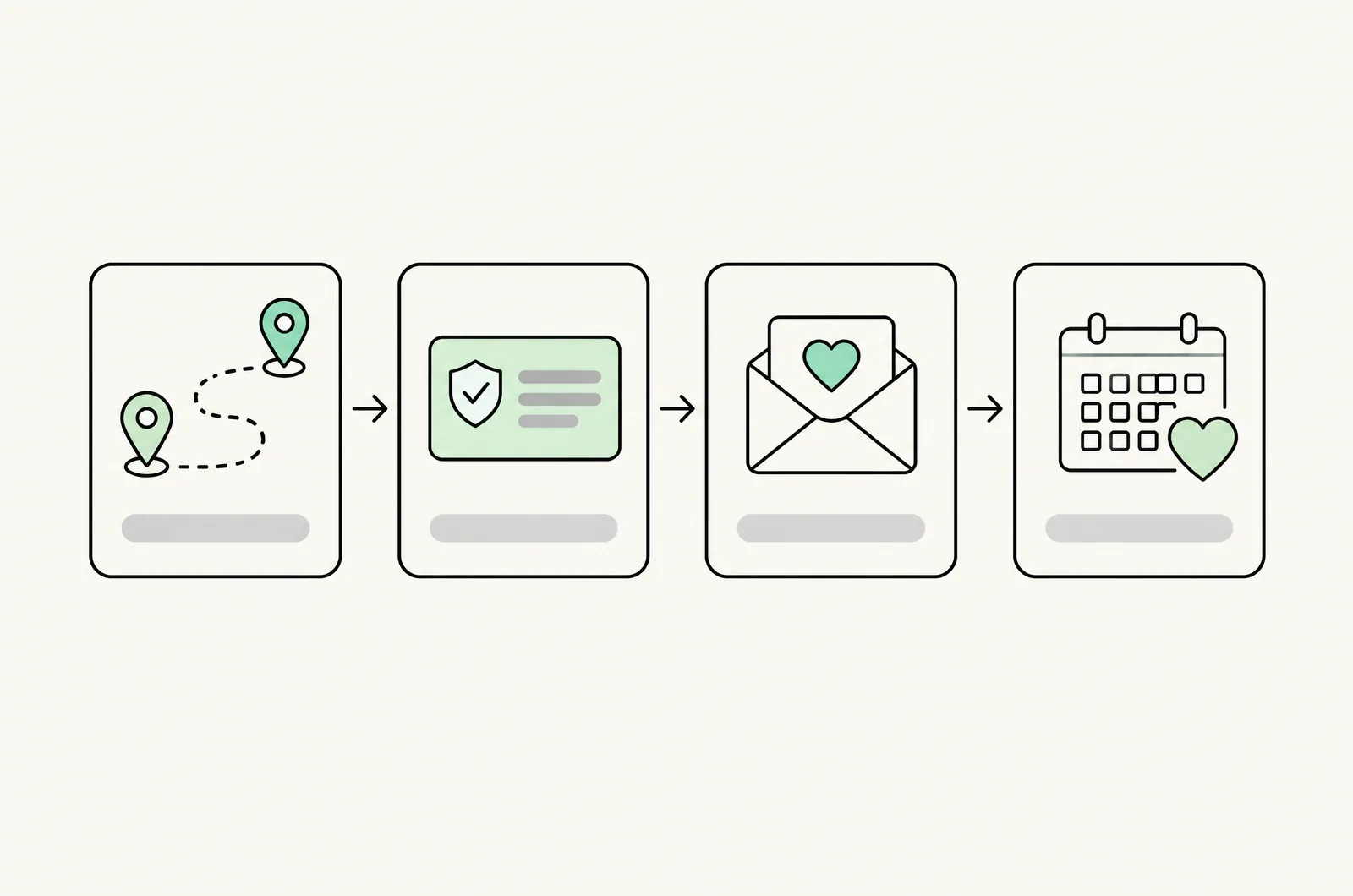
- Step 01
Patient-journey audit
Enquiry, consultation, testing and cycle-start rates by source, plus a check of every tag on fertility pages.
- Step 02
Coverage and claims
SB 729 coverage content, benefits-verification flow and a §651 review of success-rate and outcome claims.
- Step 03
Consultations and nurture
Consultation-focused search, opt-in education sequences and employer and broker outreach.
- Step 04
Report consults to cycles
Monthly booked and attended consultations and started cycles by source, as counts only.
A fertility specialist vs a general healthcare agency vs an in-house marketer
In-house costs are directional and depend on seniority and metro.
SB 729 coverage-check flow
- General healthcare agency
- Not considered
- In-house California hire
- Varies
- Conversion (San Francisco)
- Yes
No fertility data sent to ad platforms
- General healthcare agency
- Pixels on every page
- In-house California hire
- Depends
- Conversion (San Francisco)
- Yes
§651 review of success-rate claims
- General healthcare agency
- Rarely
- In-house California hire
- Varies
- Conversion (San Francisco)
- Yes
Long-cycle, opt-in nurture
- General healthcare agency
- Retargeting ads
- In-house California hire
- Manual follow-up
- Conversion (San Francisco)
- Yes
Reports consultations to started cycles
- General healthcare agency
- Leads
- In-house California hire
- Spreadsheet
- Conversion (San Francisco)
- Yes
Typical monthly cost
- General healthcare agency
- $3,000–$12,000 fee
- In-house California hire
- $10,000+ per marketer (directional)
- Conversion (San Francisco)
- From $6,000 fee
Considered decisions, honestly compared
- Considered decision · Canada
4x
App user base
NDAX: trust built across channels
NDAX is a Canadian fintech app, not a fertility clinic or a California client, and we have no published fertility result. We include it because it's a high-trust, regulated decision that people research for a long time across several channels. Running those channels as one plan grew users 4x.
What fertility marketing costs in California
USD, excluding media. Pay-on-results terms are reviewed for referral-fee compliance.
Clinic foundation
From $6,000/mo
One clinic
Tracking audit, SB 729 coverage content and booking flow, consultation-focused search and monthly reporting. Media is separate.
- Coverage-check flow
- Consultation search
- Consults-to-cycles report
- Most popular
Network program
$10,000–$20,000/mo
Multi-clinic
Everything in the foundation, plus opt-in nurture, outcomes content, employer and broker outreach, and network-level reporting.
- Opt-in nurture
- Employer partnerships
- Outcomes content
Pay-on-results
Base + per consult
Qualifying clinics
A lower base plus a fee per attended new-patient consultation above an agreed baseline, with terms reviewed for referral-fee compliance.
- Baseline agreed up front
- Counted on attended consults
- Compliance-reviewed terms
IVF and fertility marketing questions

What does SB 729 change for fertility clinics in California?
How should a fertility clinic market to newly covered patients?
Can we retarget people who visited our IVF pages?
How should clinics present success rates?
How long is the fertility patient journey?
Which California fertility markets do you work in?
How much does fertility clinic marketing cost?
Do you market LGBTQ+ family-building services?
Related healthcare pages
IVF clinics marketing agency (national)
Our national fertility marketing practice.ExploreHealthcare marketing in California
The parent practice: patient acquisition under CMIA and §651.ExploreDental group marketing in California
A sibling: office-level demand for multi-location dental groups.ExploreMed-spa & aesthetics marketing
A sibling: aesthetic practices under physician-ownership rules.Explore



Sources and statutes
Every figure and regulation cited on this page.
Facts and thresholds last checked 19 November 2026.
- Kindbody — SB 729 explained: what it means for fertility patients in CaliforniaFully insured large-group plans (101+ employees) must cover infertility diagnosis and treatment, including IVF, from the first renewal on or after 1 January 2026; self-funded plans exempt.
- California Civil Code §56 et seq. — Confidentiality of Medical Information Act (CMIA)California's medical-privacy law; it reaches some businesses HIPAA doesn't and carries statutory damages per violation.
- California Business & Professions Code §651 — healthcare advertisingBans false or misleading healthcare advertising, including online; before-and-after images must name the procedure, be comparable in pose and lighting, and state that results may vary.
Make coverage your first answer
30 minutes with a senior strategist. We'll review your coverage content, booking flow and tracking.
What happens next
- 1Pick a time for a 30-minute call.
- 2We review coverage content, tags and consult flow.
- 3Get a plan built around SB 729.
Prefer email? tarun@conversion.is