Interior design \u00b7 California
An interior design marketing agency that knows the California market
Signed projects for California interior design firms, from portfolio SEO and visual channels to referrals from architects and builders.
Trusted by 50+ D2C brands · Google, Meta & Shopify partners












No licence required, which is exactly why it's crowded
San Francisco, CA
Statewide studios
Title-compliant
B&P Code §5800
Signed projects
Not followers
California doesn't license interior designers. Anyone can practise, but only people certified by the California Council for Interior Design Certification may call themselves a 'certified interior designer' (Business & Professions Code §5800 onward). Since 1 January 2025, any job of $1,000 or more in labour and materials, or any job needing a permit, also needs a licensed contractor. Those two rules shape how a California design firm can describe and sell its work.
They also explain why the market is crowded. With no licence to earn, the field runs from solo e-designers to fifty-person commercial studios, all competing for the same 'interior designer near me' searches. A beautiful Instagram feed brings followers, many of them other designers. What a firm actually needs is a steady flow of clients with the right budget and timeline, and fewer enquiries from people who want a free consultation.
We run interior design as one of nine verticals in our California practice, from San Francisco. The work covers portfolio SEO, visual channels set up to generate enquiries, a qualification step that protects your time, and referral marketing with the architects, builders and real estate agents who send the best projects.
This page covers interior design broadly: residential studios, commercial and hospitality interiors, and trade showrooms. High-end residential design has its own page, because $500,000 projects in Montecito or Atherton come through a different door. Commercial interiors and trade showrooms have their own pages too.
Why design firms struggle to find the right clients
Each of these comes from California's crowded market or its rules on titles and contracting.

Followers aren't clients
Instagram and Pinterest reward beautiful rooms, and design firms post them. But the audience that saves and likes is mostly other designers, students and people decorating on a budget. In a state where living costs push studio rates high, you need the enquiry form to fill with homeowners and businesses who can afford the fee, not with likes.
State rules limit what you can claim
Only CCIDC-certified designers may use the title 'certified interior designer', and implying certification you don't hold breaks the law. Any project of $1,000 or more in labour and materials, or needing a permit, requires a licensed contractor, so 'we handle everything' copy has to be accurate about who does the build. A typical agency template won't know either rule.
Search is dominated by directories
Houzz, Yelp, Thumbtack and listicles take most of page one for 'interior designer Los Angeles' and similar searches, and sell those leads to many firms at once. In LA and San Francisco, map-pack competition is fierce. Without owned search results and project pages, you're renting leads that three other designers also receive.
Seven workstreams, one signed-projects report
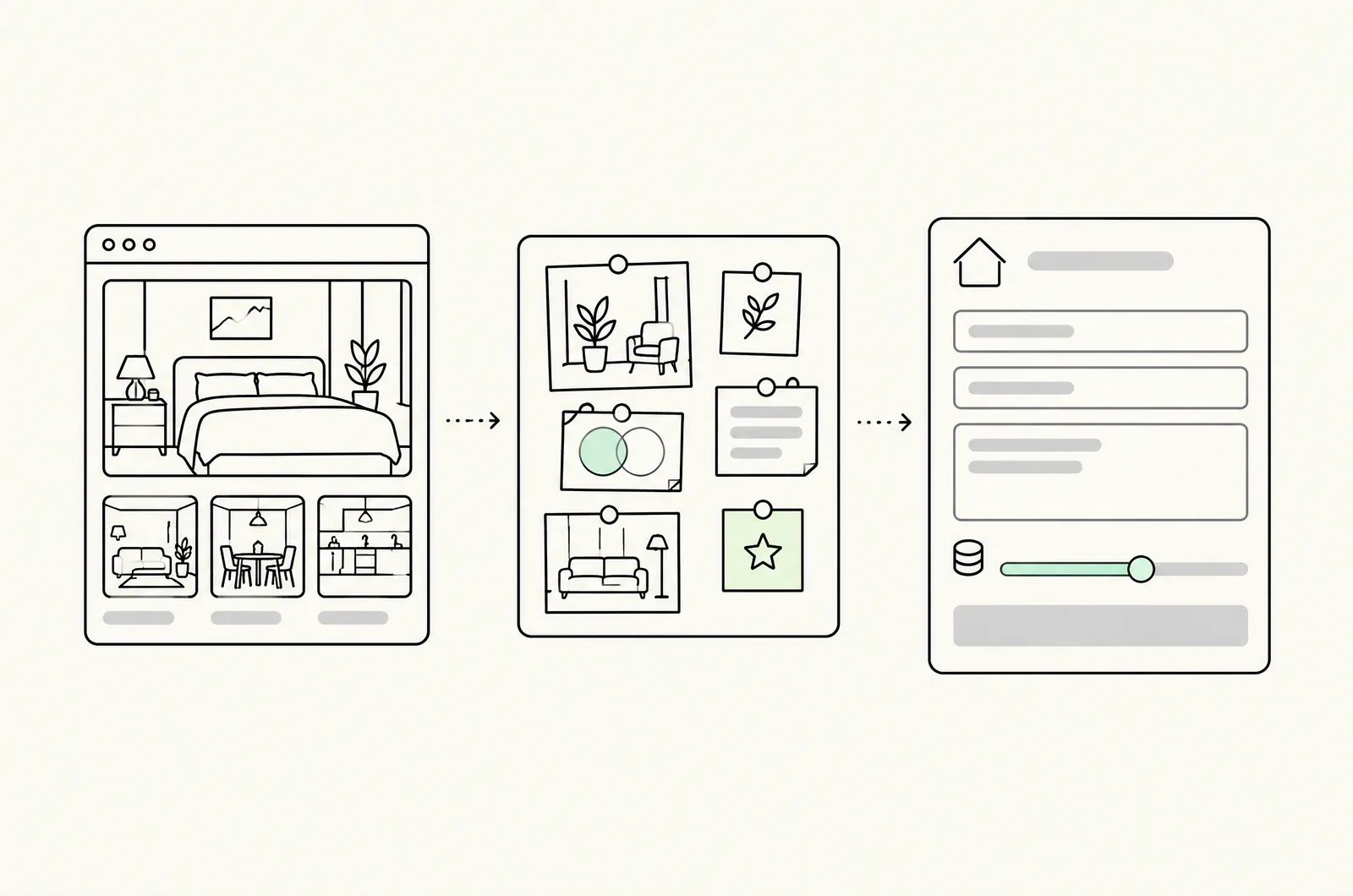
Portfolio and project-page SEO
Project pages with locations, scope, styles and budgets, built to rank for '[style] interior designer [city]'. A gallery without text is invisible to search, so the directories win by default.
Pinterest and Instagram for leads
Visual content linked to project pages and enquiry forms, with paid amplification to homeowners by interest and location. Organic reach alone mostly reaches other designers.
Enquiry qualification
Forms and booking flows that ask about budget, scope, timeline and location before a call. In a crowded California market, unqualified consultations cost you days every month.
Referral marketing with architects and builders
Trade-facing pages, project case studies and outreach to architects, contractors and agents who refer clients. The best California projects usually arrive by referral, and referrers check your site first.
Local SEO and Houzz strategy
Google Business Profile, reviews and a deliberate Houzz presence. Directories are worth having, but you want them sending people to your own site, not to a paid lead queue.
Title and claims compliance
Copy reviewed for the 'certified interior designer' title, contractor-licence references and project claims. Misstating either invites complaints that a design firm doesn't need.
E-design and product revenue
For firms with e-design packages, product curation or furniture lines, ecommerce and paid social built around those offers, kept separate from full-service lead generation.
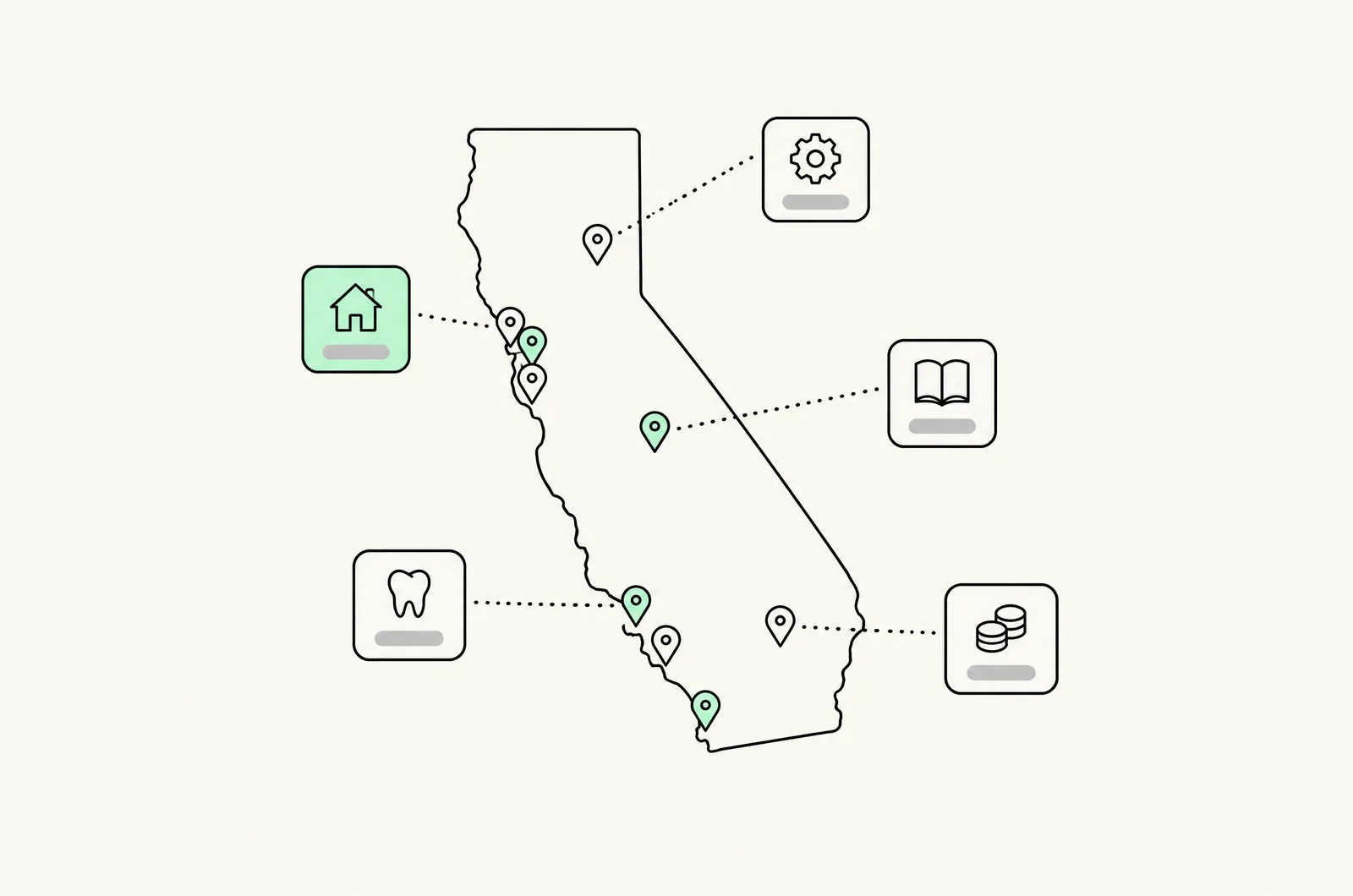
Seven design markets, seven different clients
What's true about design clients in each market, and how they find designers.
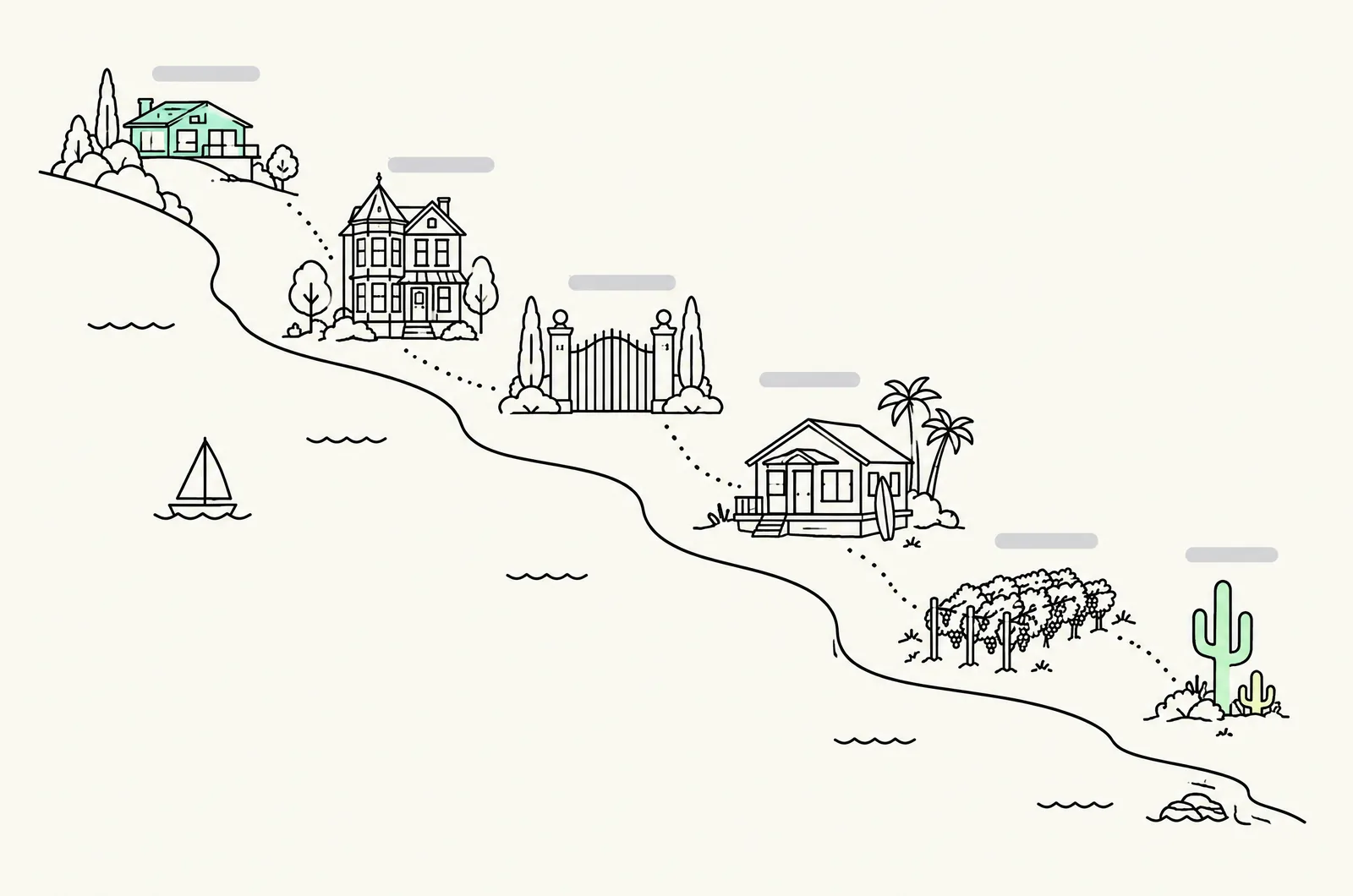
Los Angeles
The state's biggest design market, from Westside residential to Silver Lake creative studios. The January 2025 fires created a long rebuild pipeline in Altadena, the Palisades and Malibu, with homeowners searching for designers who know rebuild timelines.
San Francisco & the Peninsula
Victorian and Edwardian renovations in the city and large new builds on the Peninsula. Projects are expensive and permit-heavy, so designers who explain the process win trust early.
Montecito & Santa Barbara
Estate projects for clients from LA and out of state. Discretion and long relationships matter more than ad reach; portfolio depth and referrals drive the work.
Orange County
Coastal homes in Newport and Laguna and large inland homes in Irvine. Coastal-modern and transitional styles dominate search, and clients often come through builders.
San Diego
Coastal residential, short-term rental furnishing and a growing hospitality design market. Rental owners want fast, durable, photogenic rooms and search very differently from homeowners.
Napa & Sonoma
Second homes, tasting rooms and small hotels, with a wine-country aesthetic. Residential and hospitality design overlap here, and many clients live in the Bay Area.
Palm Springs & the high desert
Mid-century restoration in Palm Springs and modern desert homes in Joshua Tree and Yucca Valley. Second-home and rental buyers furnish quickly and search by style.
From project-source audit to signed projects
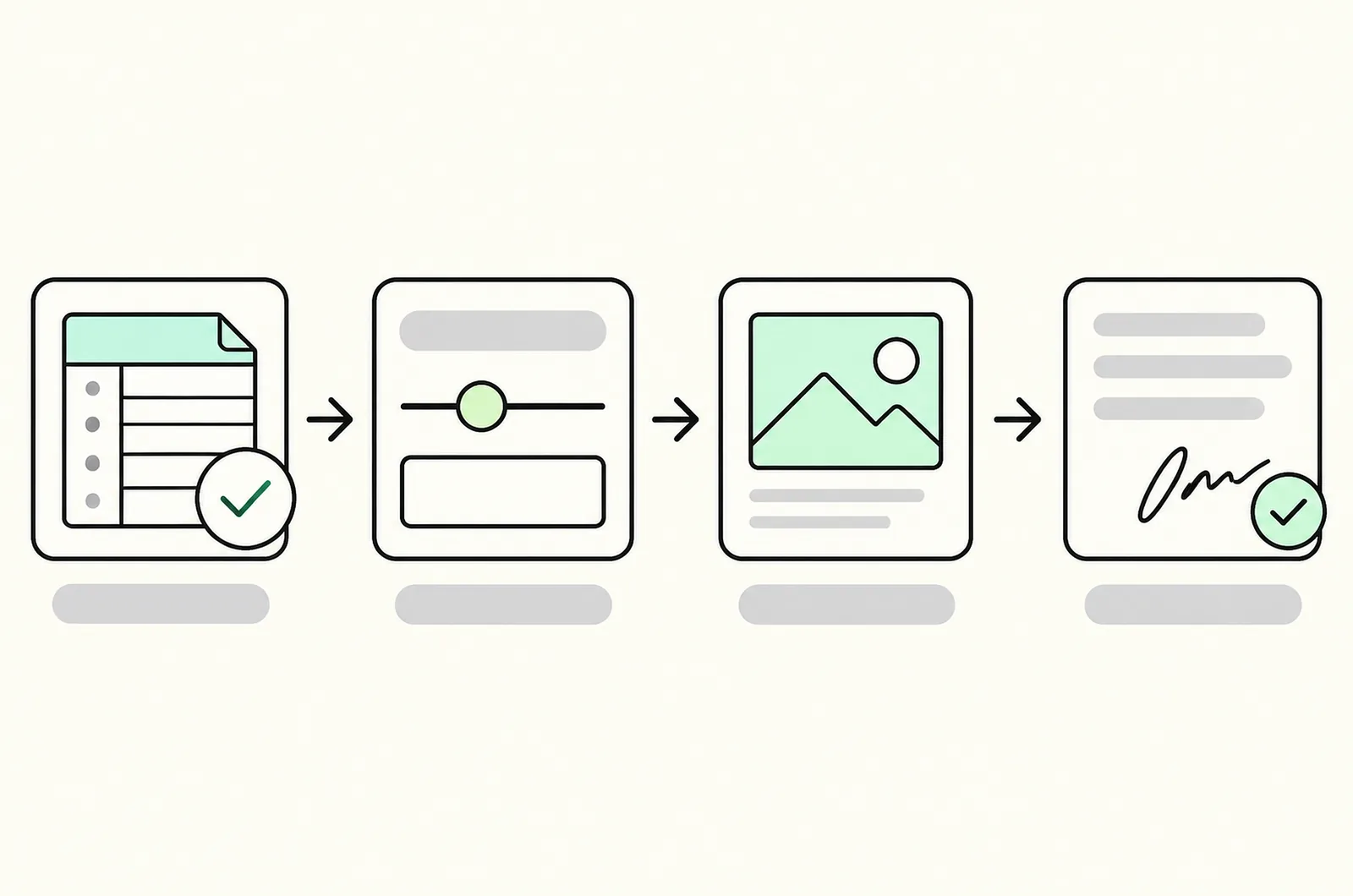
- Step 01
Project-source audit
We map where your last year of signed projects came from, by source, budget and location, and what each one was worth.
- Step 02
Claims and qualification
Title and contractor-licence language reviewed; enquiry forms rebuilt to qualify budget, scope and timeline.
- Step 03
Build owned demand
Project pages and portfolio SEO, visual channels set up for enquiries, and referral marketing to architects and builders.
- Step 04
Report on signed projects
Monthly enquiries, qualified consultations, signed projects and fee value by source. Budget follows the sources that sign.
A California design-marketing agency, a generalist or an in-house marketer
In-house costs are directional and depend on seniority and metro.
Knows California title and contractor rules
- Generalist agency
- Rarely
- In-house California hire
- Depends on the hire
- Conversion (San Francisco)
- Yes
Portfolio SEO with real project pages
- Generalist agency
- Gallery uploads
- In-house California hire
- If time allows
- Conversion (San Francisco)
- Yes
Qualifies budget before the consultation
- Generalist agency
- Generic contact form
- In-house California hire
- Manual screening
- Conversion (San Francisco)
- Yes
Referral marketing to architects and builders
- Generalist agency
- No
- In-house California hire
- Ad hoc
- Conversion (San Francisco)
- Yes
Reports signed projects and fee value
- Generalist agency
- Followers and reach
- In-house California hire
- Varies
- Conversion (San Francisco)
- Yes
Typical monthly cost
- Generalist agency
- $1,500–$6,000 fee
- In-house California hire
- $8,000+ fully loaded (directional)
- Conversion (San Francisco)
- From $4,000 fee
Visual proof, with the caveat up front
- Visual-first brand · national
$8.5M
Gross sales, +37% YoY
Actively Black: visual content that sells
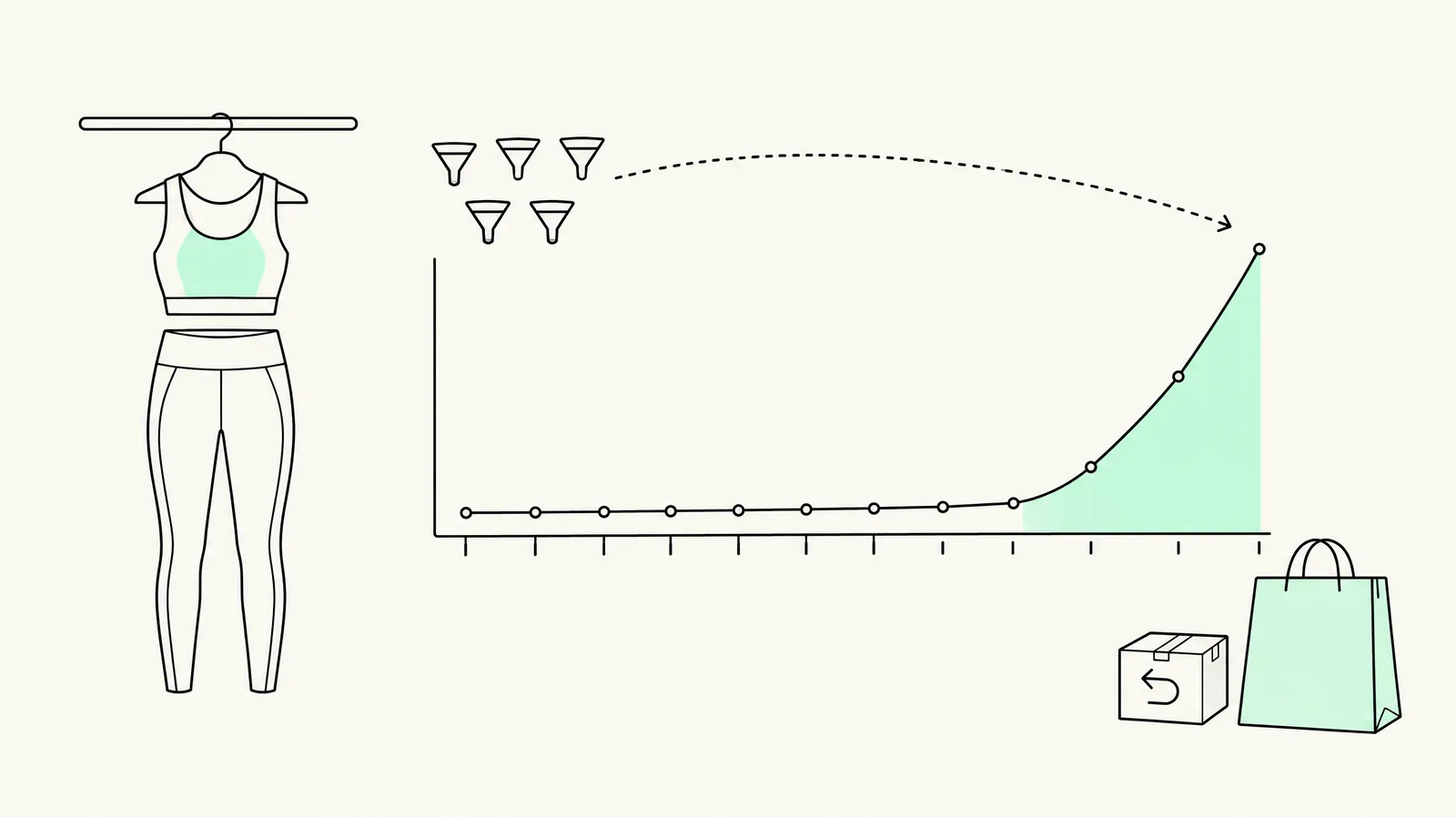
Actively Black is an apparel brand, not a design firm, and not a California client. The relevant part is turning visual content into revenue rather than reach: cold-traffic creative that grew gross sales 37% while returns stayed low. Design firms have the visuals; most just haven't connected them to enquiries.
Where interior design splits into different businesses
These firms sell to different clients through different doors, so each gets its own plan.
- Live
Luxury residential design
Studios taking $250,000+ projects in Montecito, Atherton, the Westside and Napa, where referrals, discretion and publication matter most.
- Live
Commercial & hospitality interiors
Office, hospitality and healthcare interiors sold to developers, operators and facilities teams through RFPs and long B2B cycles.
- Live
Trade showrooms
Showrooms at the Pacific Design Center and SF Design District selling to the trade: designer accounts, events and samples.
What interior design marketing costs in California
USD, excluding media and photography.

Studio foundation
From $4,000/mo
One studio · one or two channels
Portfolio SEO or visual-channel lead generation, enquiry qualification and the claims review. Media and photography are separate.
- Project-page SEO
- Qualified enquiry flow
- Signed-projects report
- Most popular
Studio growth
$7,500–$14,000/mo
Multi-channel · multi-office
SEO, Pinterest and Instagram, paid social, referral marketing and local SEO run as one plan, plus e-design or product revenue where relevant.
- Referral programme
- Paid visual campaigns
- E-design and product sales
Pay-on-results
Base + share
Qualifying firms
A lower base plus a share of design fees from signed projects attributed to our campaigns, against an agreed baseline.
- Baseline agreed up front
- Paid on design fees
- Shared risk
Interior design marketing questions
Do interior designers need a licence in California?
Can my design firm's website say we manage the whole renovation?
How do interior designers get more clients in California?
Is Houzz worth it for a California design firm?
How do you stop small-budget enquiries?
Are the LA fire rebuilds a marketing opportunity for designers?
Which California design markets do you work in?
How much does interior design marketing cost?
How long does it take to see signed projects?
More from the San Francisco team
California digital marketing hub
All nine California verticals, the state rulebook and the metros we plan for.ExploreLuxury interior design marketing
Referral-led, discreet marketing for studios taking $250,000+ projects.ExploreHospitality marketing in California
A sibling vertical: hotels, restaurants and wineries, many of them design clients.ExploreLuxury real estate marketing
The listing agents who often refer high-end design projects.ExploreActively Black case study
Visual creative that grew gross sales 37% to $8.5M.ExploreSocial media marketing agency
Paid and organic social, the visual layer of a design firm's pipeline.Explore



Sources and statutes
Every figure and regulation cited on this page.
Facts and thresholds last checked 19 November 2026.
- California Senate Business, Professions & Economic Development Committee — CCIDC sunset background paperInterior designers are not licensed in California; only CCIDC-certified individuals may use the title 'certified interior designer' (B&P Code §5800 et seq.).
- CSLB — AB 2622 raises the minor-work exemption to $1,000From 1 January 2025, work of $1,000 or more (labour and materials), or any job needing a permit, requires a licensed contractor.
- California Privacy Protection Agency — 2025 CCPA monetary threshold adjustmentsAnnual gross revenue threshold for a covered 'business': $26,625,000 (Civil Code §1798.140(d)(1)(A)).
Find out where your best projects come from
30 minutes with a senior strategist. Bring a list of last year's signed projects and how each one found you.
What happens next
- 1Pick a time for a 30-minute call.
- 2We review your portfolio, enquiries and referral sources.
- 3Get a plan measured on signed projects.
Prefer email? tarun@conversion.is