Education \u00b7 California
Education marketing in California, run on the state's calendar
Applications and enrolled students for California schools, colleges and career programmes, timed to the dates families and students actually decide.
Trusted by 50+ D2C brands · Google, Meta & Shopify partners








Two dates that decide your year
San Francisco, CA
Statewide enrollment
Calendar-led
UC · CSU · Cal Grant
Enrolled students
Not enquiries
California's education calendar is fixed and unforgiving. UC and CSU first-year applications for fall entry close on 30 November. The FAFSA and California Dream Act Application are due on 2 March for Cal Grant consideration. Private K–12 schools run open houses in autumn and send decisions in spring. Miss a window and a prospective student enrolls somewhere else, and you wait a year.
The market is changing too. In 2025–26, every four-year-old in California became eligible for free public transitional kindergarten for the first time, and about 213,000 enrolled. That reshaped the entry point for private preschools and elementary schools. At the other end, trade schools and career colleges compete for adults weighing a certificate against a two-year degree, under BPPE rules on what they must disclose.
We run education as one of nine verticals in our California practice, from San Francisco. The work is enrollment marketing: search and social timed to each admissions window, programme pages that rank, enquiry-to-application nurture, and reporting that follows a family or student from first visit to enrolled.
This page covers education broadly: private K–12 schools, colleges and graduate programmes, trade and technical schools, and education companies. Private K–12 schools have their own page, because selling to parents is a different job. Higher-ed enrollment and trade schools have their own pages too.
Why enrollment marketing misses in California
Each problem comes from the state's calendar, its privacy and disclosure rules, or its free public options.

Your calendar is set by the state
Fall applications to UC and CSU close on 30 November; Cal Grant aid forms close on 2 March. Private colleges, community-college transfers and trade schools all position around those dates. A campaign that starts in December is late for most of the year's decisions, and one that runs at a flat budget all year wastes money in the months when nobody's choosing.
Student and family data carries extra rules
CCPA/CPRA applies to covered schools and education companies, and many enquiries involve minors, whose data has stricter consent rules under California law. BPPE-approved private postsecondary schools must give prospective students a School Performance Fact Sheet with completion, placement and salary data before enrollment, and marketing claims have to be consistent with it.
The competition includes free public options
Universal TK, community colleges with low fees for California residents, and the UC and CSU systems are the alternatives every private school and career college is measured against. Your marketing has to explain clearly what a family or student gets for the tuition, which is harder than buying more clicks.
Eight workstreams, one enrolled-student report

Enrollment-calendar search campaigns
Search campaigns that ramp before each admissions window and fall away after. Flat year-round budgets spend most heavily when California families aren't deciding.
Programme and campus page SEO
Pages for each programme, campus and pathway, ranking for '[programme] in [city]' and 'best [type] school near me'. Thin programme pages lose to rankings sites and aggregators.
Paid social for families and adult learners
Meta and TikTok aimed at parents by life stage and at adult learners by career change, with creative that shows students and outcomes. Education ads have to avoid discriminatory targeting and claims they can't back up.
Enquiry-to-application nurture
Email and SMS sequences from first enquiry through open house, application and enrollment deposit, with consent handled correctly for minors. Most lost students drop between enquiry and application.
Open house and event marketing
Registration campaigns, reminders and follow-up for open houses, tours and info sessions. Attendance is the strongest predictor of enrollment, so no-shows are expensive.
Disclosure and claims compliance
BPPE fact-sheet consistency for career schools, CCPA notices on enquiry forms, and claims about outcomes, rankings and job placement checked before they ship.
Spanish-language and bilingual campaigns
Bilingual pages and campaigns for families and adult learners who search in Spanish. In much of California, an English-only funnel misses a large share of the market.
Enrollment attribution
Reporting from enquiry to application, admission and enrolled student by source and programme, connected to your SIS or CRM.
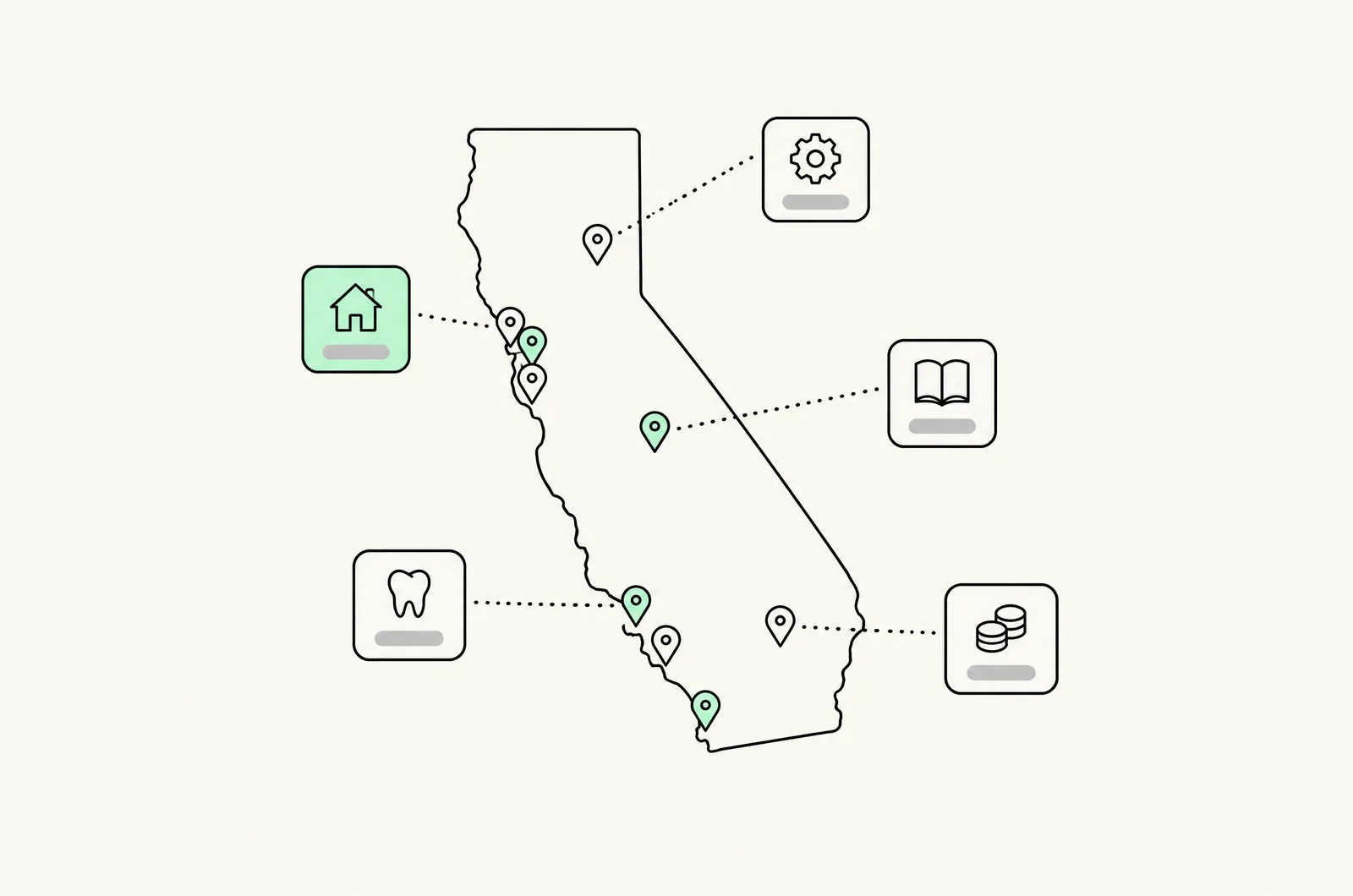
Seven education markets, seven kinds of student
Who's choosing a school or programme in each market, and what they weigh.

Los Angeles
The largest private-school and career-college market in the state, with strong demand for bilingual programmes and arts and entertainment training. Neighbourhood-level search matters because families rarely commute across the county.
San Francisco Bay Area
Highly competitive private K–12 admissions, graduate and executive programmes for tech professionals, and coding and AI bootcamps. Families and professionals research deeply and compare outcomes.
San Diego
Military families who move often, a growing biotech workforce, and cross-border students. Rolling admissions and transfer-friendly messaging suit families on PCS timelines.
Sacramento
State-government and healthcare employers drive demand for certificates, nursing and public-administration programmes. Trade schools compete for students on job placement with large local employers.
Inland Empire
Fast-growing family populations, logistics and healthcare jobs, and price-sensitive adult learners. Trade schools and career colleges compete here on schedule flexibility and job outcomes.
Orange County
Private and faith-based K–12 schools, test-prep and tutoring, and strong demand for STEM programmes. Family incomes are high but so are expectations for results.
Central Valley
First-generation college students, agricultural and healthcare careers, and strong Spanish-language demand. Financial aid and Cal Grant messaging carries more weight than prestige.
From funnel audit to enrolled students
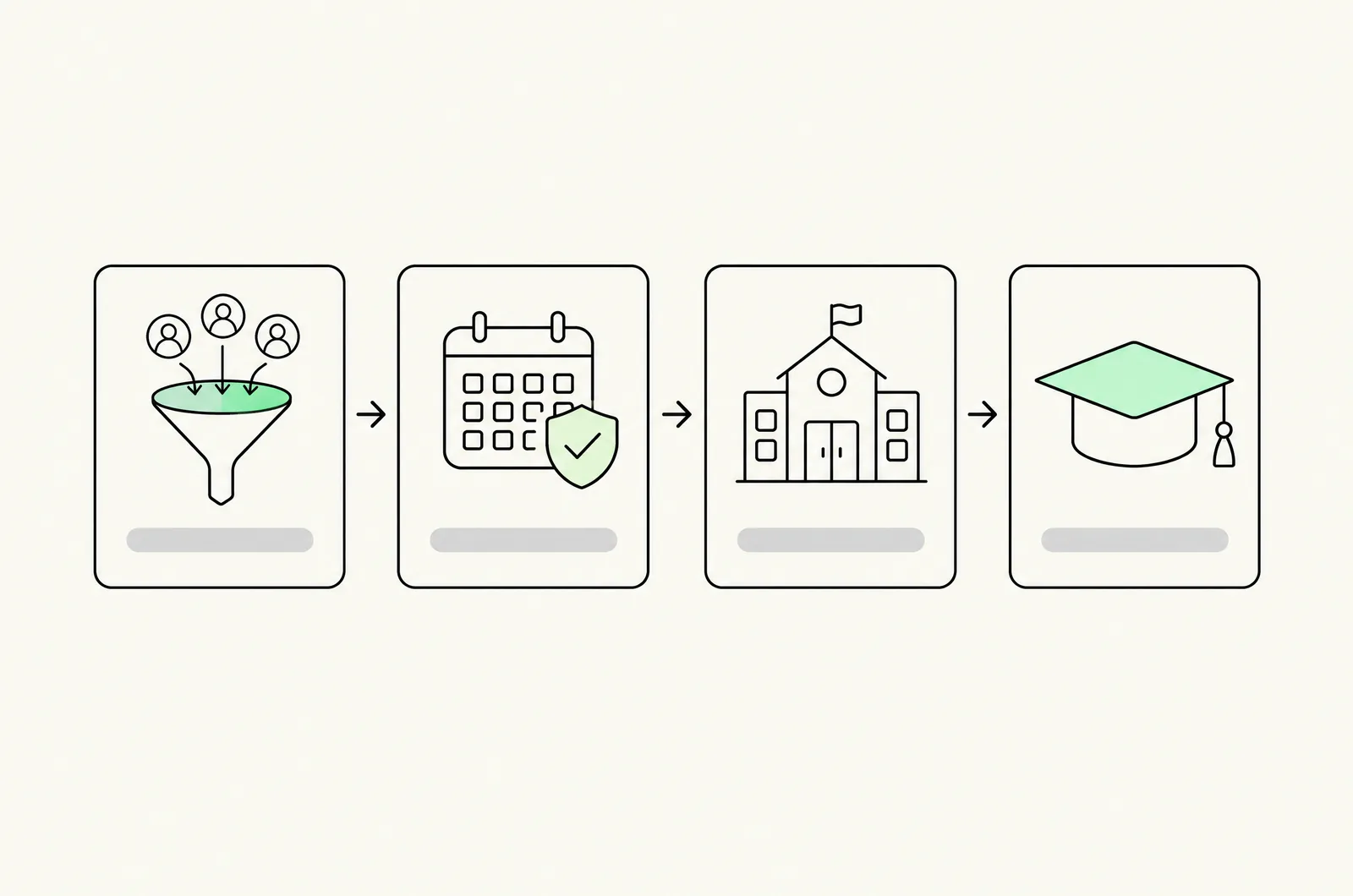
- Step 01
Enrollment funnel audit
We map last year's enquiries, applications, admits and enrolled students by source, programme and campus, and find where students drop out.
- Step 02
Calendar and compliance
A campaign calendar built back from your admissions dates and the state's, plus CCPA, minors' data and BPPE disclosure checks.
- Step 03
Build the enrollment engine
Programme pages, calendar-led search and social, open-house campaigns and nurture from enquiry to deposit.
- Step 04
Report on enrolled students
Monthly cost per application and per enrolled student by source and programme, so budget follows the students who enroll.
A California education agency, an out-of-state agency or an in-house marketer
In-house costs are directional and depend on seniority and metro.
Plans around UC, CSU and Cal Grant dates
- Out-of-state agency
- Generic academic calendar
- In-house California hire
- Usually
- Conversion (San Francisco)
- Yes
Knows BPPE and CCPA rules for student data
- Out-of-state agency
- Rarely
- In-house California hire
- Depends on the hire
- Conversion (San Francisco)
- Yes
Bilingual campaigns and pages
- Out-of-state agency
- Translation add-on
- In-house California hire
- If staff speak Spanish
- Conversion (San Francisco)
- Yes
Reports enrolled students by source
- Out-of-state agency
- Cost per lead
- In-house California hire
- Varies
- Conversion (San Francisco)
- Yes
Search, social, SEO and nurture in one team
- Out-of-state agency
- Usually one channel
- In-house California hire
- Several hires
- Conversion (San Francisco)
- Yes
Typical monthly cost
- Out-of-state agency
- $3,000–$12,000 fee
- In-house California hire
- $9,000+ fully loaded (directional)
- Conversion (San Francisco)
- From $4,500 fee
Regulated acquisition, honestly labelled
- Regulated acquisition · Canada
4x
App user base
NDAX: acquisition under disclosure rules
NDAX is a Canadian fintech app, not a school or a California client. The relevant part is running Apple Search, Meta and Reddit as one plan in a regulated category where every claim has to hold up. That grew users 4x. Enrollment marketing under BPPE and minors' privacy rules needs the same discipline.
Where education splits into different buyers
Parents, adult learners and transfer students decide differently, so each segment gets its own plan.
- Live
Private K–12 schools
Independent, faith-based and Montessori schools filling seats against universal TK and strong public districts, with parents as the buyer.
- Live
Higher-ed enrollment
Private colleges and graduate programmes competing with UC and CSU, timed to the November and March deadlines.
- Live
Trade & technical schools
BPPE-approved career schools in Sacramento, the Inland Empire and beyond, selling to adults on job outcomes.
What education marketing costs in California
USD, excluding media and event costs.

Enrollment foundation
From $4,500/mo
One campus · one or two channels
Calendar-led search or social, programme pages and nurture for one campus, with the compliance pass included. Media is separate.
- Admissions calendar plan
- Enquiry-to-application nurture
- Enrolled-student report
- Most popular
Enrollment programme
$9,000–$18,000/mo
Multi-campus · multi-programme
Search, social, SEO, open-house campaigns and bilingual funnels across programmes and campuses, tied to your SIS or CRM.
- Open-house campaigns
- Bilingual funnels
- SIS/CRM attribution
Pay-on-results
Base + per enrollment
Qualifying institutions
A lower base plus a fee per enrolled student above an agreed baseline, measured at census date.
- Baseline agreed up front
- Paid per enrolled student
- Counted at census
Education marketing questions

When should California schools and colleges run enrollment campaigns?
What does the CCPA mean for school marketing?
What do BPPE-approved schools have to disclose in marketing?
How has universal TK affected private schools?
How do you measure education marketing?
Should education campaigns be bilingual in California?
Which California education markets do you work in?
How much does education marketing cost?
Do you guarantee enrollment numbers?
More from the San Francisco team
California digital marketing hub
All nine California verticals, the state rulebook and the metros we plan for.ExplorePrivate school marketing
Filling seats at independent, faith-based and Montessori schools.ExploreIT & software marketing in California
A sibling vertical, including edtech companies selling to schools.ExploreHospitality marketing in California
A sibling vertical: seasonal demand and calendar-led campaigns.ExploreNDAX case study
Acquisition in a regulated category: 4x app users.ExploreSEO agency
The technical and content SEO behind programme and campus pages.Explore

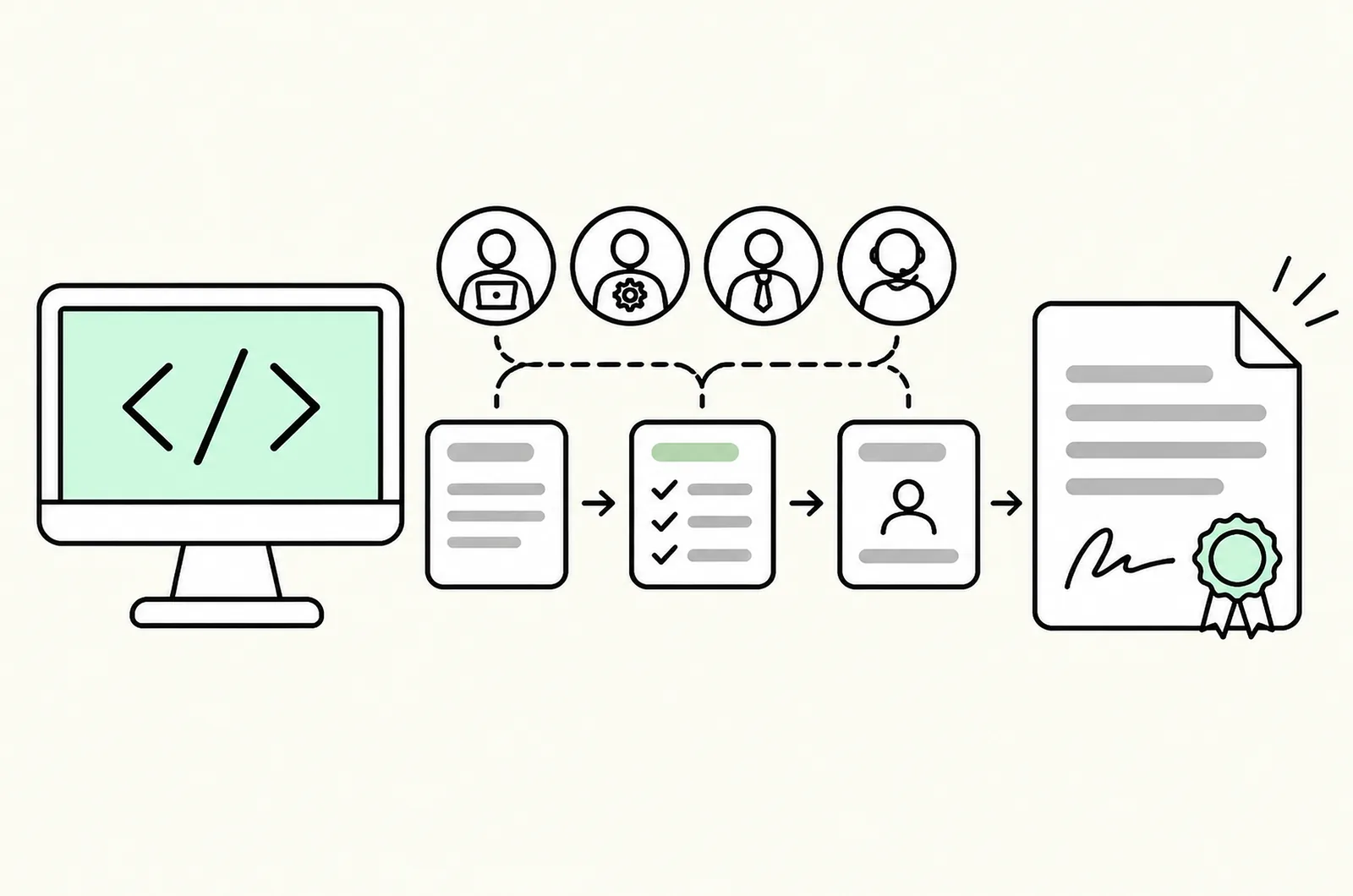

Sources and statutes
Every figure and regulation cited on this page.
Facts and thresholds last checked 19 November 2026.
- University of California — First-year dates and deadlinesFiling period 1–30 November (opens 1 October); FAFSA, California Dream Act Application and GPA Verification due 2 March for Cal Grant.
- Cal State Fullerton — Admission deadlines (Cal State Apply)Cal State Apply opens 1 August; submissions from 1 October; priority deadline 30 November for fall entry.
- PPIC — California's transitional kindergarten expansion2025-26 was the first year every four-year-old was eligible for public TK; about 213,000 enrolled.
- California Bureau for Private Postsecondary Education — School Performance Fact Sheet guidanceBPPE-approved institutions must give prospective students a School Performance Fact Sheet (completion, placement, licensure and salary data) before enrollment.
- California Privacy Protection Agency — 2025 CCPA monetary threshold adjustmentsAnnual gross revenue threshold for a covered 'business': $26,625,000 (Civil Code §1798.140(d)(1)(A)).
Plan your next admissions cycle
30 minutes with a senior strategist. Bring last year's enquiries and enrollments by source if you have them.
What happens next
- 1Pick a time for a 30-minute call.
- 2We review your funnel, calendar and compliance.
- 3Get a campaign calendar built back from your deadlines.
Prefer email? tarun@conversion.is