Manufacturing · California
A manufacturing marketing agency that knows the California market
RFQs, quotes and won purchase orders for California manufacturers, built for the engineers, buyers and quality teams who pick suppliers.
Trusted by 50+ D2C brands · Google, Meta & Shopify partners










The biggest manufacturing state is also the most crowded
San Francisco, CA
Statewide coverage
Buying committee
Engineers to procurement
RFQ to PO
CRM-attributed
California has more manufacturing jobs than any other state: about 1,202,300 in December 2025, according to the St. Louis Fed's FRED data. That covers aerospace in the South Bay, medical devices in Irvine, semiconductors and hardware in the Bay Area, and food processing across the Central Valley. It's not a small-shop economy, and buyers comparing California suppliers have plenty to choose from.
Manufacturing sales also look nothing like consumer marketing. A new supplier is chosen by a committee of an engineer who writes the spec, a procurement lead who runs the RFQ, a quality manager who audits the plant, and often a plant or program manager who owns the risk. Sales cycles run months. Most of the research happens before anyone fills in a contact form, in datasheets, CAD downloads, certifications and capability pages.
We run manufacturing as one of nine verticals in our California practice, from San Francisco. The work is built around the buying committee: content and search that engineers trust, account-based campaigns for named target companies, RFQ flows that don't lose quotes, and reporting from first visit to won purchase order.
This page covers manufacturing broadly: contract manufacturers, OEMs, machine shops and component makers. Food and beverage processors have their own page, because retail buyers and food-safety rules change the job. Robotics and hardware companies and industrial distributors have their own pages too.
Why manufacturing marketing stalls in California
Each of these comes from California's cost base, its rules or the density of competing suppliers.
Your cost base needs bigger contracts
California manufacturers carry some of the highest labour, energy and real estate costs in the country, and the exempt-salary floor alone is $70,304 in 2026. You rarely win on unit price against out-of-state or offshore suppliers. Marketing has to reach buyers who pay for what California does well: engineering support, quick turns, short logistics to West Coast customers and certifications. Then it has to filter out price-only RFQs.
State rules reach into your marketing stack
Since January 2023, the CCPA has covered business-to-business contact data, so trade-show scans, gated datasheets and ABM lists need notice and opt-out handling if you're a covered business. Products sold into California may need Prop 65 warnings on product pages and catalogues. Packaging and emissions claims sit under CARB rules and the state's plastic-packaging law. Generic B2B templates ignore all of it.
Search is crowded with directories and distributors
For spec-driven queries like 'CNC machining Los Angeles' or 'medical device contract manufacturer California', page one is often Thomasnet, marketplaces and distributors, not manufacturers. In a state with this many suppliers, a thin capabilities page doesn't rank. You need content engineers actually use, such as tolerances, materials, certifications and lead times, to get onto the RFQ list.
Eight workstreams, one pipeline report
Each one names what it costs a California manufacturer when it's missing or done badly.
Technical SEO for spec searches
Capability, material, process and certification pages written to the specs engineers search for. Without them, you lose page one in California's crowded supplier market to directories that resell the lead.
RFQ and quote-flow optimisation
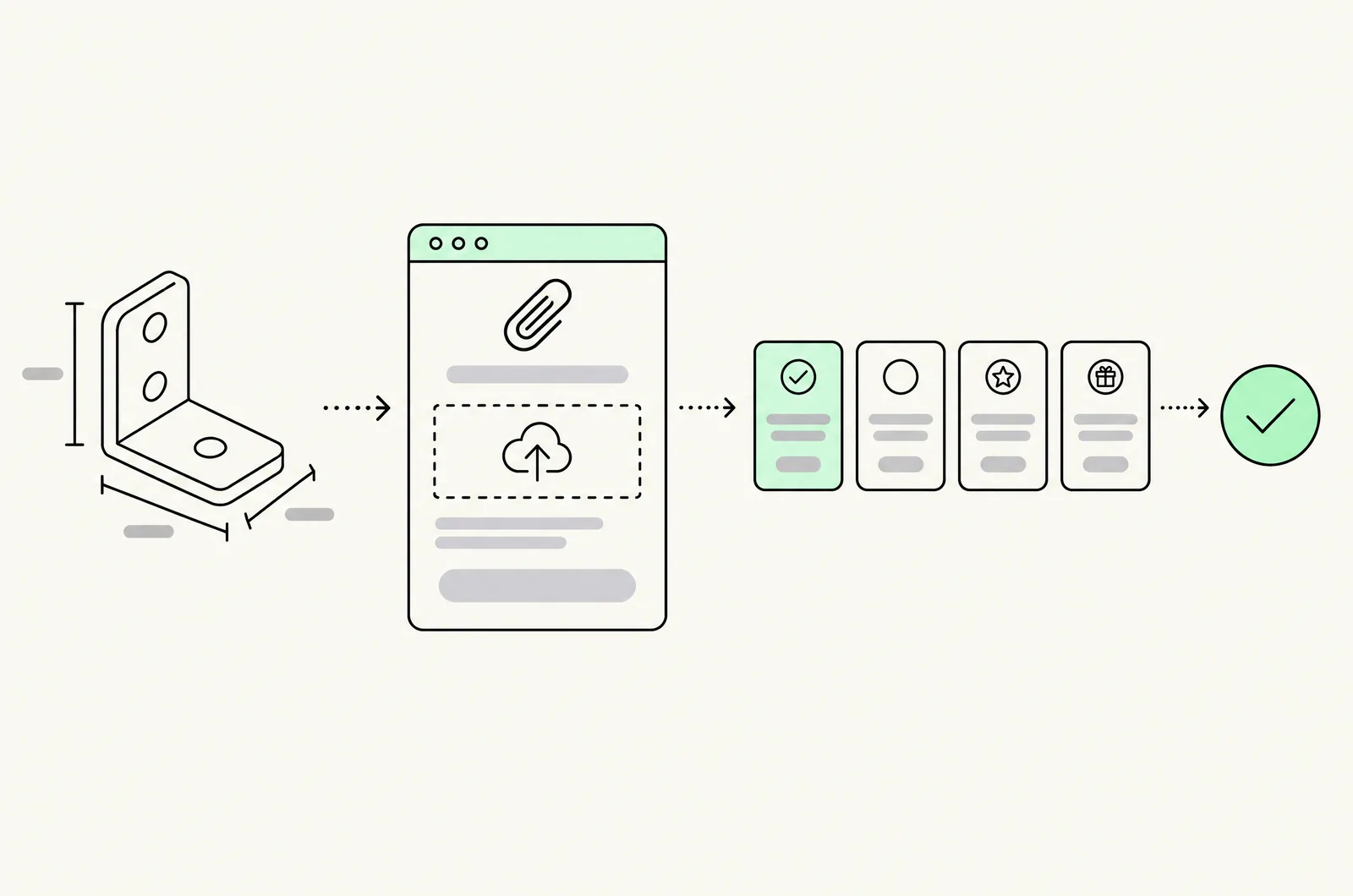
Upload-a-drawing RFQ forms, CAD-friendly file handling and fast acknowledgement. A broken or slow RFQ flow loses quotes to the next supplier on the list, often a competitor down the same freeway.
Account-based LinkedIn and display
Campaigns to named target accounts by role: engineering, procurement, quality and operations. With CCPA covering B2B data, audiences come from compliant first-party lists and platform targeting, not purchased lists.
Google Ads for high-intent supplier searches
Search campaigns on process and capability terms, with negatives for jobs, students and DIY. Without negatives, California manufacturing search spends heavily on job seekers.
Datasheets, CAD and gated content
Spec sheets, CAD downloads and design guides with CCPA-compliant gates: clear notice, minimal fields, and opt-out honoured. Over-gated assets get abandoned; ungated ones give you no signal.
Prop 65 and claims review on product pages
Prop 65 warnings where required for consumer-facing products, plus checks on 'recyclable', 'compostable' and emissions claims. Getting this wrong invites demand letters from private enforcers.
Trade-show and distributor programs
Pre-show account targeting, booth follow-up sequences and distributor co-marketing for events like Pacific Design & Manufacturing and WESTEC. Scanned leads need CCPA notice like any other contact data.
Attribution from RFQ to purchase order
CRM integration tracking RFQs, quotes sent, quotes won and PO value by source and account, imported back into Google and LinkedIn. Lead counts alone reward the channels that bring price shoppers.
Eight manufacturing regions, eight industry mixes
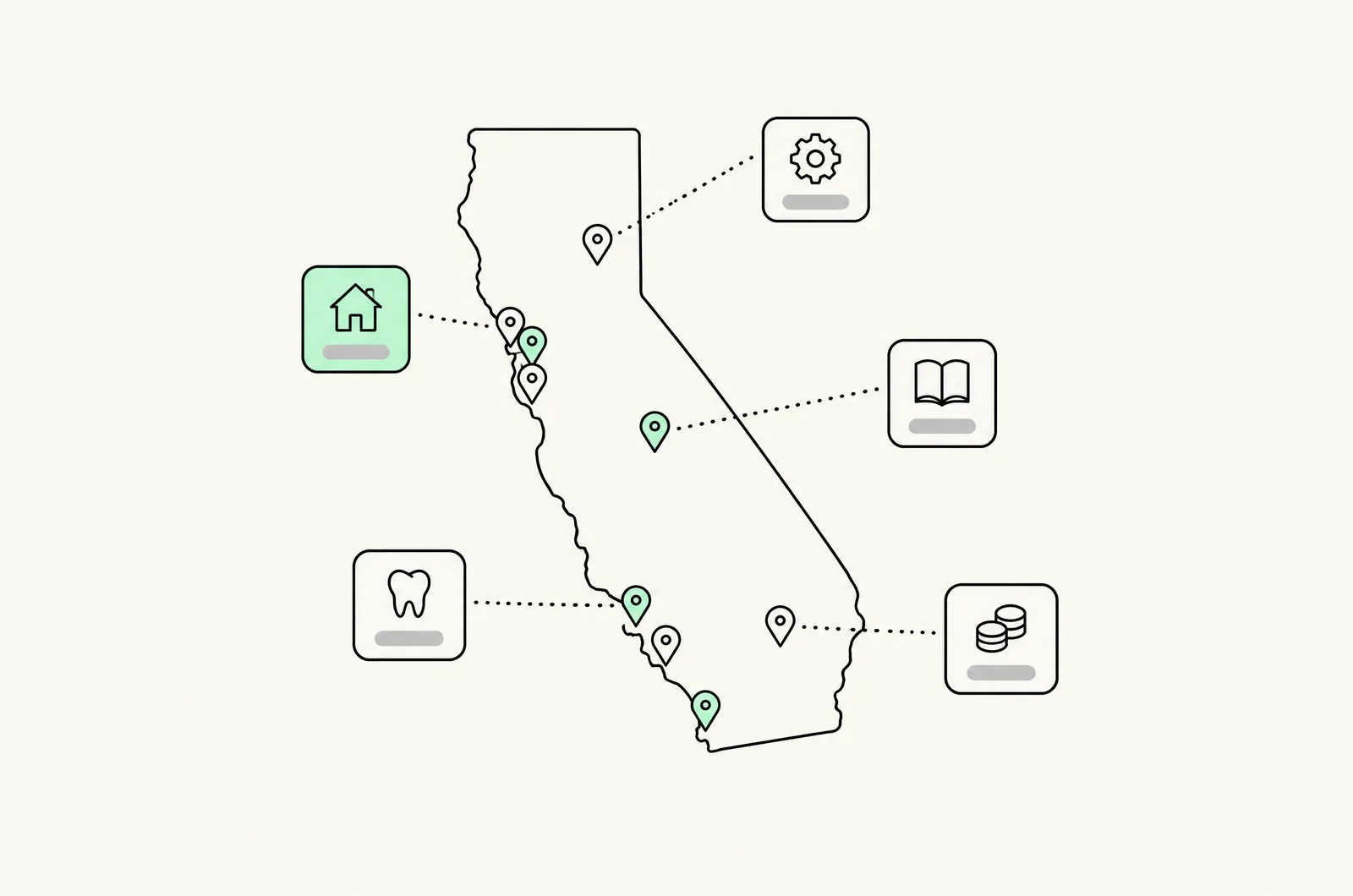
What each California region makes, who buys from it, and what that changes in the plan.
Los Angeles & the South Bay
Aerospace, space and defence suppliers around El Segundo, Hawthorne and Torrance, plus apparel and consumer goods in the LA basin. ITAR, AS9100 and program-level buying make certification content and named-program targeting essential.
Long Beach & Oakland ports
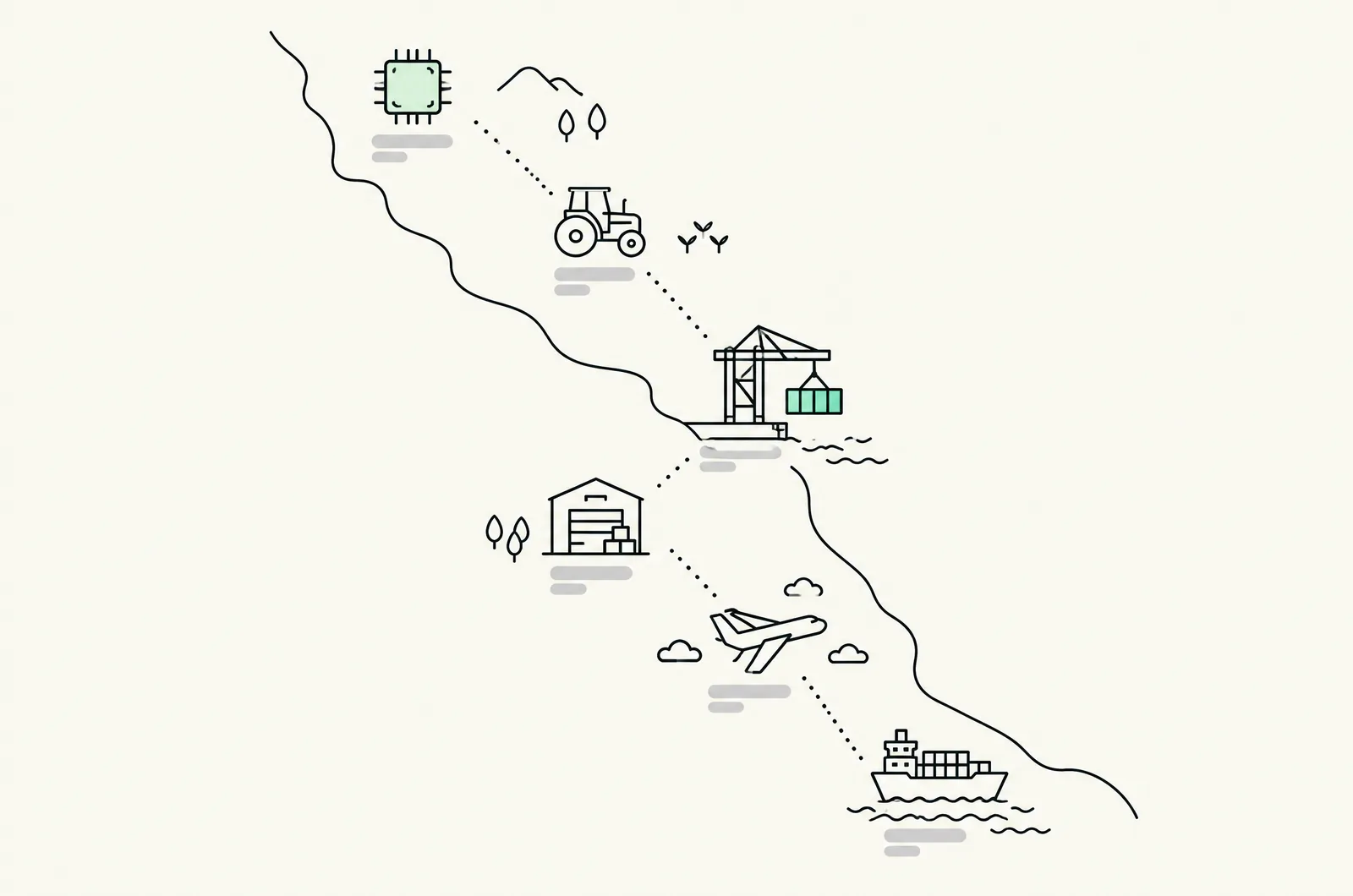
LA and Long Beach moved about 20.1 million TEUs in 2025, and Oakland serves Northern California. Import-dependent manufacturers sell short lead times and West Coast logistics. Supply-chain disruption stories are a strong content angle.
Inland Empire
Warehousing, light assembly and food processing in Ontario, Fontana and Riverside. Buyers include national brands looking for West Coast capacity close to the ports and distribution centres.
Bay Area & Fremont
Hardware, robotics, semiconductors and EV supply chains. Startups need prototyping and low-volume production fast, so quick-turn capability and engineering support outsell price.
Orange County
Medical devices around Irvine, plus aerospace and electronics. ISO 13485 and FDA registration content matters, and buying committees include regulatory and quality teams.
San Diego
Defence, shipbuilding support, biotech manufacturing and medtech. Proximity to the Navy and cross-border manufacturing in Tijuana shape both buyers and competitors.
Central Valley
Fresno, Modesto and Stockton: food processing, packaging, agricultural equipment and metal fabrication. Lower costs than the coast, and buyers who value reliability and plain, specific capability pages.
Sacramento
Clean-tech, electronics and building products, with lower land and labour costs than the Bay Area. Bay Area companies moving production inland are a natural target audience.
From RFQ audit to won margin by source
- Step 01
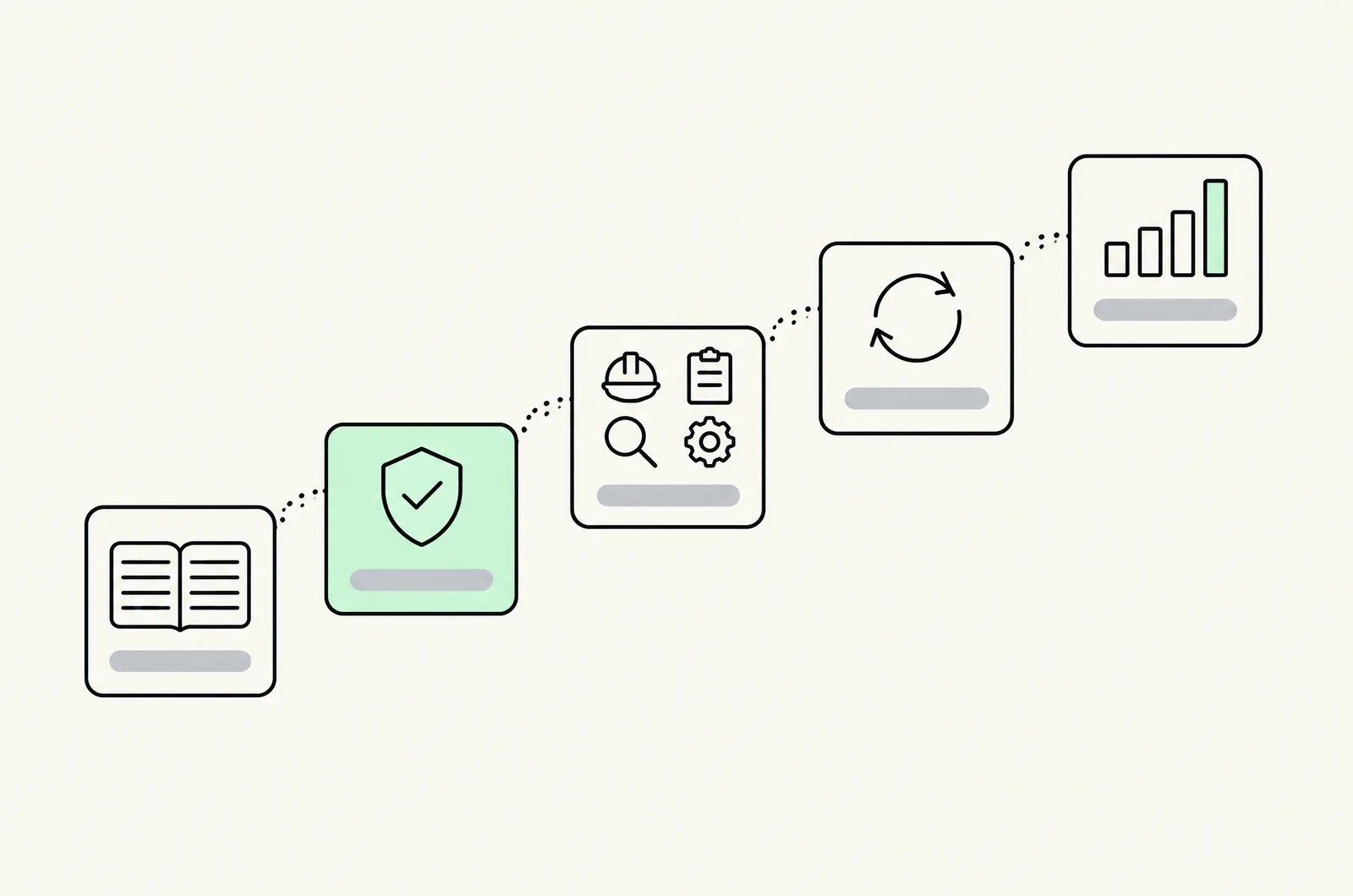
Win/loss and RFQ audit
We map the last 12 months of RFQs, quotes and wins by source, industry and account to find where your margin actually comes from.
- Step 02
Compliance pass
CCPA notice for B2B forms, ABM lists and trade-show scans; Prop 65 and environmental-claims review where products reach consumers.
- Step 03
Build for the buying committee
Technical content for engineers, proof content for quality and procurement, RFQ flow fixes, and named-account campaigns.
- Step 04
Wire CRM to the ad platforms
Quotes and won POs flow back to Google and LinkedIn, so campaigns optimise toward buyers who place orders.
- Step 05
Report on pipeline and margin
Monthly: RFQs, quote value, win rate and won margin by source and account. Budget moves toward the accounts and channels that win.
A California B2B agency, an out-of-state agency or an in-house marketer
In-house costs are directional and depend on seniority and metro.
Knows Prop 65 and CCPA rules for B2B data
- Out-of-state agency
- Rarely
- In-house California hire
- Depends on the hire
- Conversion (San Francisco)
- Yes
Writes technical content engineers use
- Out-of-state agency
- Generic blog posts
- In-house California hire
- If they're an engineer
- Conversion (San Francisco)
- Yes
Account-based targeting by buying role
- Out-of-state agency
- Broad audiences
- In-house California hire
- Limited tools
- Conversion (San Francisco)
- Yes
Tracks RFQ to won purchase order
- Out-of-state agency
- Lead counts
- In-house California hire
- Varies
- Conversion (San Francisco)
- Yes
SEO, paid, ABM and trade shows in one team
- Out-of-state agency
- Usually one channel
- In-house California hire
- Several hires
- Conversion (San Francisco)
- Yes
Typical monthly cost
- Out-of-state agency
- $3,000–$12,000 fee
- In-house California hire
- $11,000+ fully loaded (directional)
- Conversion (San Francisco)
- From $5,000 fee
B2B proof, with the caveat up front
- B2B demand gen · national
-70%
Cost per acquisition
NP Digital: fewer, better B2B conversions
NP Digital is a B2B agency, not a manufacturer or a California client. The relevance is the buyer: a sceptical B2B committee researching before contact. Splitting campaigns by intent and adding negatives weekly cut CPA 70% while conversions rose 388%. It's how we separate RFQ-ready searches from job seekers and students.
Where manufacturing splits into different buyers
These segments sell to different buyers under different rules, so each gets its own plan.
- Live
Food & beverage processing
Processors, co-packers and CPG brands selling to retail and foodservice buyers, with AB 418, Prop 65 and FSMA 204 traceability on the agenda.
- Live
Robotics & hardware
Bay Area robotics and hardware companies selling to enterprise operations buyers. Long pilots, technical evaluation and venture-backed growth targets.
- Live
Industrial distributors
Distributors around the Long Beach and Oakland ports competing on availability, catalogue search and account management against national players.
What manufacturing marketing costs in California
USD, excluding media, trade-show and production costs. LinkedIn budgets vary most by account list size.
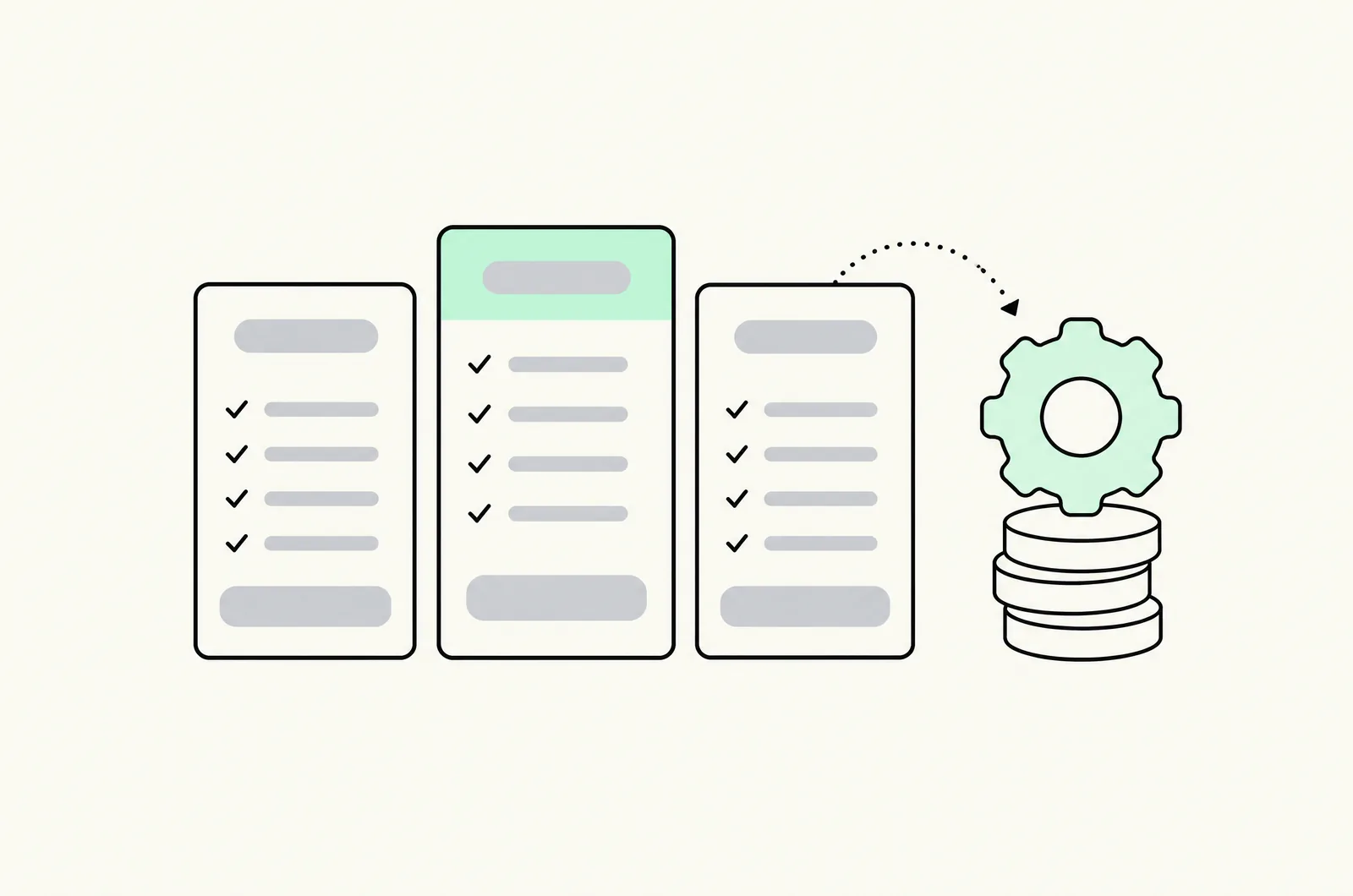
Pipeline foundation
From $5,000/mo
One or two channels
Technical SEO or search and LinkedIn for one product line or plant, with the CCPA pass, RFQ fixes and quote attribution included. Media is separate.
- Capability and spec pages
- RFQ flow fixes
- Quotes-won report
- Most popular
Manufacturing growth program
$10,000–$20,000/mo
Multi-channel · multi-plant
SEO, search, account-based LinkedIn, trade-show and distributor programs run as one plan, with CRM attribution to won purchase orders.
- Named-account campaigns
- Trade-show sequences
- PO-value attribution
Pay-on-results
Base + share
Qualifying manufacturers
A lower base plus a share of gross margin on new-account orders attributed to our campaigns, against an agreed baseline.
- Baseline agreed up front
- Paid on won margin
- Same monthly reporting
Manufacturing marketing questions
What does a manufacturing marketing agency in California do?
Does the CCPA apply to B2B marketing data?
Do manufacturers need Prop 65 warnings on their websites?
How long does B2B manufacturing marketing take to produce orders?
Is LinkedIn worth it for California manufacturers?
How do you compete with Thomasnet and directories in search?
Which California manufacturing regions do you work with?
How much does manufacturing marketing cost?
Should we hire an in-house marketer instead?
Do you guarantee RFQs or rankings?
More from the San Francisco team
California digital marketing hub
All nine California verticals, the state rulebook and eight metros.ExploreFood & beverage marketing in California
Retail and foodservice pipeline for processors, co-packers and CPG brands.ExploreReal estate marketing in California
A sibling vertical: seller leads and closings under DRE rules.ExploreCommercial real estate marketing
Industrial and flex space marketing for the buildings manufacturers lease.ExploreNP Digital case study
Intent-tiered B2B search: +388% conversions, -70% CPA.ExploreIT & software marketing in California
A sibling vertical: account-based B2B for software buying committees.Explore
Sources and statutes
Every market figure and regulation cited on this page.
Facts and thresholds last checked 19 November 2026.
- FRED (St. Louis Fed) — All employees: manufacturing in CaliforniaAbout 1,202,300 manufacturing jobs in December 2025, the most of any state.
- FreightWaves — Port of Los Angeles tops 10M containers for third time (2025 totals)Los Angeles ~10.2M TEU and Long Beach 9.9M TEU in 2025, about 20.1M combined.
- California Attorney General — California Consumer Privacy Act (CCPA)Since CPRA took full effect on 1 January 2023, B2B contact data and employee data are no longer exempt.
- California Privacy Protection Agency — 2025 CCPA monetary threshold adjustmentsAnnual gross revenue threshold for a covered 'business': $26,625,000 (Civil Code §1798.140(d)(1)(A)).
- OEHHA — Proposition 65 warnings for consumer products, including internet and catalog sales
- CalChamber — California 2026 minimum wage increases to $16.90 per hourExempt salary floor = 2 × $16.90 × 2,080 = $70,304 a year from 1 January 2026.
Get an RFQ-to-PO audit
30 minutes with a senior strategist. Bring your last year of RFQs and wins if you can, and we'll show where your margin actually comes from.
What happens next
- 1Pick a time for a 30-minute call.
- 2We review RFQ sources, buying roles and compliance gaps.
- 3You leave with a plan measured on won orders, not leads.
Prefer email? tarun@conversion.is