Industrial distributors
Industrial distributor marketing that wins the urgent order
Reorders, urgent orders and bigger accounts for California distributors, from part-number search to B2B ecommerce.
Trusted by 50+ D2C brands · Google, Meta & Shopify partners










The line is down, and they're searching your part number
San Francisco, CA
Ports to the Valley
Catalogue-first
Part-number search
Account revenue
Not traffic
When a production line in Fontana stops because a bearing failed, the maintenance manager searches the part number, checks who has it in stock nearby and calls whoever answers first. Distributors who show up for that search with local stock win the order and often the account. Those whose catalogues aren't indexed, or show 'call for price', lose it to a national player or Amazon Business.
California distribution sits on top of some of the country's busiest freight corridors. The ports of Los Angeles and Long Beach handled about 20.1 million TEUs in 2025, and Inland Empire industrial direct vacancy was 7.1% in Q3 2026. Distributors here compete on availability, delivery speed and service against national firms with bigger catalogues and marketing budgets.
We work with distributors as part of manufacturing marketing in California, and statewide from San Francisco. The work is catalogue and account marketing: part-number search, Shopping feeds, B2B ecommerce that accounts actually use, and campaigns to grow share of wallet.
Three ways distributors lose orders
Each one sends an order to a national competitor or a marketplace.

The catalogue isn't findable
Many distributor sites hide thousands of SKUs behind search forms Google can't crawl, with thin manufacturer descriptions and no part-number pages. Buyers searching an exact part number find a national competitor or marketplace instead. Indexable product pages with specs, cross-references and local availability fix that.
Online ordering doesn't match how accounts buy
Account customers expect their contract pricing, order history, punch-out or quick reorder online. A generic ecommerce store with list prices drives them back to the phone or to a competitor's portal. B2B ecommerce has to work for repeat buyers first.
Share of wallet is left on the table
Most accounts buy only a few categories from each distributor. Without data on what else they buy elsewhere, and campaigns to introduce the rest of your line card, growth relies on reps remembering to cross-sell. Many California products also need Prop 65 warnings when sold online.
Six pieces of work, catalogue to account
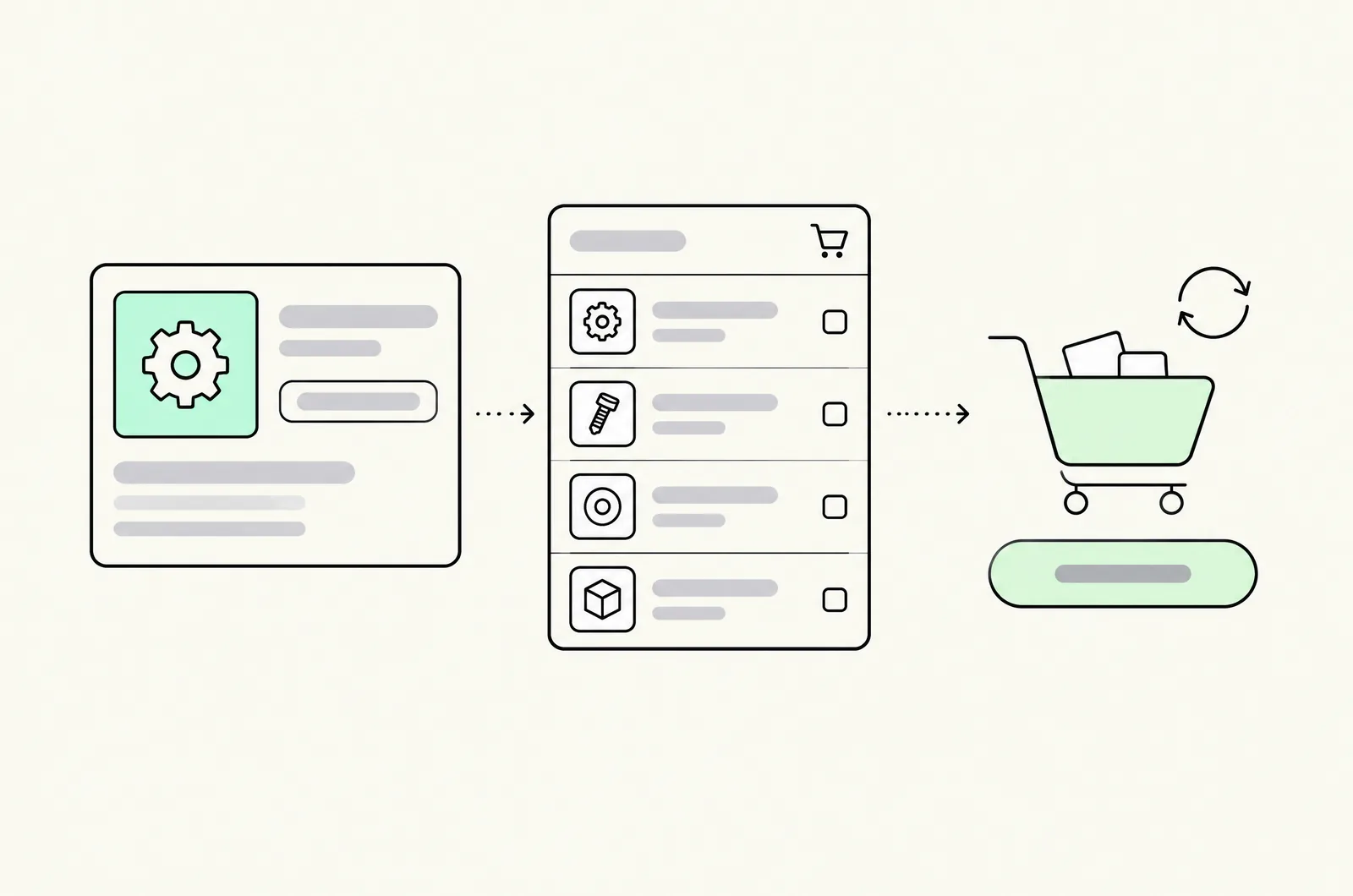
Catalogue and part-number SEO
Indexable product pages with specs, cross-references, CAD where available and local stock, ranking for part numbers and category searches.
Shopping feeds and marketplaces
Google Shopping and marketplace feeds with accurate pricing, availability and Prop 65 warnings where required.
B2B ecommerce CRO
Account login, contract pricing, quick reorder and punch-out flows tested for repeat buyers, not just first-time shoppers.
Share-of-wallet campaigns
Email and account-based campaigns that introduce additional categories to existing accounts, based on what they buy and what they don't.
Local search by branch
Google Business Profiles and branch pages for counter sales and will-call, so urgent buyers find the nearest stock.
Account revenue reporting
Revenue, margin and categories per account by source, from your ERP, so marketing is judged on account growth.
Five distribution markets, five customer mixes
Where California distributors sell, and what their customers need.
LA & Long Beach port area
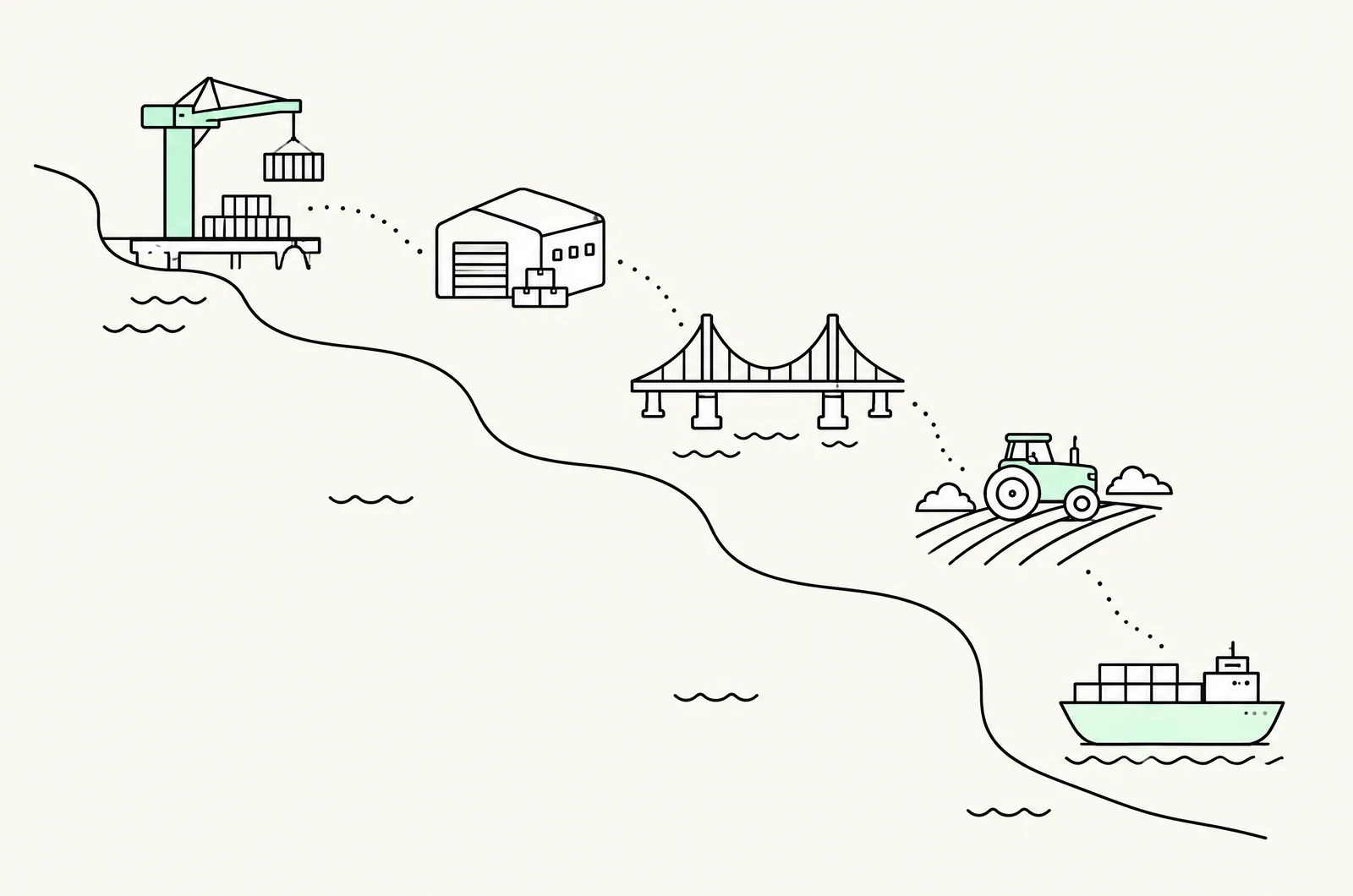
Carson, Compton, Torrance and the South Bay, near ports that moved about 20.1 million TEUs in 2025. Logistics, aerospace and manufacturing customers need fast delivery and broad stock.
Inland Empire
Warehouses, food processors and fabricators in Ontario, Fontana and Riverside. Direct vacancy was 7.1% in Q3 2026, and new facilities are steady buyers of MRO and packaging.
Oakland & the East Bay
Port logistics, hardware manufacturing and construction. Customers value same-day delivery and technical support.
Central Valley
Food processing, agriculture and packaging plants in Fresno, Modesto and Stockton. Seasonal peaks around harvest drive urgent orders.
San Diego
Defence, shipbuilding support, biotech and cross-border manufacturing. Buyers need certified parts and documentation.
From catalogue audit to account revenue
- Step 01
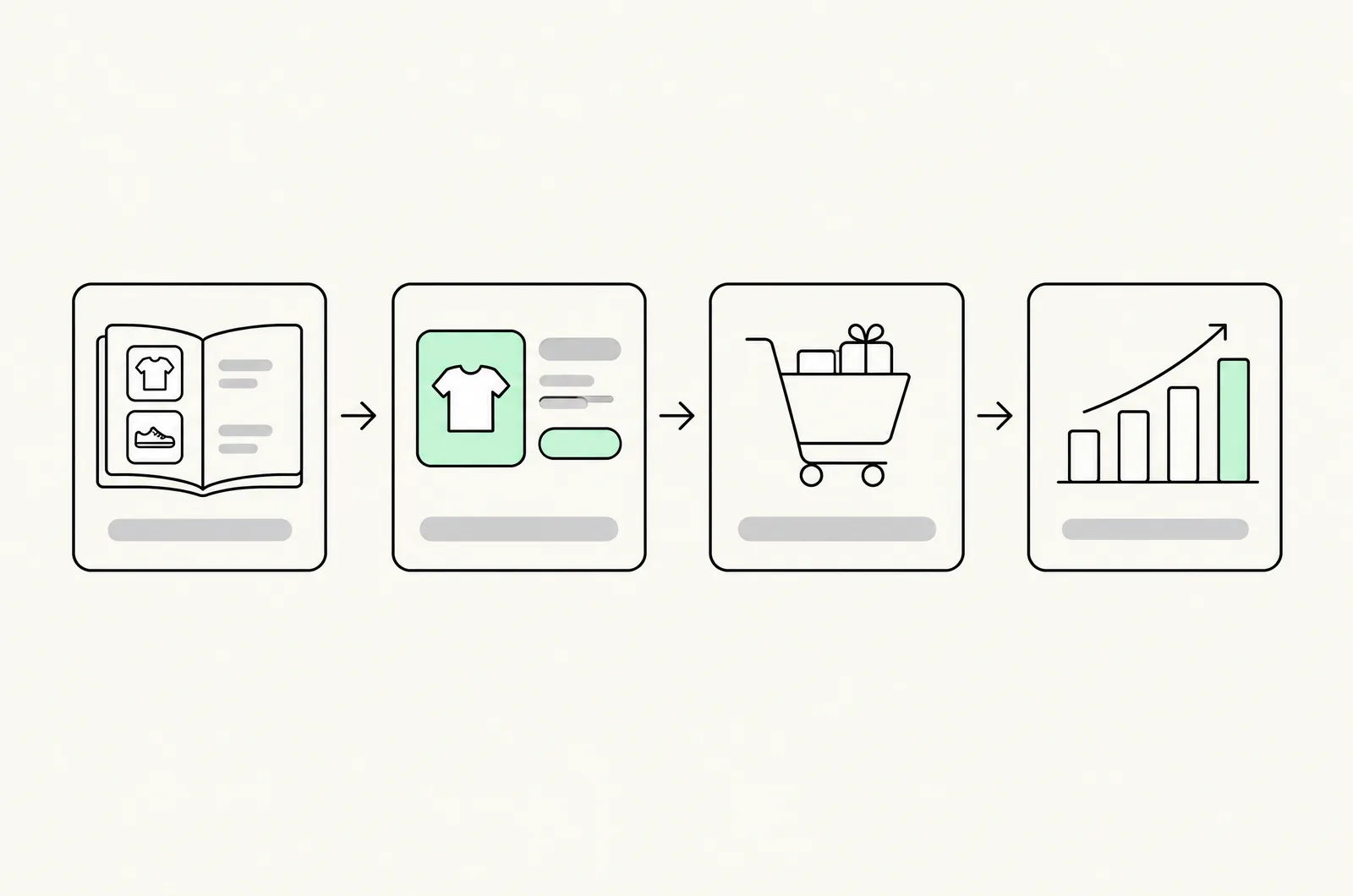
Catalogue and account audit
Indexation, product data, ecommerce flows and account buying patterns from your ERP.
- Step 02
Fix product data
Part-number pages, cross-references, availability and Prop 65 warnings, then pushed to feeds.
- Step 03
Grow accounts
B2B ecommerce fixes, share-of-wallet campaigns and branch local search.
- Step 04
Report account revenue
Monthly revenue, margin and categories per account by source.
A distributor specialist vs an ecommerce agency vs an in-house marketer
In-house costs are directional and depend on seniority and metro.
Indexable part-number pages
- General ecommerce agency
- Rarely
- In-house California hire
- IT project
- Conversion (San Francisco)
- Yes
B2B ecommerce for repeat buyers
- General ecommerce agency
- Consumer store templates
- In-house California hire
- Varies
- Conversion (San Francisco)
- Yes
Share-of-wallet campaigns
- General ecommerce agency
- No
- In-house California hire
- Reps' memory
- Conversion (San Francisco)
- Yes
Prop 65 warnings in feeds and pages
- General ecommerce agency
- Sometimes
- In-house California hire
- Varies
- Conversion (San Francisco)
- Yes
Reports account revenue and margin
- General ecommerce agency
- Traffic and ROAS
- In-house California hire
- ERP reports
- Conversion (San Francisco)
- Yes
Typical monthly cost
- General ecommerce agency
- $3,000–$12,000 fee
- In-house California hire
- $10,000+ per marketer (directional)
- Conversion (San Francisco)
- From $5,000 fee
Ecommerce growth, with the caveat up front
- Ecommerce · national
$8.5M
Gross sales, +37% YoY
Actively Black: ecommerce scaled on new demand
Actively Black is a consumer apparel brand, not a distributor or a California client, and we have no published distribution result. It's our clearest ecommerce result: gross sales up 37% to $8.5M by reaching new buyers rather than re-buying existing ones. Distributor ecommerce has the same choice between growth and repeat spend.
What distributor marketing costs in California
USD, excluding media.
Catalogue foundation
From $5,000/mo
One catalogue
Catalogue audit, part-number SEO, Shopping feeds and account revenue reporting. Media is separate.
- Part-number SEO
- Shopping feeds
- Account revenue report
- Most popular
Distributor growth
$10,000–$20,000/mo
Multi-branch
Everything in the foundation, plus B2B ecommerce CRO, share-of-wallet campaigns and branch local search.
- B2B ecommerce CRO
- Share-of-wallet campaigns
- Branch local SEO
Pay-on-results
Base + share
Qualifying distributors
A lower base plus a share of incremental gross margin from attributed new accounts and categories, against an agreed baseline.
- Baseline agreed up front
- Paid on incremental margin
- Same reporting
Industrial distributor marketing questions

How do industrial distributors win more online orders?
Should distributors show prices online?
Do distributors need Prop 65 warnings online?
How do you grow share of wallet with existing accounts?
Which California distribution markets do you work in?
How much does distributor marketing cost?
Does CCPA apply to distributor marketing?
How do you compete with Amazon Business and national distributors?
Sources and statutes
Every figure and regulation cited on this page.
Facts and thresholds last checked 19 November 2026.
- FreightWaves — Port of Los Angeles tops 10M containers for third time (2025 totals)Los Angeles ~10.2M TEU and Long Beach 9.9M TEU in 2025, about 20.1M combined.
- Kidder Mathews — Inland Empire industrial market report, Q3 2026Direct vacancy 7.1%, total including sublease 8.3%, availability 12.9% at the end of Q3 2026.
- OEHHA — Proposition 65 warnings for consumer products, including internet and catalog sales
- California Attorney General — California Consumer Privacy Act (CCPA)Since CPRA took full effect on 1 January 2023, B2B contact data and employee data are no longer exempt.
Make your catalogue findable
30 minutes with a senior strategist. We'll look at how your catalogue shows up in search.
What happens next
- 1Pick a time for a 30-minute call.
- 2We review catalogue, feeds and accounts.
- 3Get a plan measured on account revenue.
Prefer email? tarun@conversion.is