Commercial & hospitality interiors
Commercial interiors marketing that gets you on the shortlist
Shortlists and RFP wins for California workplace, hospitality and healthcare interiors firms, through relationships built before the brief.
Trusted by 50+ D2C brands · Google, Meta & Shopify partners











Empty floors, new interiors work
San Francisco, CA
Statewide projects
Account-based
Developers to operators
RFPs won
Not followers
San Francisco's office vacancy was 26.0% at the end of Q3 2026, down from 31.1% a year earlier, with much of the new leasing driven by AI companies. Landlords with empty floors are spending on spec suites, amenity floors and lobby refreshes to compete, and tenants moving into better buildings want workplaces that bring people back. That's commercial interiors work, and it's won long before a public RFP.
Commercial design clients don't find firms on Instagram. A landlord hears about you from their broker; a hotel operator's development team keeps a shortlist; a health system issues RFPs to firms it already knows. Firms win by being known to those decision-makers, with case studies that show cost, schedule and results, not just photography.
We work with commercial interiors firms as part of interior design marketing in California, and from our San Francisco office. The work is account-based business development, project case studies and referral relationships, measured on shortlists, RFPs and fee value won.
Three reasons commercial pipelines stall
Each one is about getting known earlier.

The shortlist is set before the RFP
By the time a commercial RFP is public, the client usually has a shortlist of firms they already know. Firms that only respond to public RFPs compete on price against incumbents. Business development has to reach developers, owners, brokers and operators months earlier.
Portfolios show photos, not outcomes
Commercial clients care about cost per square foot, schedule, occupancy, guest scores or patient experience as much as design. Case studies with only photography don't answer their questions. Results-led case studies, with permission from clients, win more shortlists.
Referral partners aren't managed
Tenant-rep brokers, project managers, architects and general contractors refer much of the work. Few firms track those relationships or give partners useful material to share. Without a programme, referrals depend on a few personal contacts.
Six pieces of work, relationship to RFP

Results-led case studies
Project stories with scope, budget, schedule and outcomes alongside photography, approved by clients.
Account-based business development
LinkedIn and email campaigns to developers, landlords, hotel operators and health-system facilities teams at named accounts.
Broker and partner programmes
Content, events and updates for tenant reps, project managers, architects and contractors who refer projects.
Sector expertise content
Guides and pages on workplace return-to-office, hospitality renovation and healthcare environments, with California code considerations.
RFP support materials
Qualification packages, team bios and sector case-study sets ready to adapt for each RFP.
Pipeline reporting
Shortlists, RFPs received, win rate and fee value by source and sector.
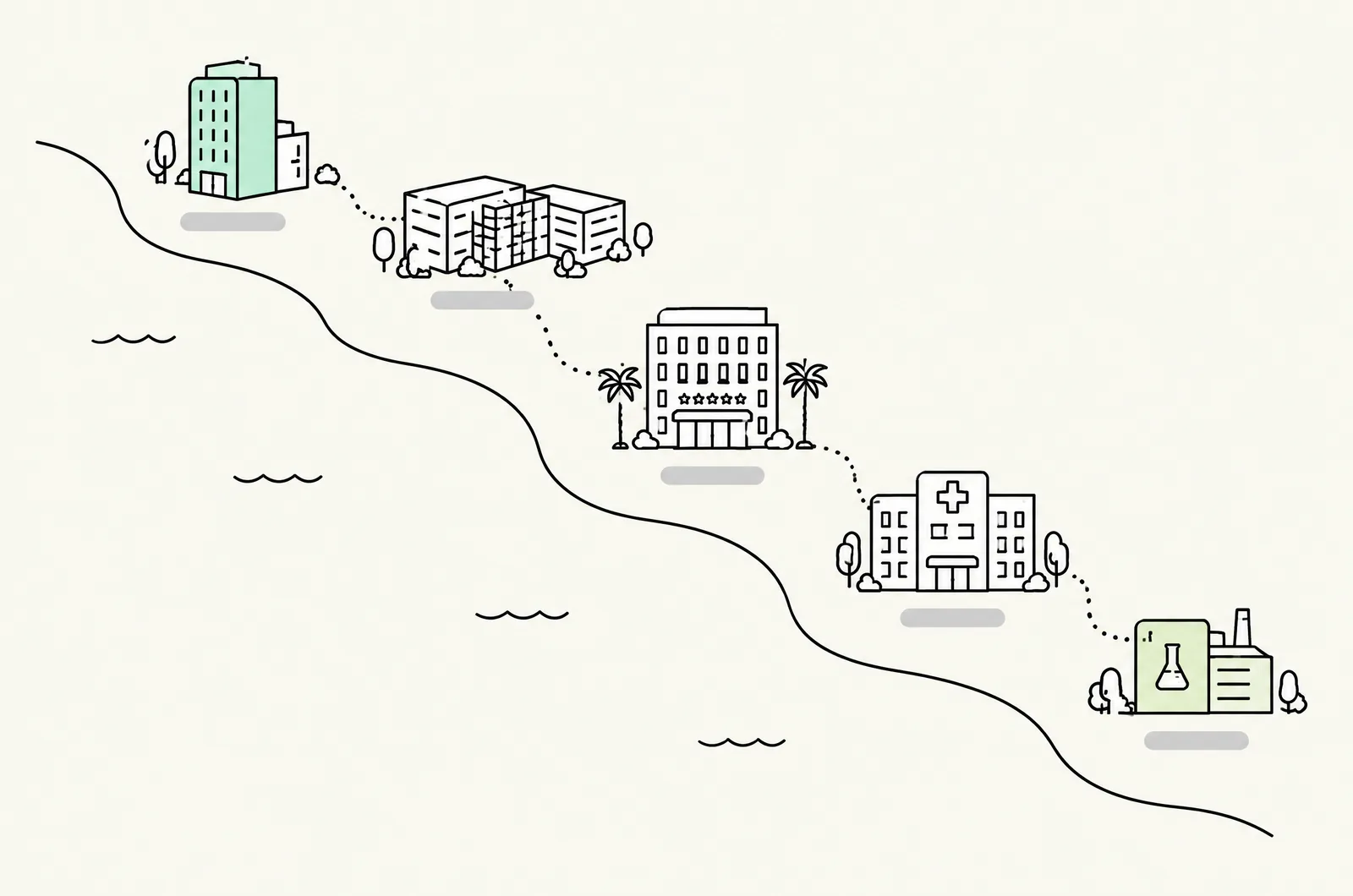
Five commercial markets, five kinds of client
Where California commercial interiors work is, and who commissions it.
San Francisco
Office vacancy at 26.0% in Q3 2026, with AI companies leading leasing. Landlord repositioning and tenant fit-outs are the main opportunities.
Silicon Valley & the Peninsula
Large tech campuses and R&D buildings, plus lab and office conversions. Clients expect deep workplace-strategy expertise.
Los Angeles
Media, entertainment and hospitality projects, plus healthcare and creative-office fit-outs. Hospitality renovation is a strong sector.
Orange County
Medical office, corporate headquarters and hospitality projects in Irvine and the coast. Healthcare interiors are a growing niche.
San Diego
Life-sciences labs, healthcare, hospitality and military-adjacent office space. Lab and healthcare expertise sets firms apart.
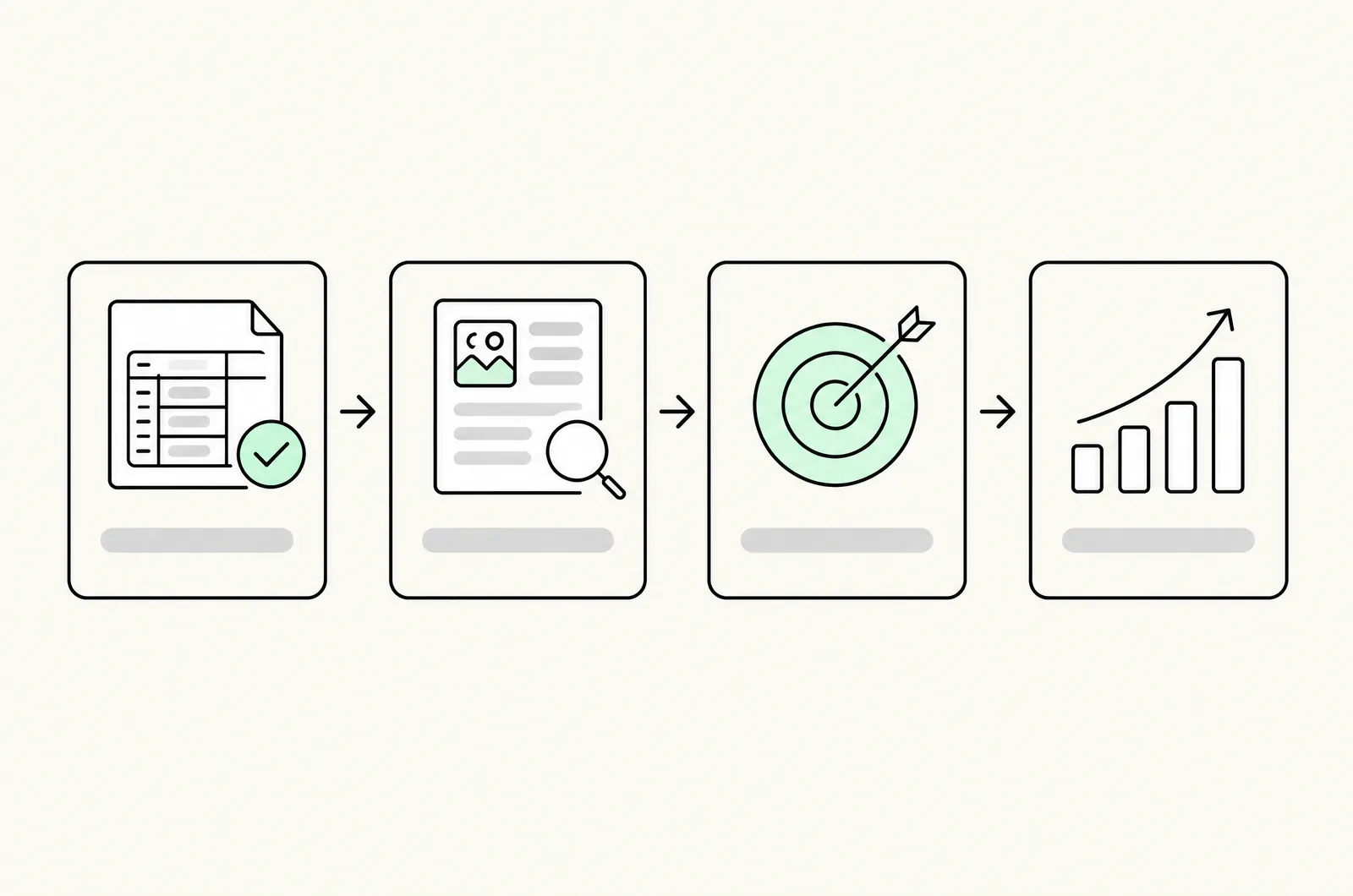
From pipeline audit to RFPs won
- Step 01
Pipeline audit
Where shortlists and wins came from, by sector, client type and referral source.
- Step 02
Case studies and positioning
Results-led case studies and sector positioning built with your team and clients.
- Step 03
Target accounts and partners
Account-based campaigns and broker and partner programmes.
- Step 04
Report wins
Quarterly shortlists, RFPs, win rate and fee value by source.
A commercial-interiors specialist vs a design agency vs an in-house marketer
In-house costs are directional and depend on seniority and metro.
Results-led case studies
- Residential design agency
- Photo galleries
- In-house California hire
- If time allows
- Conversion (San Francisco)
- Yes
Account-based business development
- Residential design agency
- Social posting
- In-house California hire
- Principal-led
- Conversion (San Francisco)
- Yes
Broker and partner programme
- Residential design agency
- No
- In-house California hire
- Informal
- Conversion (San Francisco)
- Yes
RFP support materials
- Residential design agency
- Rarely
- In-house California hire
- Proposal team
- Conversion (San Francisco)
- Yes
Reports RFPs and fee value won
- Residential design agency
- Followers
- In-house California hire
- CRM
- Conversion (San Francisco)
- Yes
Typical monthly cost
- Residential design agency
- $2,500–$8,000 fee
- In-house California hire
- $10,000+ per marketer (directional)
- Conversion (San Francisco)
- From $5,000 fee
B2B visibility, honestly compared
- B2B services · national
95%
Brand impression share
NP Digital: staying visible to a short list
NP Digital isn't a design firm or a California client, and we have no published commercial-interiors result. What carries over is B2B visibility to a small set of decision-makers: brand campaigns held 95% impression share while conversions rose 388%. Commercial firms need the same presence with the few clients who matter.
What commercial interiors marketing costs in California
USD, excluding photography.
Business development foundation
From $5,000/mo
One firm
Case-study development, sector positioning, one account-based channel and pipeline reporting. Photography is separate.
- Results-led case studies
- Sector positioning
- Pipeline report
- Most popular
Growth program
$9,000–$16,000/mo
Multi-sector firms
Everything in the foundation, plus account-based campaigns, broker and partner programmes and RFP support materials.
- Named-account campaigns
- Partner programme
- RFP support
Pay-on-results
Base + share
Qualifying firms
A lower base plus a share of fees from attributed new projects above an agreed baseline.
- Baseline agreed up front
- Paid on fees won
- Same reporting
Commercial interiors marketing questions

How do commercial interior design firms win more projects?
How does San Francisco's office vacancy affect commercial interiors?
What should a commercial interiors case study include?
Do commercial interiors firms need a contractor licence in California?
Which California commercial design markets do you cover?
How much does commercial interiors marketing cost?
Is LinkedIn useful for commercial design firms?
How long does commercial interiors business development take?
Related California pages
Interior design marketing in California
The parent practice for residential studios, commercial interiors and showrooms.ExploreLuxury interior design marketing
A sibling: high-end residential studios.ExploreTrade showroom marketing
A sibling: showrooms selling to the trade.ExploreCommercial real estate marketing
The landlords and brokers who commission much of this work.Explore


Sources and statutes
Every figure and regulation cited on this page.
Facts and thresholds last checked 19 November 2026.
- Kidder Mathews — San Francisco office market report, Q3 2026Overall vacancy 26.0% at the end of Q3 2026, down from 31.1% a year earlier. Other brokers report 24.6%–29.3% depending on definitions.
- CSLB — AB 2622 raises the minor-work exemption to $1,000From 1 January 2025, work of $1,000 or more (labour and materials), or any job needing a permit, requires a licensed contractor.
- California Senate Business, Professions & Economic Development Committee — CCIDC sunset background paperInterior designers are not licensed in California; only CCIDC-certified individuals may use the title 'certified interior designer' (B&P Code §5800 et seq.).
Get on the next shortlist
30 minutes with a senior strategist. Tell us where your last five projects came from.
What happens next
- 1Pick a time for a 30-minute call.
- 2We review case studies, accounts and partners.
- 3Get a business-development plan.
Prefer email? tarun@conversion.is