Dental groups & DSOs
Dental group marketing, office by office, chair by chair
New patients where your California dental group has open chairs, with the right treatment and insurance mix for each office.
Trusted by 50+ D2C brands · Google, Meta & Shopify partners





New investor rules, the same empty chairs
San Francisco, CA
Groups statewide
Per-office plans
Capacity-led
Kept appointments
Not calls
Since 1 January 2026, SB 351 has barred private-equity and hedge-fund investors from interfering with clinical judgment in California dental practices, including decisions about which patients are seen, how many and for how long. For DSOs, that reshapes who can direct marketing. Campaign priorities have to come from the practice's clinical leadership, and growth targets can't dictate treatment.
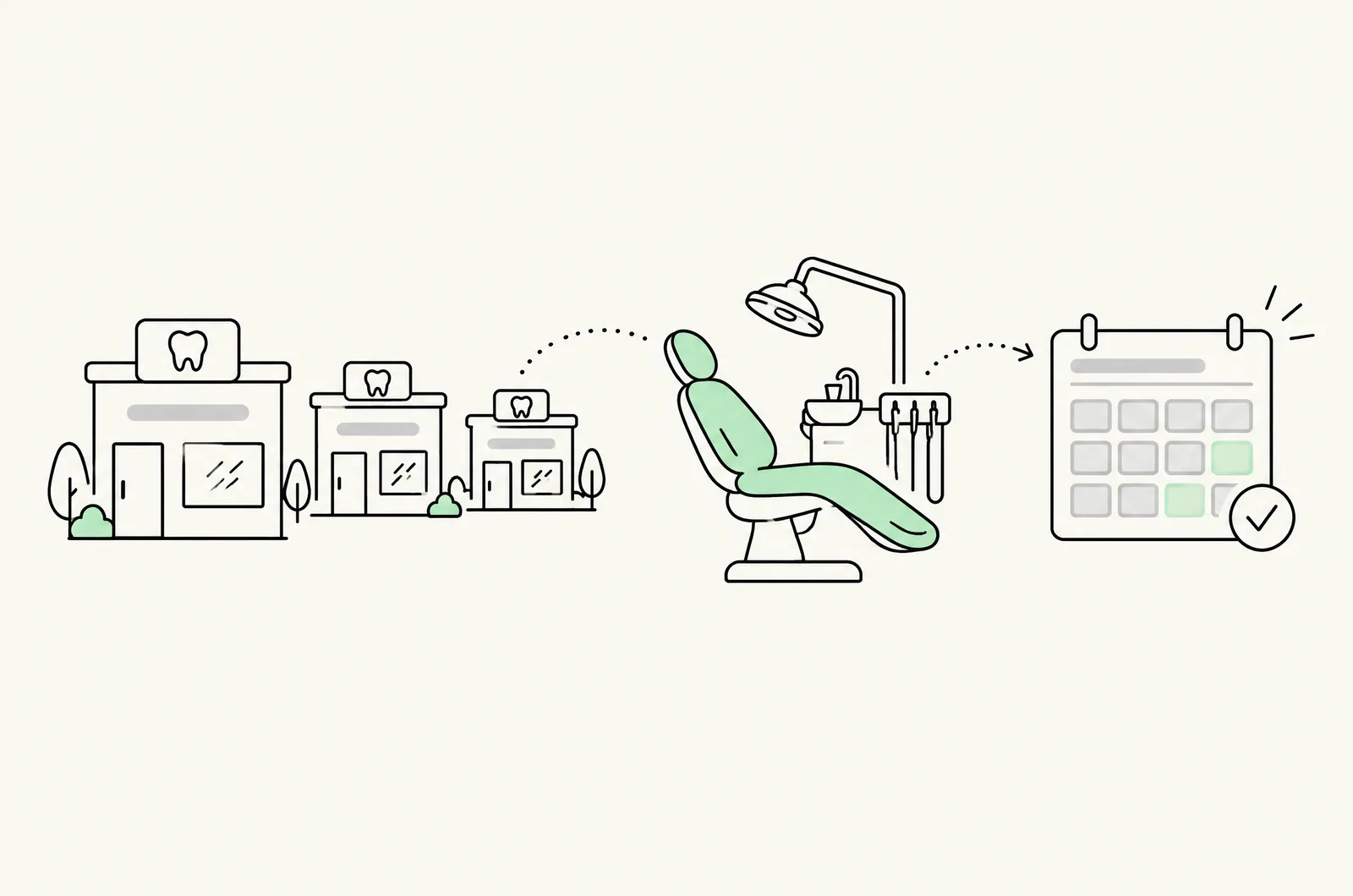
The practical marketing problem for a dental group hasn't changed, though. You have twelve offices, each with its own chairs, hygienists, insurance mix and competition. One office in Irvine is booked solid on implants; another in Riverside has open hygiene time and a growing Medi-Cal Dental schedule. A single group-wide campaign sends patients to whichever office ranks best, not to the chairs you need filled.
We work with dental groups as part of healthcare marketing in California, from the San Francisco team, alongside our national dental marketing practice. The job is office-level demand: the right patients, for the right treatments, at the offices with capacity.
Three reasons dental groups miss their schedules
None of these is fixed by a bigger group-wide budget.
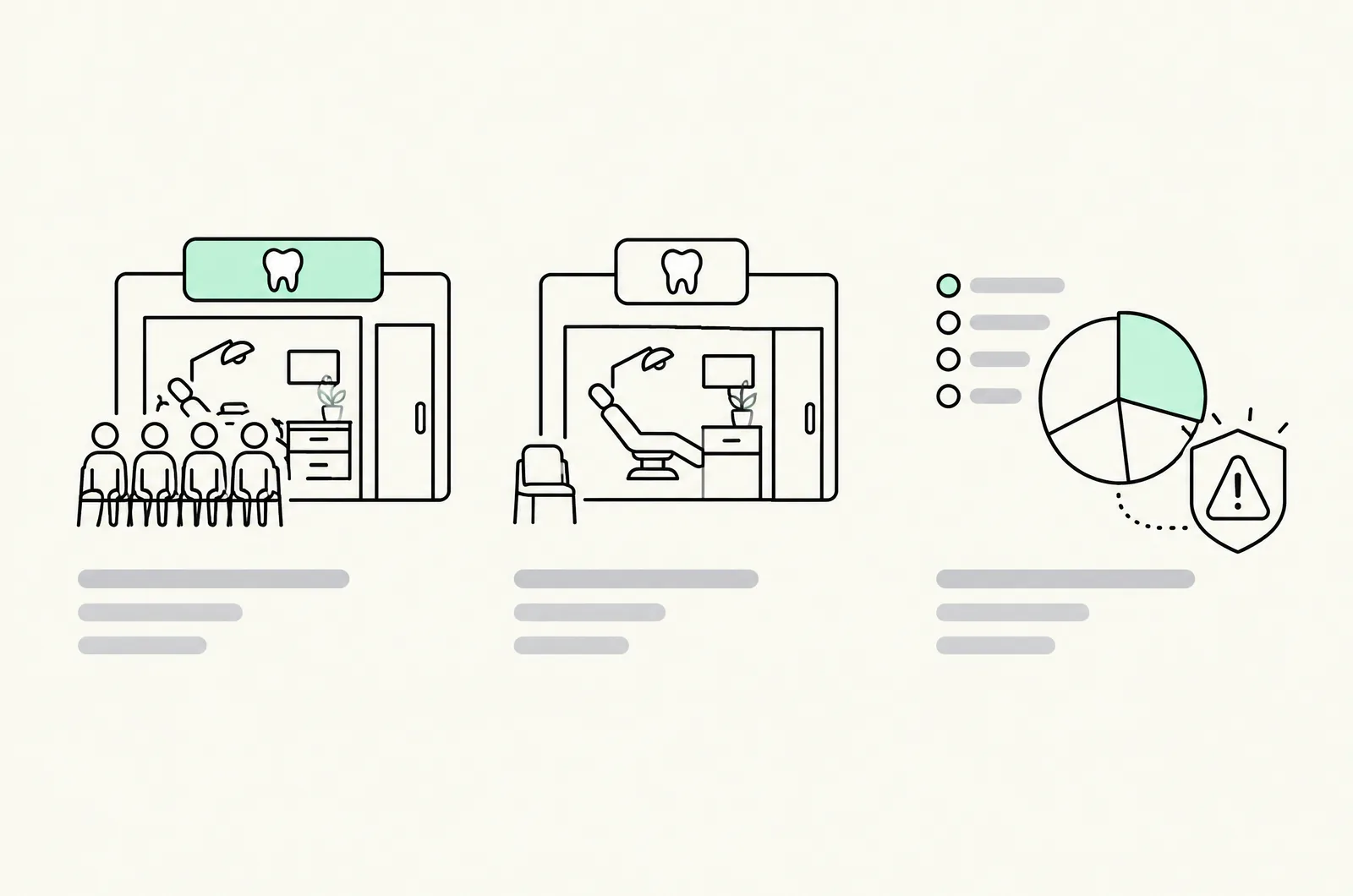
Group campaigns ignore office capacity
Most dental groups run one set of campaigns for every location. Patients go to whichever office is nearest or ranks best, while the offices with open chairs stay empty. Budget and targeting need to follow capacity by office, treatment and provider, updated as schedules change.
Payer mix drifts without anyone choosing it
California offices see fee-for-service, PPO, HMO and Medi-Cal Dental patients, and the mix decides profitability. Campaigns that optimise to cheapest new patient tend to fill schedules with the lowest-reimbursement appointments. Targeting by treatment and insurance acceptance keeps the mix where each office needs it.
Specialty claims and offers can break §651
B&P Code §651 limits how general dentists advertise specialty services and how fees and discounts are presented, and before-and-after smile photos follow the same rules as medical images. Group templates that call every office 'implant specialists' or show unqualified 'free exam' offers risk Dental Board complaints.
Six pieces of work, planned per office
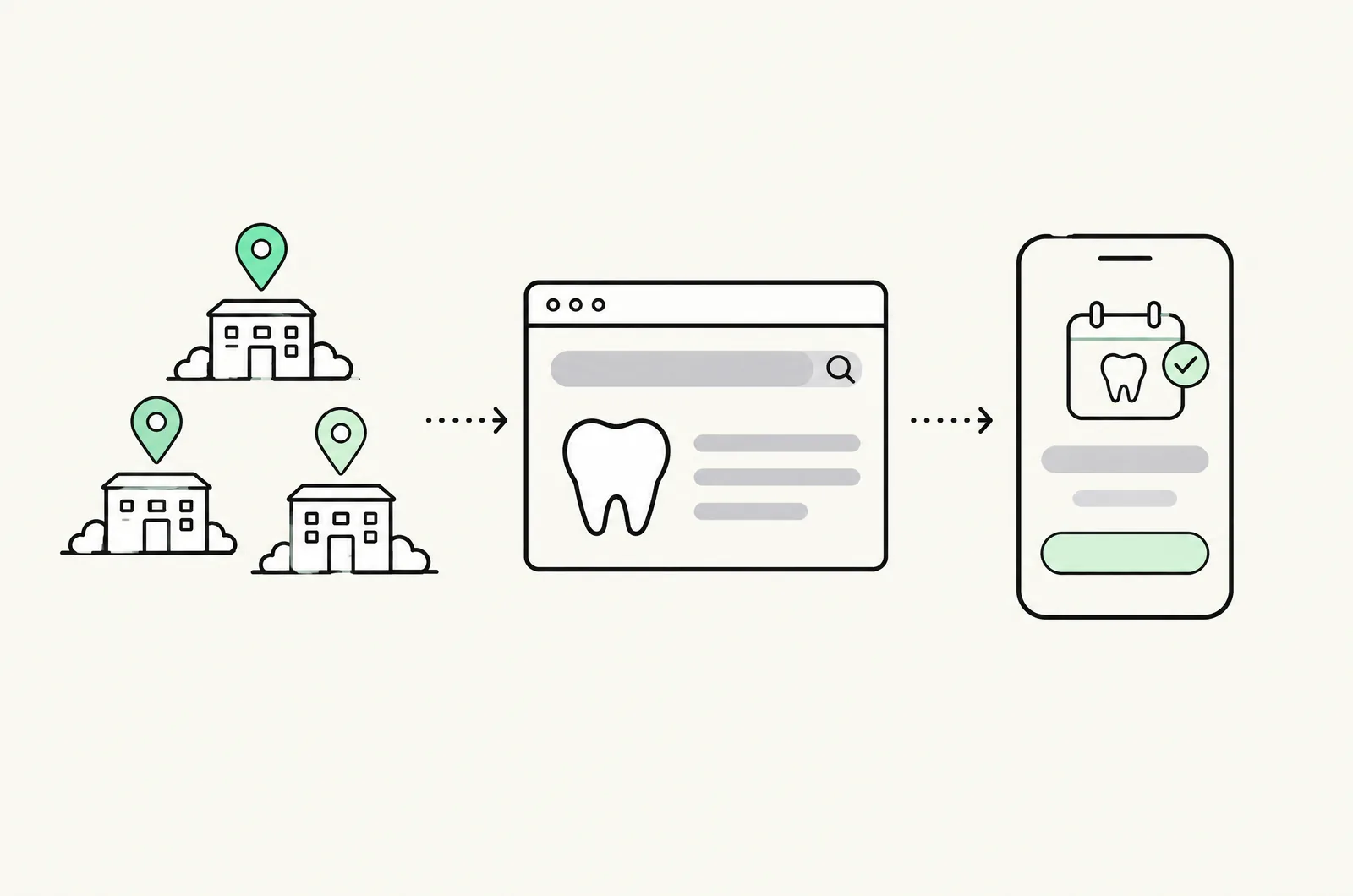
Per-office local SEO and maps
A Google Business Profile, location page, provider pages and review programme for every office, ranking for 'dentist near me' in its own neighbourhood.
Capacity-led Google Ads
Campaigns by office and treatment, with budgets shifted weekly toward the offices and procedures with open time, such as implants, clear aligners or hygiene.
High-value treatment funnels
Landing pages and nurture for implants, aligners and cosmetic dentistry, with financing information and §651-compliant smile galleries.
Online booking and call handling
Booking flows by office and appointment type, plus call tracking and scripts. Many new patients still phone, and a missed call is a lost patient.
Recall and reactivation
Email and SMS recall for overdue hygiene and unscheduled treatment, by office. Existing patients are the cheapest chairs to fill.
Multilingual patient pages
Spanish, Chinese, Vietnamese and Korean service pages and ads for offices whose patients need them.
Six dental markets, six patient mixes
What each market's dental patients look like, and what they choose on.

Los Angeles
Dense competition, a large Medi-Cal Dental population and strong demand for Spanish- and Korean-language care. Offices a few miles apart can serve completely different patients.
Orange County
High demand for cosmetic dentistry, implants and aligners, with many PPO patients. Smile galleries and reviews decide shortlists.
Inland Empire
Fast-growing family neighbourhoods, many new dental offices and a large Medi-Cal Dental share. Evening and weekend hours and clear insurance pages win patients.
San Diego
Military families with TRICARE dental coverage, and patients who compare prices with clinics across the border in Tijuana. Clear pricing and financing pages matter.
Bay Area
High costs, many PPO patients from tech employers and strong demand for convenient scheduling near work. Online booking matters more here than anywhere.
Central Valley
Provider shortages in many towns and long drive times. Offices that advertise availability and accept Medi-Cal Dental can fill quickly.
From capacity map to kept appointments
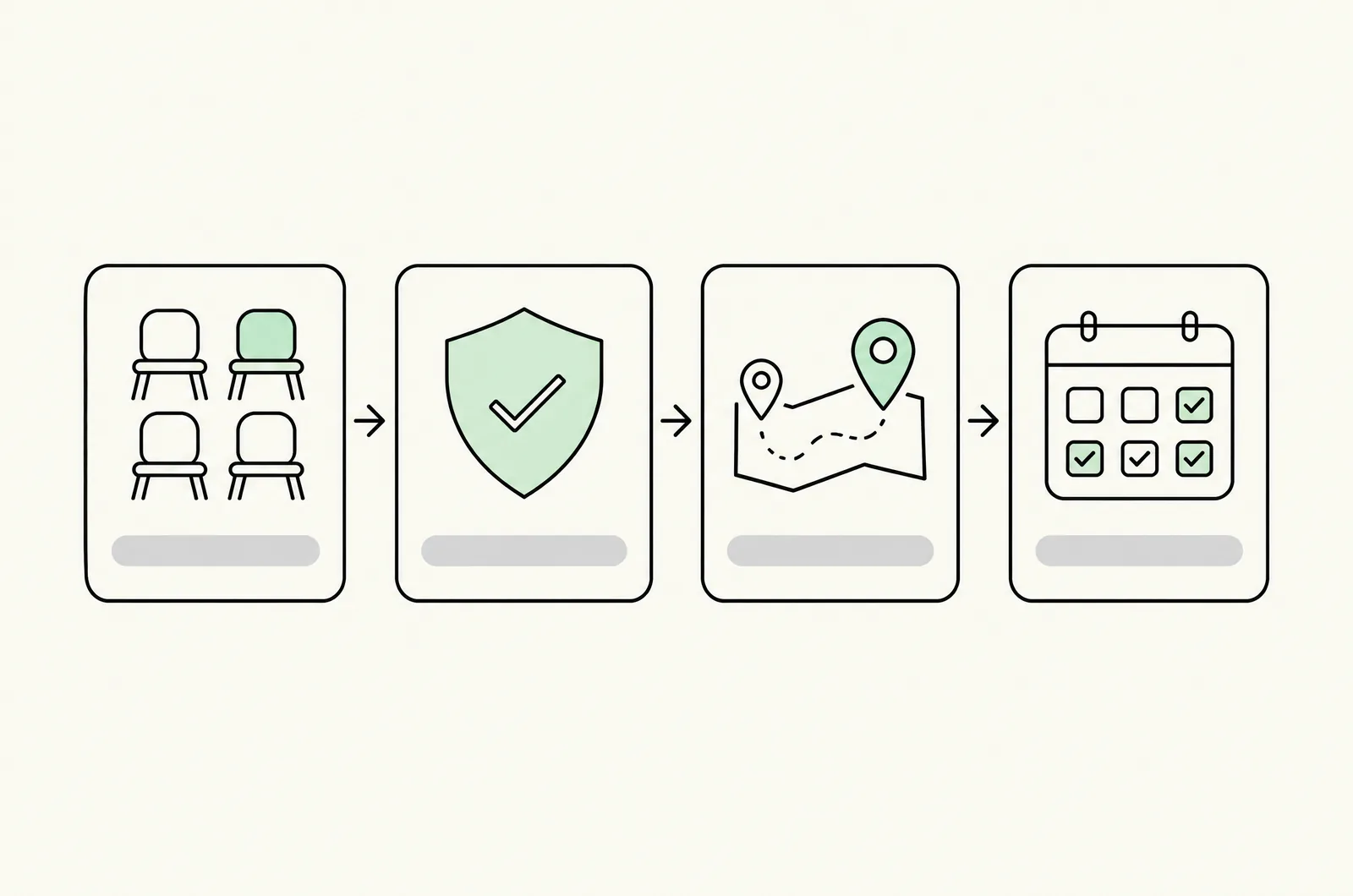
- Step 01
Office capacity map
Open chair time by office, provider and appointment type, plus current payer mix and new-patient sources.
- Step 02
Compliance pass
Specialty claims, offers, smile galleries and tracking checked against §651 and medical-privacy rules.
- Step 03
Build office-level demand
Local SEO and Google Ads by office and treatment, booking and call fixes, and recall campaigns.
- Step 04
Report kept appointments
Weekly kept new-patient appointments, treatment acceptance and payer mix by office and source.
A dental-group specialist vs a dental agency vs an in-house marketer
In-house costs are directional and depend on seniority and metro.
Budgets follow office capacity
- Single-office dental agency
- Group-wide budget
- In-house California hire
- Manual
- Conversion (San Francisco)
- Yes
Plans for payer mix by office
- Single-office dental agency
- Cheapest new patient
- In-house California hire
- Rarely
- Conversion (San Francisco)
- Yes
§651 review of specialty claims and offers
- Single-office dental agency
- Template copy
- In-house California hire
- Varies
- Conversion (San Francisco)
- Yes
Recall and reactivation by office
- Single-office dental agency
- Separate vendor
- In-house California hire
- Front-desk calls
- Conversion (San Francisco)
- Yes
Reports kept appointments by office
- Single-office dental agency
- Calls and leads
- In-house California hire
- Spreadsheet
- Conversion (San Francisco)
- Yes
Typical cost
- Single-office dental agency
- $800–$2,500/office/mo
- In-house California hire
- $9,000+ per marketer (directional)
- Conversion (San Francisco)
- From $1,200/office/mo
Budget that follows demand, stated plainly
- Search restructure · national
-70%
Cost per acquisition
NP Digital: budget that follows intent
NP Digital isn't a dental group or a California client, and we have no published dental result. The relevant part is how the search account was split by intent and tuned weekly, which cut CPA 70%. Splitting by office and treatment, then moving budget weekly to open chairs, is the same discipline.
Priced per office or per group
USD, excluding media. Pay-on-results terms are reviewed for referral-fee compliance.
Per office
From $1,200/mo
Per location · minimum 5 offices
Local SEO, maps, reviews and office-level Google Ads, with booking and call tracking. Media is separate.
- Per-office local SEO
- Capacity-led search
- Kept-appointment report
- Most popular
Group program
$9,000–$22,000/mo
Multi-office · multi-metro
Everything per office, plus high-value treatment funnels, recall and reactivation, multilingual pages and group-level reporting.
- Implant and aligner funnels
- Recall campaigns
- Payer-mix reporting
Pay-on-results
Base + per patient
Qualifying groups
A lower base plus a fee per kept new-patient appointment above an agreed baseline, with terms reviewed for referral-fee compliance.
- Baseline agreed up front
- Counted on kept appointments
- Compliance-reviewed terms
Dental group marketing questions
How should a multi-location dental group plan its marketing?
How does SB 351 affect DSO marketing in California?
Can a general dentist advertise implants or orthodontics in California?
How do you manage payer mix through marketing?
Are dental offers like free exams allowed?
Which California dental markets do you work in?
How much does dental group marketing cost?
What's the fastest way to fill open chairs?
Related healthcare pages
Dental marketing agency (national)
Our national dental practice for single and multi-location offices.ExploreHealthcare marketing in California
The parent practice: patient acquisition under CMIA and §651.ExploreMed-spa & aesthetics marketing
A sibling: aesthetic treatments under physician-ownership rules.ExploreIVF & fertility marketing
A sibling: fertility clinics after SB 729.Explore

Sources and statutes
Every figure and regulation cited on this page.
Facts and thresholds last checked 19 November 2026.
- Foley & Lardner — California SB 351 signed: limits on private equity management of medical practicesSigned 6 October 2025, in force 1 January 2026: bars private-equity and hedge-fund investors from interfering with clinical judgment in physician and dental practices; AG enforcement.
- California Business & Professions Code §651 — healthcare advertisingBans false or misleading healthcare advertising, including online; before-and-after images must name the procedure, be comparable in pose and lighting, and state that results may vary.
- California dental jurisprudence study guide — advertising, specialty claims and patient imagesSecondary summary of B&P §651 rules for dentists, including limits on specialty claims by general dentists.
- California Civil Code §56 et seq. — Confidentiality of Medical Information Act (CMIA)California's medical-privacy law; it reaches some businesses HIPAA doesn't and carries statutory damages per violation.
Find your empty chairs
30 minutes with a senior strategist. Bring open chair time by office if you have it.
What happens next
- 1Pick a time for a 30-minute call.
- 2We map capacity, payer mix and sources by office.
- 3Get an office-by-office plan.
Prefer email? tarun@conversion.is