Developer tools
Developer tools marketing that engineers don't ignore
Activated developers and paying teams for California devtools companies, through docs, content and community engineers trust.

Trusted by 50+ D2C brands · Google, Meta & Shopify partners








Your docs are your marketing
San Francisco, CA
SF · SV · LA
Docs as marketing
Search + AI citations
Activated developers
Not signups
An engineer in San Francisco evaluating a new database, API or AI framework won't click your ad. They'll read your docs, check GitHub, search for 'X vs Y' on forums, ask an AI assistant and try the quickstart. If the quickstart breaks or the docs are thin, they move on without ever filling in a form. Your marketing is mostly your documentation and your reputation among developers.
The Bay Area is where much of this competition happens. It took about 60% of global AI funding in 2025, and new devtools, AI infrastructure and API companies launch every week, often open-source first. For AI-model developers, California's SB 53, signed in September 2025, also adds transparency duties, which matters to the frontier labs many devtools companies build on and sell to.
We work with developer-tools companies as part of our California B2B software practice, from San Francisco. The work is documentation SEO, technical content, community and product-led conversion, measured on developers who activate and teams that pay.
Three reasons devtools marketing misfires
Each one is about trust, not budget.

Developers ignore marketing that sounds like marketing
Engineers use ad blockers, skip landing pages and distrust superlatives. Campaigns copied from B2B SaaS playbooks, with gated ebooks and 'book a demo' buttons, put them off. What earns attention is useful technical content, real benchmarks with methods shown and docs that answer the question fast.
Docs aren't treated as a growth channel
Documentation is often the most-visited part of a devtools site, and the part AI assistants quote when developers ask how to do something. Yet docs are rarely optimised for search, structured for AI citation or measured for conversion. A missing guide is a lost integration.
Individual adoption doesn't become a team contract
Developers try tools on their own, but companies buy. Without clear signals for when an individual user's company is ready for a team plan, and a sales-assisted path to get there, usage grows while revenue doesn't.
Six pieces of work, docs to team plans
Documentation SEO and AI citations
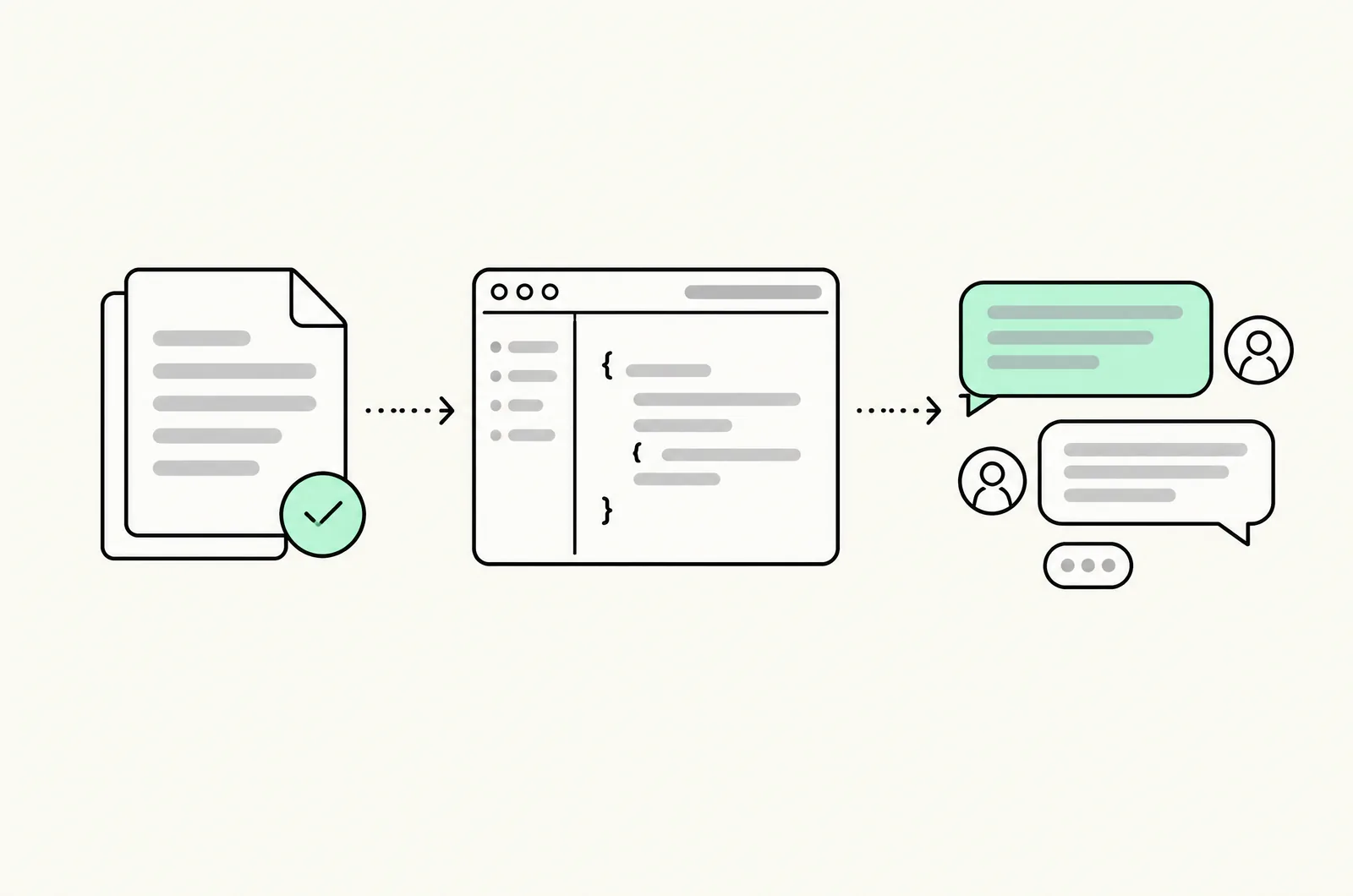
Docs structured for search and AI assistants: task-based guides, clear headings, code samples, llms.txt and consistent naming.
Technical content
Tutorials, comparisons, architecture write-ups and benchmarks with methods shown, written with your engineers.
Community programmes
Discord, GitHub, forum and meetup programmes, plus sponsorship of Bay Area and LA developer events.
Quickstart and activation CRO
Signup-to-first-success flows tested for speed, with activation events tracked so you know which developers stick.
Product-led sales signals
Account-level usage signals that tell sales when a company is ready for a team or enterprise plan.
Developer-friendly paid channels
Selective sponsorships of newsletters, podcasts and communities developers actually read, instead of broad display.
Five developer hubs, five engineering cultures
Where California's developers work, and what they evaluate.

San Francisco
The centre of AI-tooling and devtools launches, with dense meetups and developer events. Competition for developer attention is intense.
Silicon Valley
Large engineering organisations evaluating infrastructure and platform tools. Security and scale questions come early.
Los Angeles & Santa Monica
Gaming, media and creative-tech engineering teams with different tool needs from Bay Area startups.
San Diego
Telecom, defence and life-sciences engineering teams, where compliance and on-premises options matter.
Remote California developers
Many California developers work remotely for companies anywhere. Community and content reach them better than geography.
From activation audit to paying teams
- Step 01
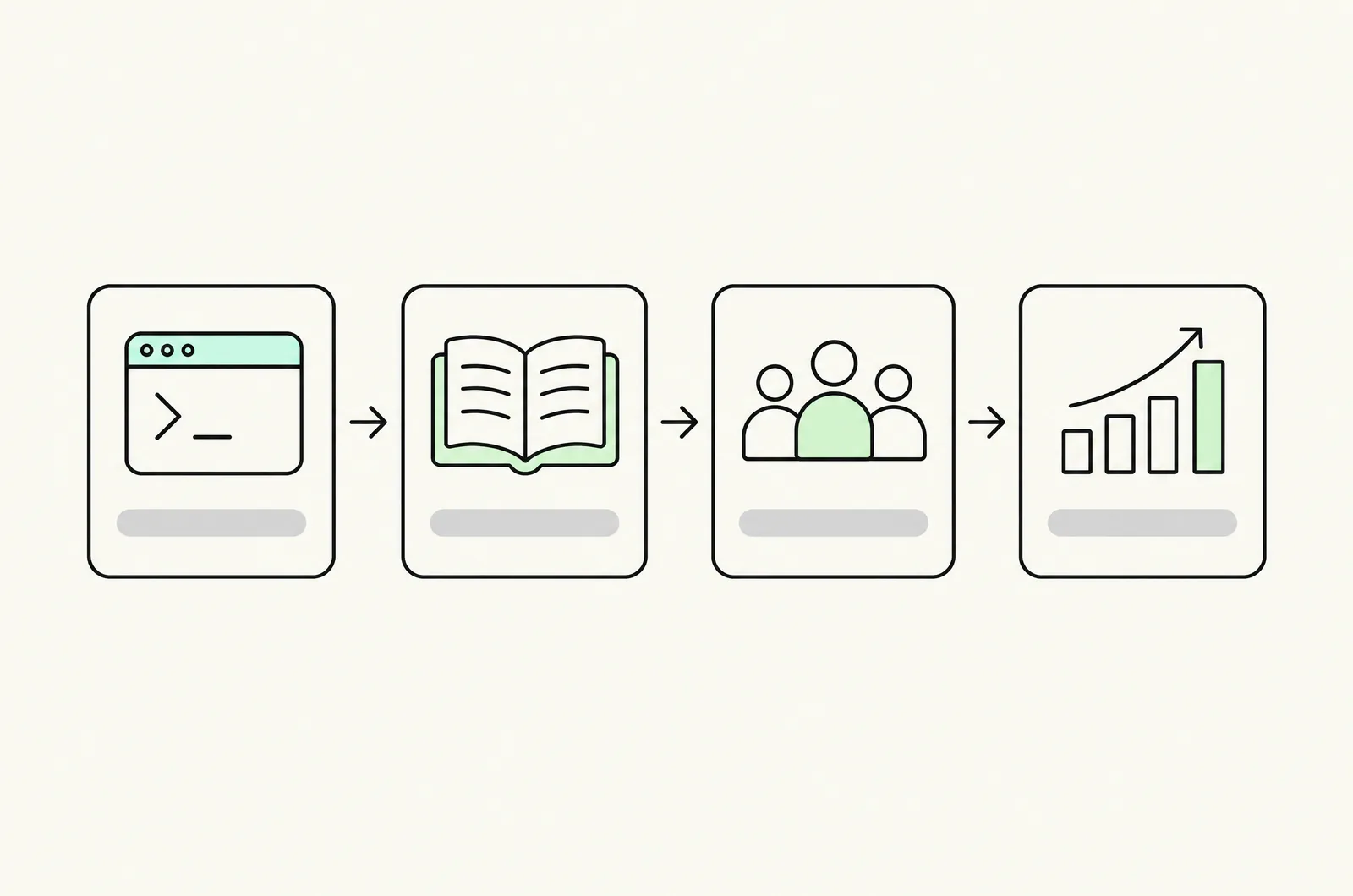
Activation audit
Signup to first success, activation and team conversion by source, plus a docs and search audit.
- Step 02
Docs and content
Docs restructured for search and AI citation, plus a technical content plan with your engineers.
- Step 03
Community and activation
Community programmes, quickstart fixes and product-led sales signals.
- Step 04
Report developers and teams
Monthly activated developers, team conversions and revenue by source.
A developer-marketing specialist vs a B2B agency vs a DevRel hire
In-house costs are directional and depend on seniority and metro.
Docs treated as a growth channel
- B2B SaaS agency
- Out of scope
- In-house California hire
- DevRel side project
- Conversion (San Francisco)
- Yes
Technical content written with engineers
- B2B SaaS agency
- Generic blog posts
- In-house California hire
- If engineers have time
- Conversion (San Francisco)
- Yes
Community programmes
- B2B SaaS agency
- Paid ads only
- In-house California hire
- DevRel-led
- Conversion (San Francisco)
- Yes
Product-led sales signals
- B2B SaaS agency
- No
- In-house California hire
- Varies
- Conversion (San Francisco)
- Yes
Reports activated developers and teams
- B2B SaaS agency
- Signups and MQLs
- In-house California hire
- Product analytics
- Conversion (San Francisco)
- Yes
Typical monthly cost
- B2B SaaS agency
- $5,000–$20,000 fee
- In-house California hire
- $16,000+ per DevRel hire (directional)
- Conversion (San Francisco)
- From $7,000 fee
Self-serve growth, honestly compared
- Self-serve acquisition · Canada
4x
App user base
NDAX: self-serve growth across channels
NDAX is a Canadian fintech app, not a devtools company or a California client, and we have no published developer-marketing result. What carries over is self-serve acquisition and activation across several channels, run as one plan, which grew users 4x.
What developer marketing costs in California
USD, excluding sponsorships.
Docs and content
From $7,000/mo
One product
Docs SEO and AI-citation work, technical content and activation reporting. Sponsorships are separate.
- Docs SEO
- Technical content
- Activation report
- Most popular
Developer growth
$12,000–$24,000/mo
Product + community
Everything in docs and content, plus community programmes, quickstart CRO and product-led sales signals.
- Community programme
- Quickstart CRO
- PLG sales signals
Pay-on-results
Base + share
Qualifying companies
A lower base plus a share of first-year revenue from attributed new paid teams above an agreed baseline.
- Baseline agreed up front
- Paid on new team revenue
- Same reporting
Developer tools marketing questions

How do you market developer tools to engineers?
Is documentation really a marketing channel?
How do you get developer tools cited by AI assistants?
Does California's SB 53 affect devtools companies?
How do you turn individual developer usage into team revenue?
Which California developer hubs do you work with?
How much does developer tools marketing cost?
Should devtools companies run paid ads?
Related California pages

Sources and statutes
Every figure and regulation cited on this page.
Facts and thresholds last checked 19 November 2026.
- Crunchbase News — US startup funding boom concentrates in the Bay AreaBay Area took roughly half of US venture dollars in 2025 and about 60% of global AI funding.
- Future of Privacy Forum — California's SB 53, the first frontier AI law, explainedSigned 29 September 2025: transparency reports for frontier model developers, governance frameworks for those with $500M+ revenue, incident reporting and whistleblower protections.
Fix your path to first success
30 minutes with a senior strategist. We'll review your docs, quickstart and activation data.
What happens next
- 1Pick a time for a 30-minute call.
- 2We review docs, quickstart and community.
- 3Get a developer-growth plan.
Prefer email? tarun@conversion.is